Economists and the housing industry have repeatedly warned that the Albanese government’s removal of key investor tax concessions (negative gearing on existing homes and the 50% CGT discount) would drive rents higher by pushing investors out of the market.
These claims typically ignore that rents have already surged nationally over the past four years due to the federal government’s record net overseas migration. This surge in rents occurred under the old negative gearing and CGT rules.
Interestingly, since the announcement of the tax changes in May’s federal budget, rental growth has eased, and the vacancy rate has jumped to its highest level in nearly five years:
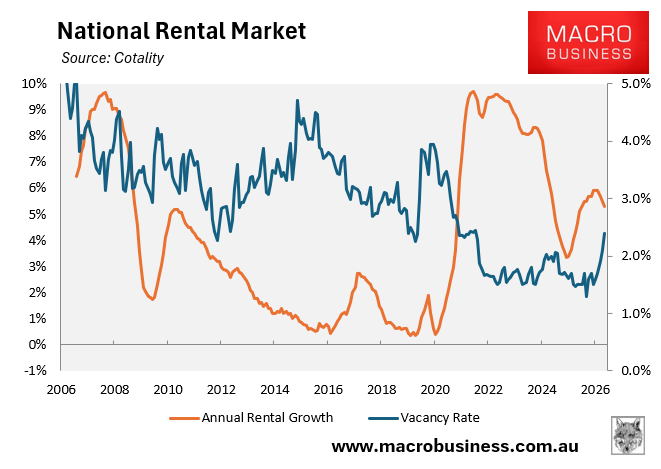
Over the past three months, Cotality reports that rents have risen just 0.4%, the smallest quarterly change since late 2024.
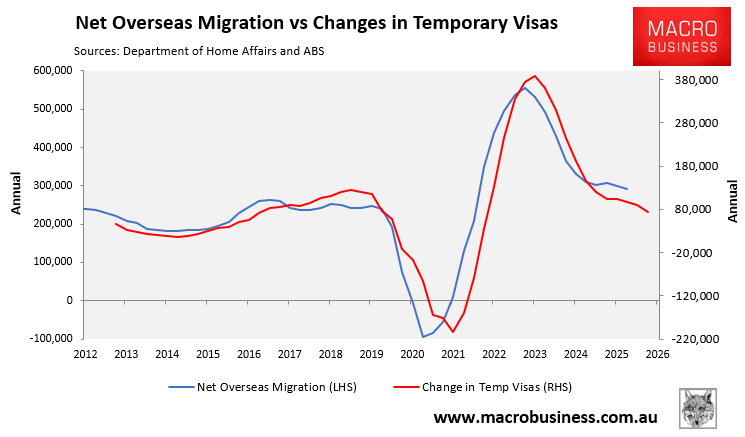
The slowing in rental growth coincides with the slowing in net overseas migration:
The empirical evidence also does not support the suggestion that the changes to negative gearing and CGT will drive up rents.
More than 80% of investor mortgage commitments are for established homes. Therefore, fewer than one out of five investors are adding to housing supply:
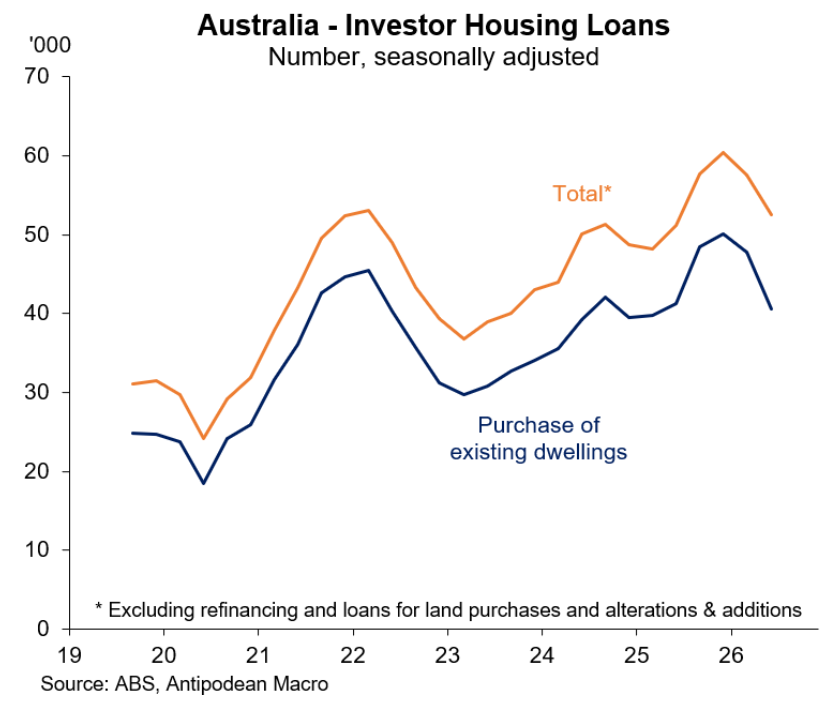
Most investors have turned homes for sale into homes for rent. Therefore, when an investor sells, the property does not vanish. Instead, another investor or an owner-occupier (possibly a first-home buyer) buys it.
Therefore, if fewer investors participated in the market, or if investors sold up following the budget’s negative gearing and CGT changes, there would be fewer homes for rent but also fewer people needing to rent, as more owner-occupiers would be in the market.
The rental supply-demand balance would be largely unaffected.
Melbourne investors sold up, but rents didn’t rise:
In 2024, the Victorian government significantly increased holding costs for investors—primarily through lower land-tax thresholds, expanded vacant-residential-land taxes, and new short-stay levies.
The changes mean more investors now pay land tax, and those who already pay are paying more, reducing net yields.
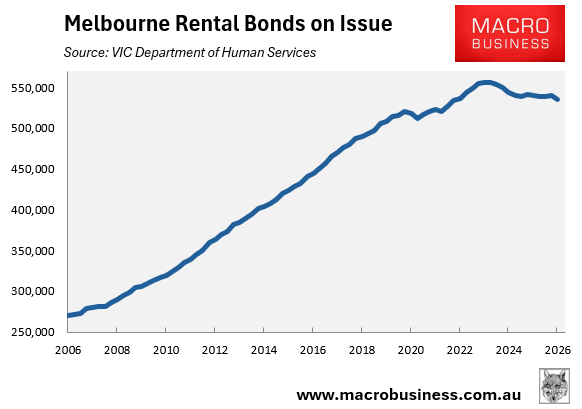
Following the changes, a significant number of investors have abandoned the market, as evidenced by the decrease in rental bonds on issue:
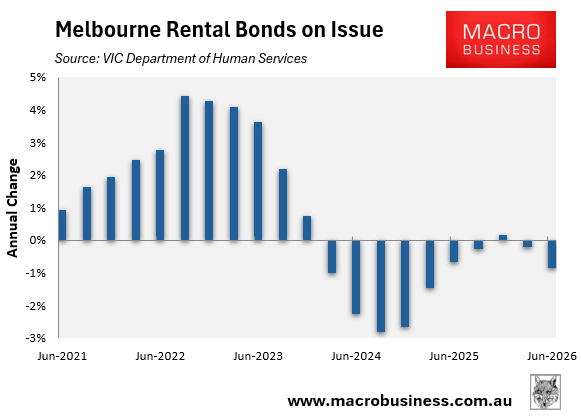
The number of rental bonds on issue in Melbourne declined by 3.8% between June 2023 and June 2026, from 556,470 to 535,570:
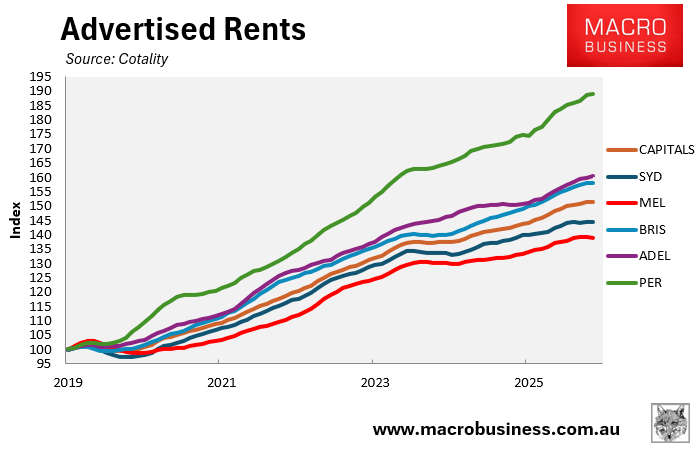
Despite the reduction in investor numbers, Melbourne’s rental growth has been the slowest of the major capital cities:
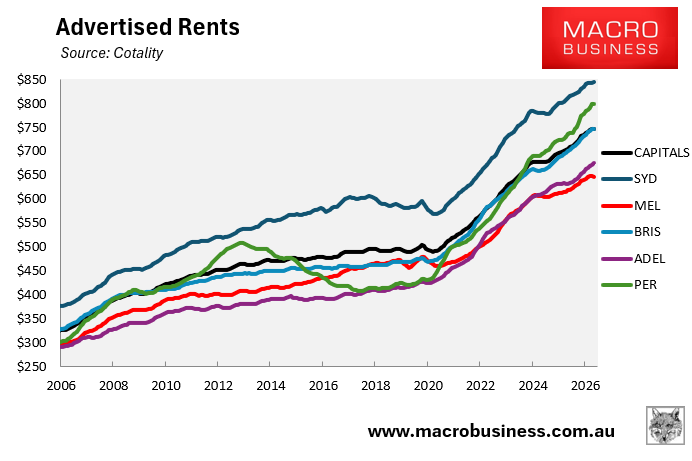
Melbourne rents are also the cheapest of the major capital cities:
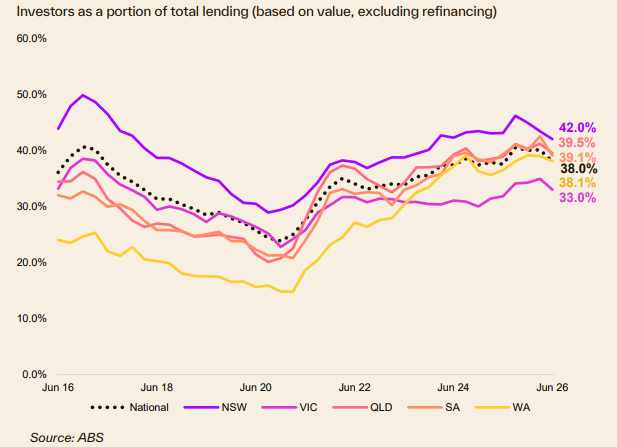
The following chart from Cotality also shows that the share of investor mortgage lending in Victoria is the lowest in the nation:
At the same time, the share of first-home buyer lending is highest in Victoria among the major jurisdictions:
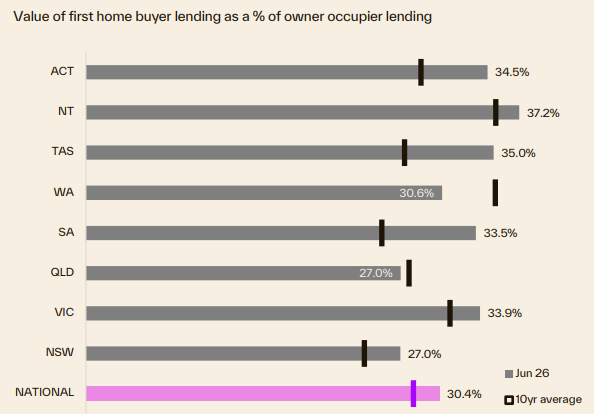
The evidence suggests that while investors have left the market in Victoria, first-home buyers have purchased these homes, keeping the rental supply-demand equation largely unchanged.