The federal budget’s changes to negative gearing and capital gains tax (CGT) aimed to reduce investor demand for established housing, lowering prices without harming housing supply.
Beginning July 1, 2027, investors can fully negative-gear only newly built homes.
Effective July 1, 2027, the 50% CGT discount will be replaced by cost-based indexation (taxing only real gains) and a 30% minimum tax rate on capital gains.
New builds, on the other hand, will continue to have access to both the old and new CGT regimes, allowing investors to choose the more favourable treatment.
These changes create a more favourable CGT environment for new homes, making new construction more appealing than purchasing an existing dwelling.
The goal is to alter investor demand so that investment increases housing supply rather than driving up the price of existing stock.
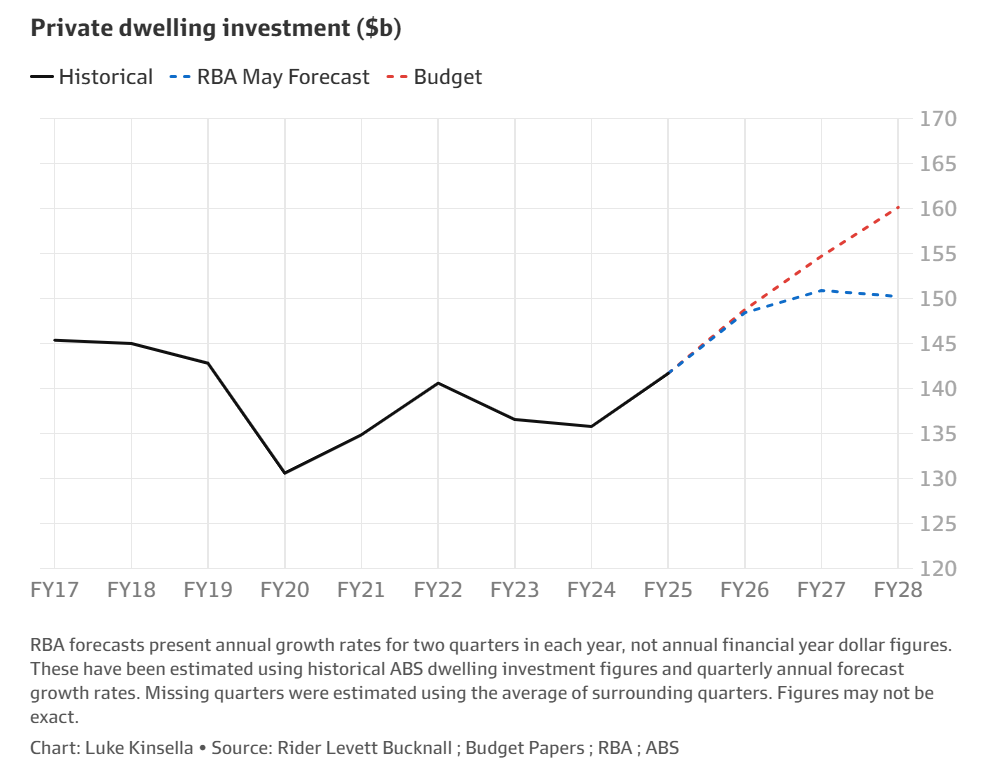
The Australian Treasury believes the adjustments will increase supply. The federal budget forecasts $315 billion in new housing investment in 2026-27 and 2027-28.
However, the RBA forecasts residential investment to shrink beginning in late 2027 due to construction restrictions. As a result, its new housing investment forecast is $13.7 billion lower than the federal budget’s $301 billion estimate.
New analysis from PropTrack shows that while overall investor mortgage demand has fallen significantly following the federal budget’s changes to negative gearing and CGT, demand for new builds has actually increased:
“The number of loans to investors was down 9% in the June quarter; this was larger than the 3% pullback we saw from owner occupiers. That suggests that the budget has affected investors, over and above the impact of higher rates affecting all buyers”.
“While overall investor loans were down, loans for buying or building new homes increased, up 24%. That means we saw a notable jump in the share of investor loans going to new homes in the June quarter. This is a deliberate outcome of the budget changes; new homes were explicitly carved out of the changes to support new supply”.
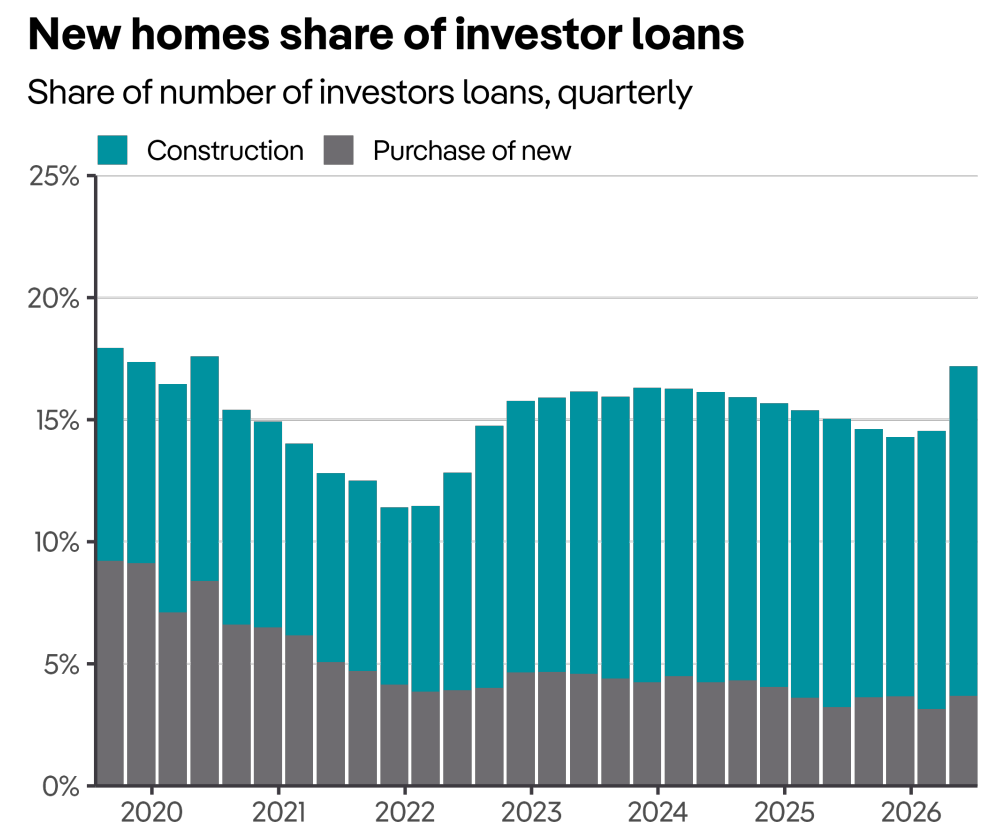
While it is still early days, data on property-investor-driven new construction is promising.
Westpac forecast that the number of new homes built by property investors would rise by about 45% over three years:
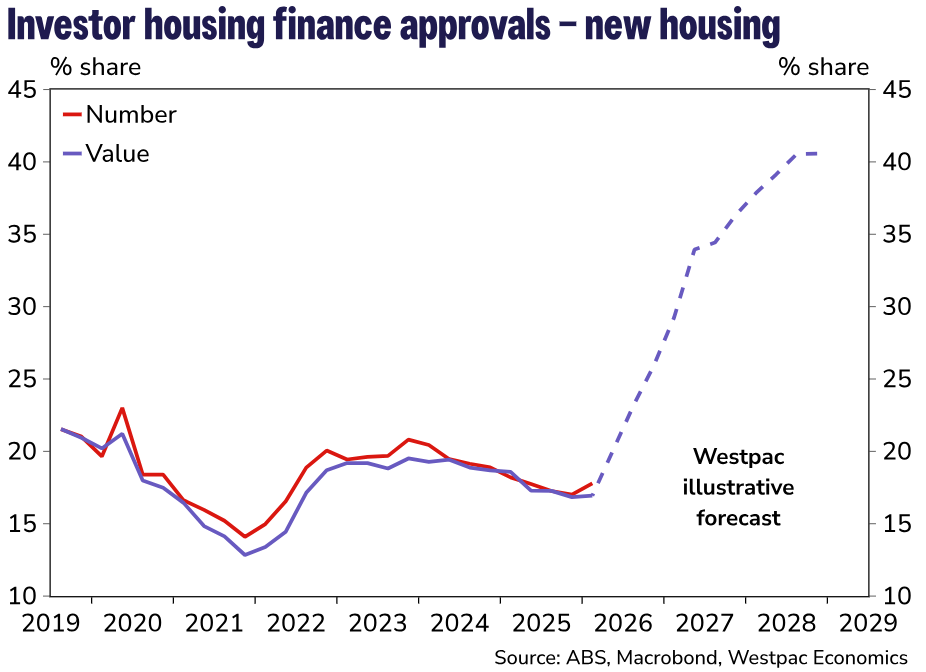
“While there are other important considerations for buyers considering new vs existing – including cost, delivery risk and capital gain expectations – it is likely that at least some prospective investors will switch”.
“The implication is that sharply lower investor activity will also skew more heavily towards new, the share potentially rising towards 40–50% of new investor loans”, Westpac wrote.
Pushing investors into new builds over established housing would provide some much-needed stimulus for housing supply and help to alleviate rental pressures.