New Zealand’s housing price correction began in November 2021, and since then, prices have declined by more than 15% nationally in nominal terms and by around 30% in real, inflation-adjusted terms.
As a result, real New Zealand housing prices are tracking at the same level as March 2018:
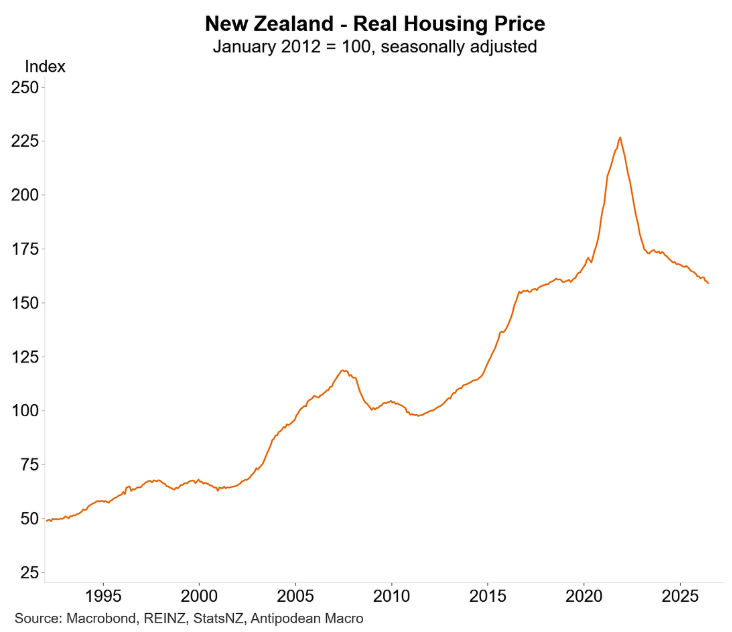
Chart from Justin Fabo at Antipodean Macro
There are good reasons to believe that New Zealand housing prices will continue to fall.
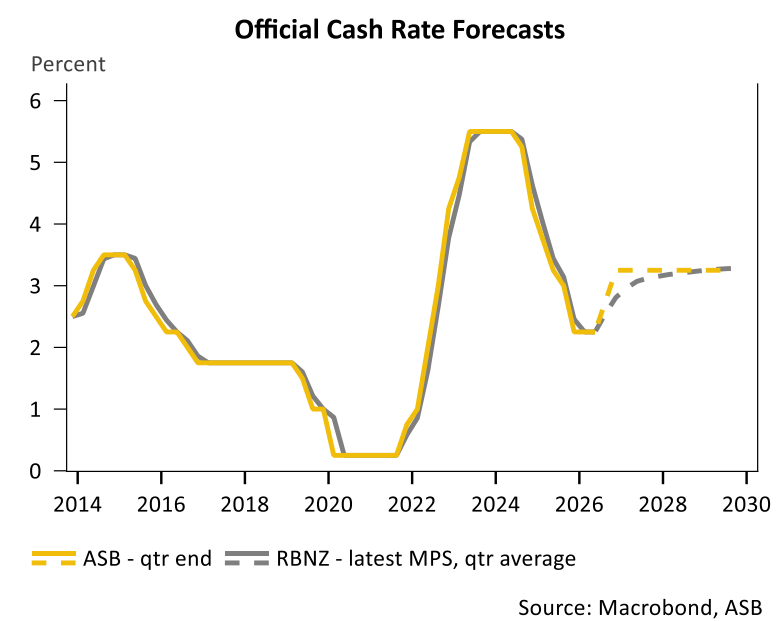
First, the Reserve Bank has begun another tightening cycle. It hiked the official cash rate by 0.25% this month to 2.75%, and major bank ASB expects follow-up 0.25% hikes in October and December, with the OCR to remain at 3.25% through 2027.
New Zealand mortgage rates are already rising, which portends lower borrowing capacity and softer housing demand.
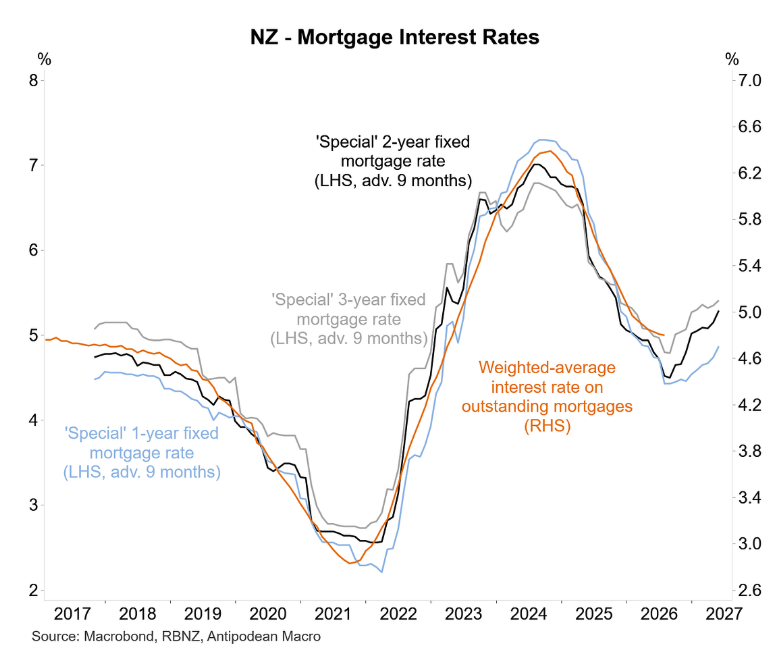
Chart from Justin Fabo at Antipodean Macro
Second, for-sale listings on realestate.co.nz continue to swell, tracking at the highest level in more than a decade:
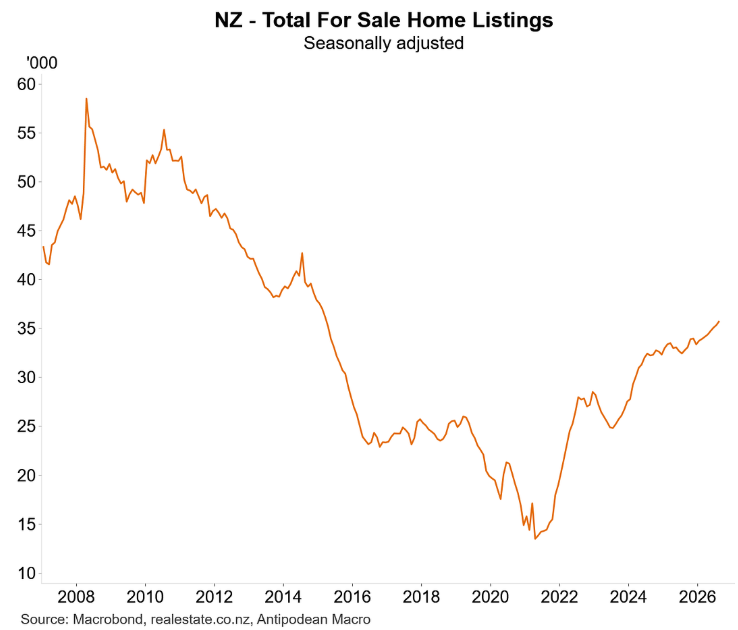
Chart from Justin Fabo at Antipodean Macro
Slower demand and rising supply suggest housing values will continue to fall.
ASB’s NZ House Price Outlook, released this week, argues that the long era of rapid, debt-fuelled house price growth is now over amid structural shifts in interest rates, demographics, and housing supply.
ASB also expects the eventual recovery to be slower and income-led than prior episodes, identifying three structural breaks that have fundamentally changed the housing market.
First, mortgage rates are around 200bp above their 2021 lows and are unlikely to return to those levels. The long‑run decline in global real interest rates has stalled, and the neutral official cash rate may drift higher.
“This downward drift in borrowing costs looks to have ended, eroding a potential source of house price gains”, ABS noted.
Second, net migration is running at around 18,000, about 40% of decade averages. Natural population increase is also at post‑WW2 lows due to ageing and low fertility.
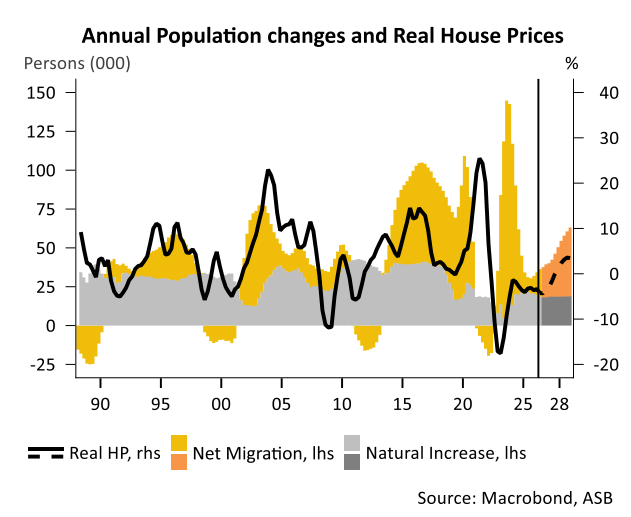
“NZ’s resident population growth has slowed… net migration inflows are running at just 18k… about 40% of the average of the last decade”, ASB noted.
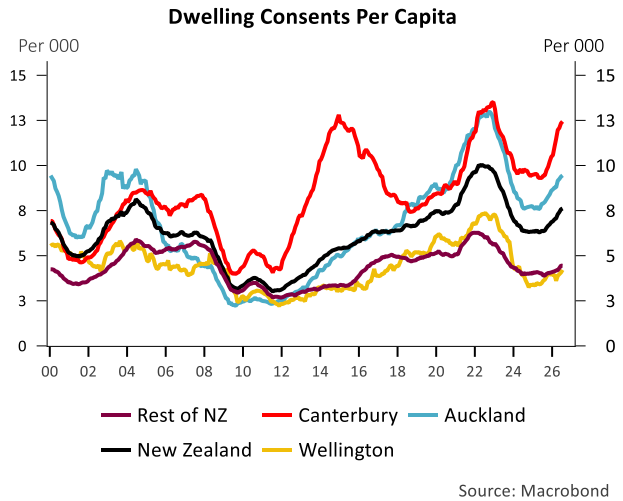
Third, New Zealand’s housing supply has become more responsive, with consents per capita tracking at 7.7 per 1,000, which is well above the long-run average of 6.1.
As a result, ASB does not expect nominal housing values to return to their late-2021 peak until at least 2029, and real values will take much longer to recover.
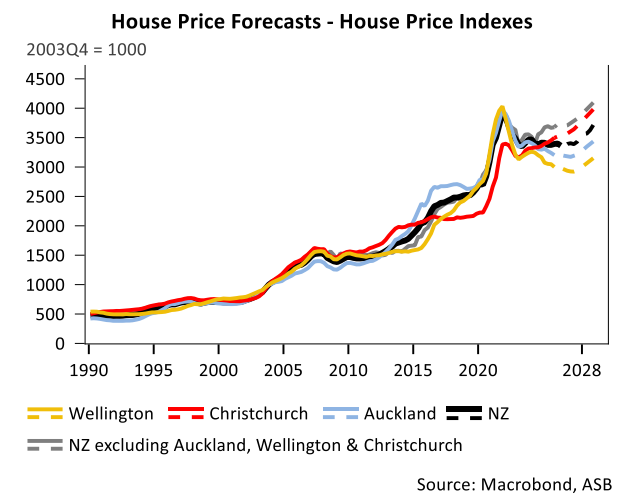
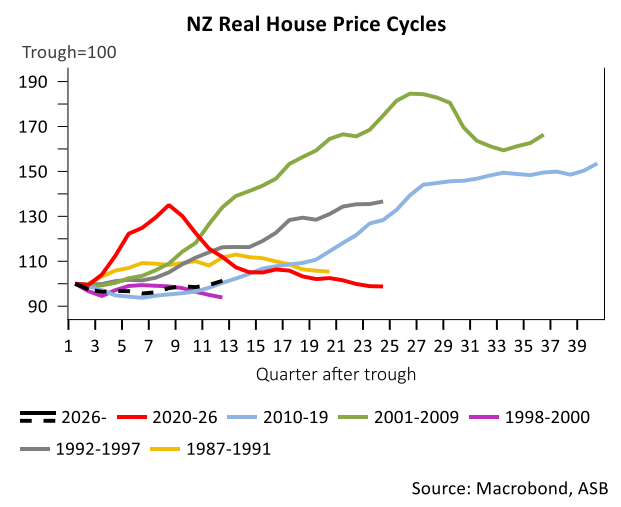
The days of easy, outsized capital gains are over, and future gains will be smaller, slower, and more sustainable.