NSW has $100 billion in data centre projects under consideration and is grappling with how to ensure enough energy supply while meeting its 2030 and 2035 emission reduction targets.
The baseline forecast from AEMO’s latest Integrated System Plan (ISP) forecasts around 1.7GW of peak demand from data centres by 2035 across NSW and the ACT, and around 34TWh of annual consumption nationally by 2035–36. This is one of the largest single sources of new load in Australian energy history.
As a result, AEMO warned that NSW could hit reliability constraints three years earlier than previously forecast, in 2030–31, not 2033–34.
Last week, Transgrid – Australia’s largest electricity transmission company that operates over 13,000kms of transmission lines and more than 100 substations in NSW and the ACT – warned that data‑centre electricity demand could be twice as high as AEMO’s core forecast, with around 3.5GW of peak demand in NSW/ACT by 2035.
Transgrid noted that 20 GW of connection enquiries have been lodged in Sydney – double NSW’s peak demand – but that Sydney’s transmission network is already full and has “limited remaining capacity”.
As a result, it warned of reliability issues and supply constraints and said that immediate action is needed to ensure enough electricity volumes are available into the 2030s without damaging the power grid.
Data centres are also expected to be major consumers of water for cooling.
For example, Sydney Water estimated that data centre demand could reach around 260 megalitres per day by 2035, equivalent to around 95 billion litres per year or 15–20% of current Greater Sydney supply.
Victoria and South Australia are also vulnerable:
Victoria is facing similar energy concerns. AEMO’s 2026 Electricity Statement of Opportunity (ESOO) warned that Victoria faces reliability constraints in 2031-32 and South Australia in 2032-33.
These concerns were captured in a detailed Herald-Sun report published over the weekend, which warned of energy shortages once the Yallourn coal-fired power plant closes in July 2028, potentially reducing the state’s power supply by 20% overnight.
The report warned that “Victoria is facing a looming “double squeeze” on the electricity grid over the next decade, as older, reliable power plants — including Yallourn — are retired at the same time overall demand is tipped to jump”.
Demand is set to soar due to data centres and Victorians switching to electric vehicles, heating and appliances, “just as supply shrinks”.
As a result, the state faces “possible blackouts and winter power shortages” that will be “more likely from mid 2028”.
Gavin Dufty, National Director of Energy Policy and Research at St Vincent de Paul Australia, told the Herald-Sun that Victoria was “certainly at an inflection point” as it approached 2028.
“If you take generation out and you don’t put more generation in, wholesale costs go up”, he said.
Yallourn’s managing director Mark Collette told the Herald-Sun that Victoria may need to lean more heavily on New South Wales’ coal fleet once Yallourn shuts.
Currently, South Australia relies on Victorian brown coal generation regularly to keep the lights on when wind power stalls. But with Victorian coal power scheduled to close by 2035 (starting with Yallourn in mid-2028), it too faces energy shortages.
The notion that Victoria can magically lean on NSW coal power to keep its (and South Australia’s) lights on is also fanciful, since NSW is scheduled to close almost all of its coal generation by 2035:
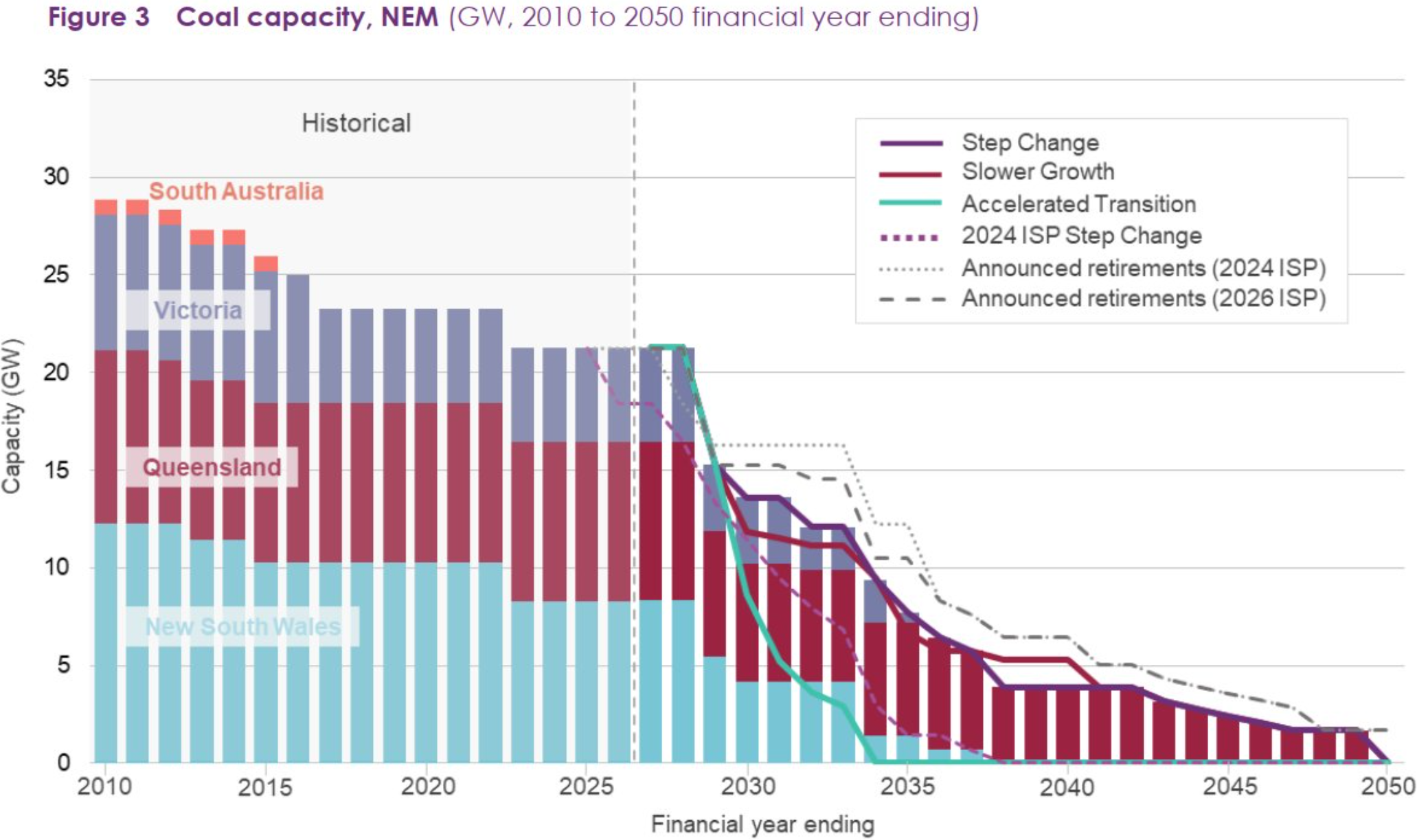
As illustrated above by AEMO’s latest Integrated System Plan, around 15GW of coal generation in NSW and Victoria is scheduled to close by 2035.
Yet, over the past three months, coal accounted for 69% of NSW grid electricity generation, whereas brown coal generation accounted for 60% of Victoria’s:
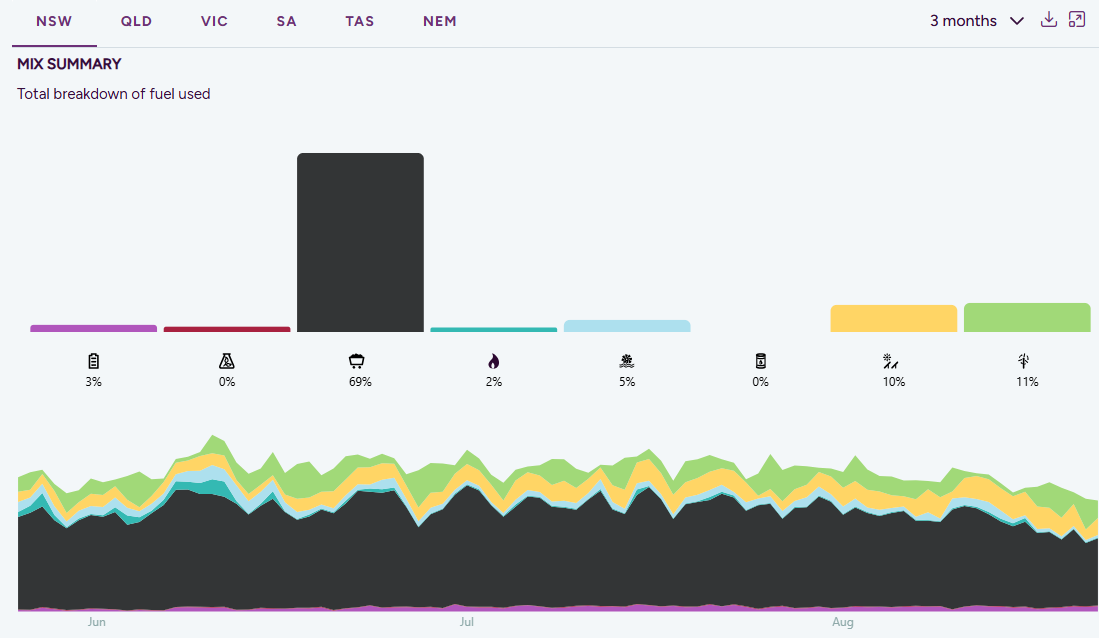
NSW energy mix – last three months
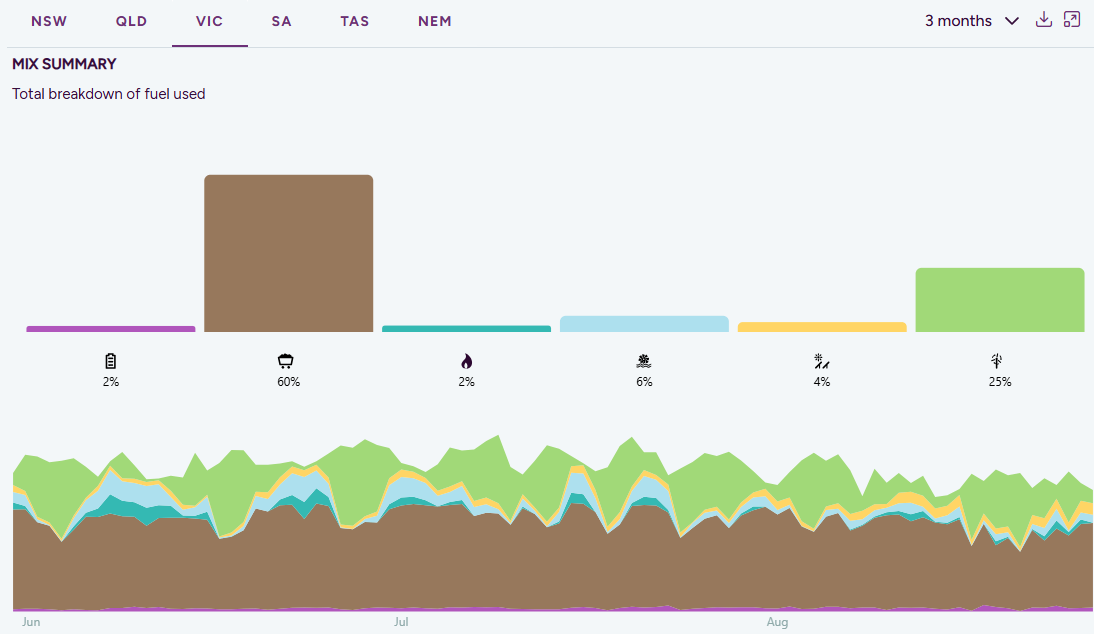
VIC energy mix – last three months
Clearly, eastern Australia is heading towards a major energy crunch as soaring demand from data centres, electric vehicles, population growth, etc., meets plummeting baseload coal supply.
The most likely outcome is that policymakers will eventually be forced into a policy backflip and will keep Australia’s coal fleet operational much longer than planned. They will have no choice.