

As the falls in Australian housing prices continue to grow in size and scope, many Australians are increasingly wondering how far prices could fall before they eventually bounce back.
Across the Tasman in New Zealand, we have a real-life example of what happens when an overvalued housing market takes a dive without policymakers riding to the rescue.
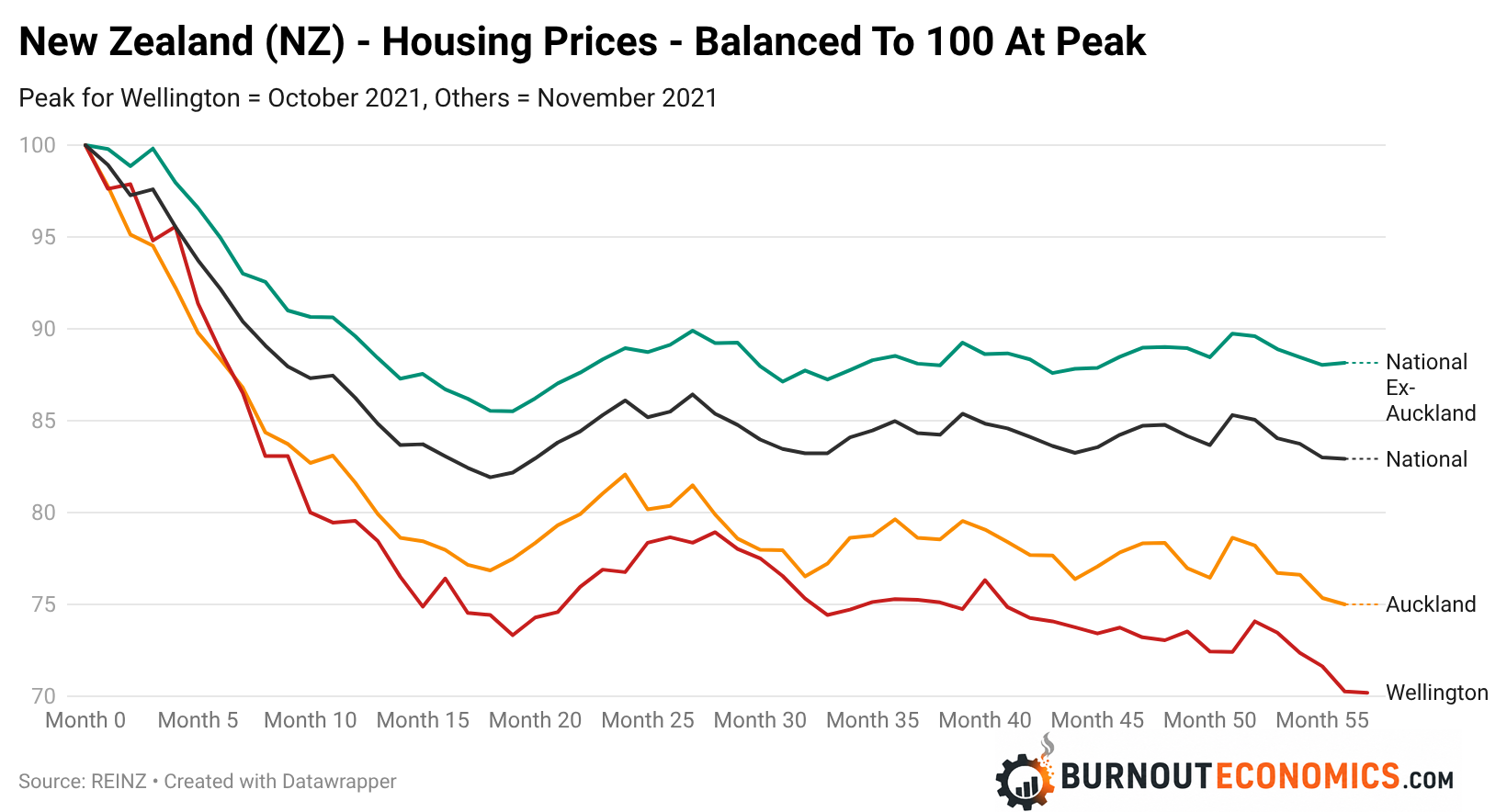
At a national level, housing prices are down 17.1% from their peak in November 2021.
This is slightly up from the lows recorded in May 2023, when they were down 18.1%.
But national outcomes mask much larger falls in Auckland (New Zealand’s most populous city) and Wellington (New Zealand’s capital).
Before we get into the numbers, it’s worth getting some perspective on the relative scale and importance of the Auckland housing market to New Zealand.
As of the 2023 Census, the Auckland metro area represented 35% of New Zealand’s population.
In Australian terms, Auckland is just under the relative proportion of the population held by Sydney, Brisbane and Adelaide put together.
Yet despite its relative size and importance, housing prices have fallen by 25% since the peak, and the most recent data revealed a new cycle low.
This is just a few percentage points off the 27.6% drop seen at a U.S. average level during the Global Financial Crisis-era housing crash.
Meanwhile, in the Kiwi capital, prices have fallen even further, now down 30%, and have also hit a new cycle low in the latest data.
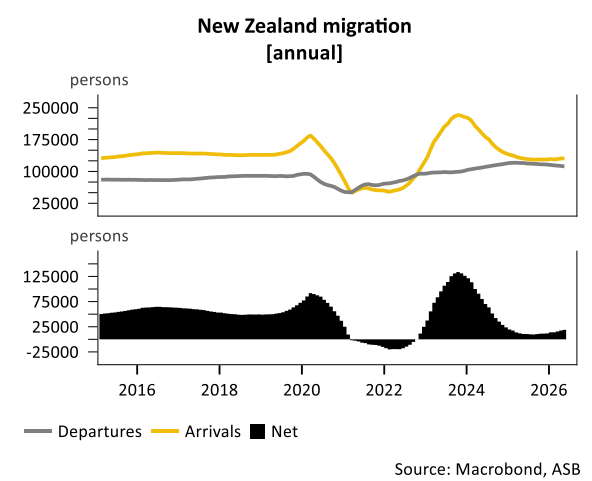
One major difference between Australia and New Zealand is that migration in New Zealand has been slashed to well below pre-pandemic lows.
While there is entirely correct commentary that part of this downward trend has been driven by the exodus of Kiwis out of the country, particularly to Australia, the underlying intake, excluding the impact of Kiwi citizens, remains significantly smaller than before the pandemic.
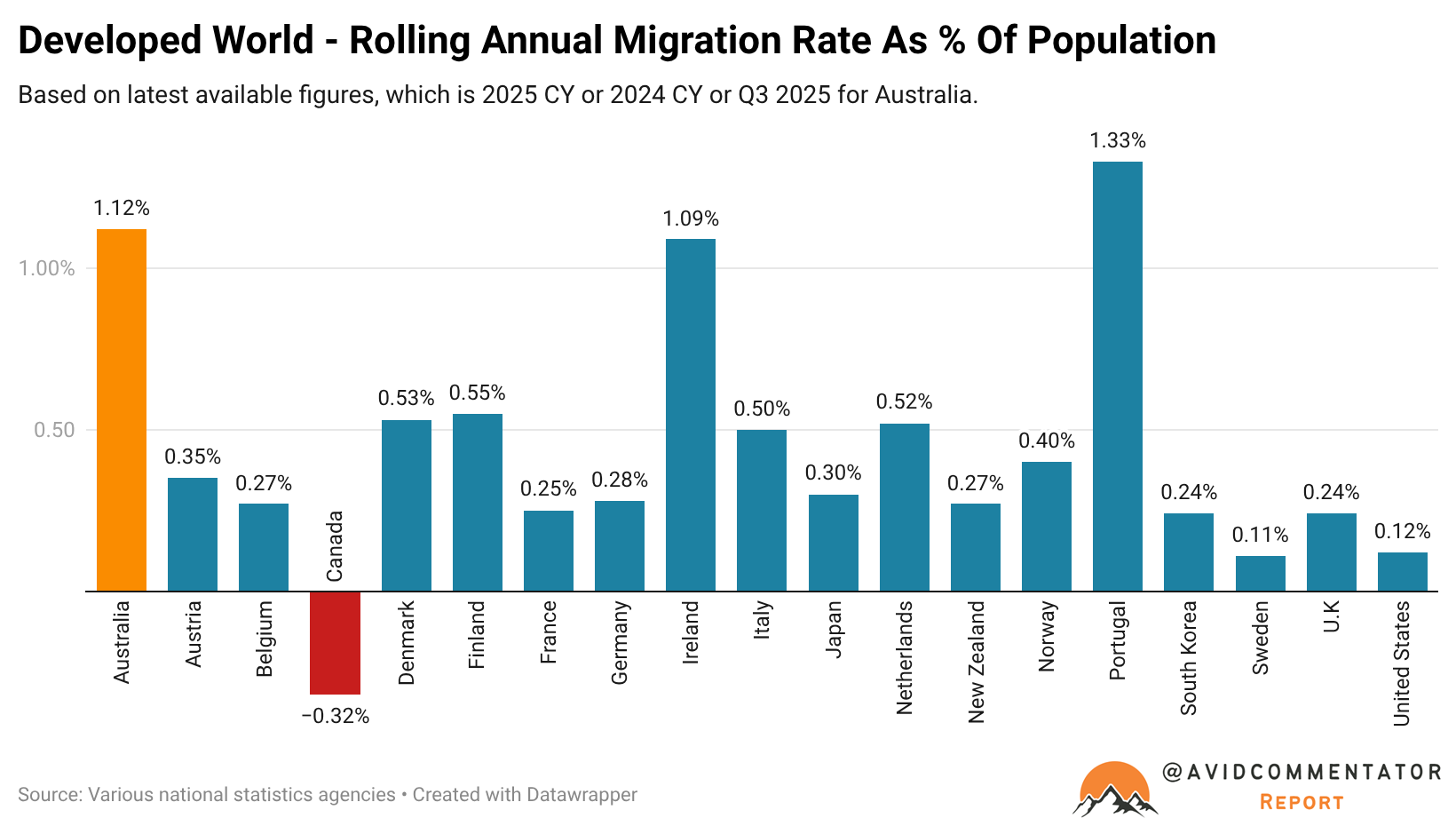
Meanwhile, Australia continues to run a migration intake that is near world-beating for a major developed nation, at a rate more than double the developed world average in per capita terms.
The Takeaway
While there are elements of the Kiwi story that definitively separate it from Australia’s, such as a higher unemployment rate, the reality is the major factor supporting Australian housing prices not following the same path as our brethren across the Tasman is policymaker intervention.
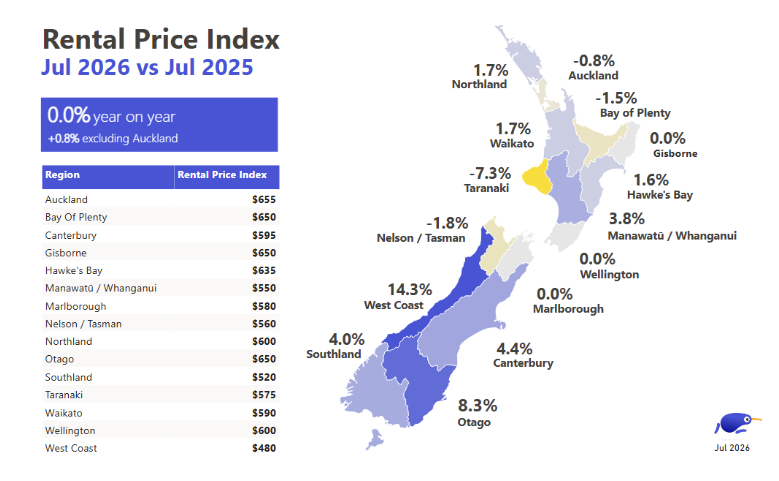
In New Zealand, migration was cut, the impetus to panic-buy homes was removed, and asking rents are now flat year on year at a national level.
Meanwhile in Australia, asking rents at a national level are up by 7.4% in the past 12 months.
Now, amidst falling home prices and the removal of negative gearing and the capital gains tax discount for newly purchased existing properties, questions are being raised about the Albanese government following the Kiwis, Canadians, Americans and British in slashing migration.
If that scenario were to play out, one of the major policymaker interventions already supporting the market would have been removed, and it would be only a matter of time before Australia’s record-holding construction sector helped deliver flatlining rental growth.
Ultimately, New Zealand remains a cautionary tale or successful proof of concept of how an overvalued housing market can play out if policymakers simply sit on their hands and pursue an appropriate level of immigration for their nation.
