Investors in renewables say confidence in the Australian energy market is declining.
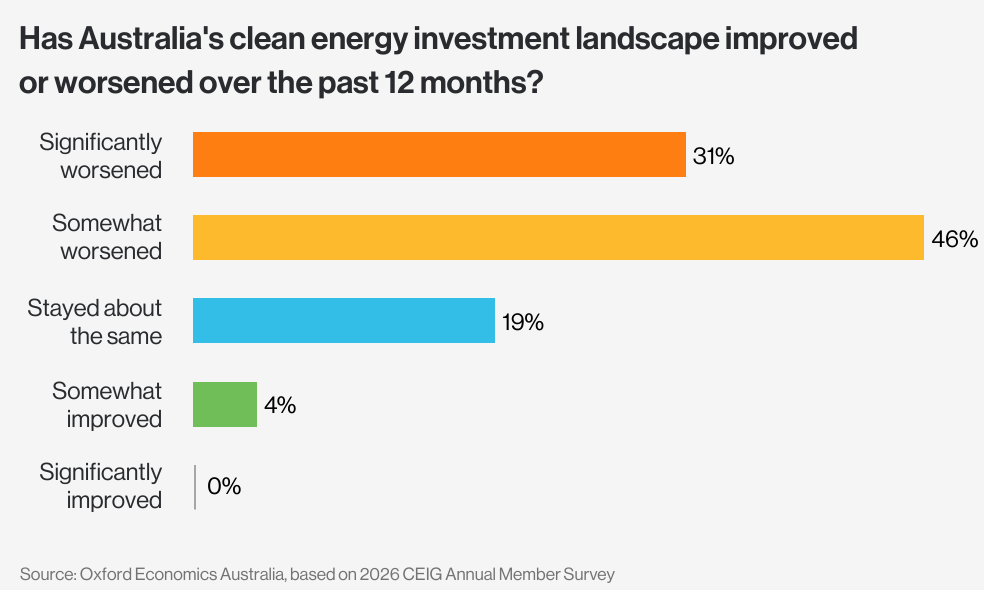
A national investor survey by the Clean Energy Investor Group (~140 respondents) found that 77% of respondents believe Australia’s clean energy investment landscape has deteriorated over the past 12 months:
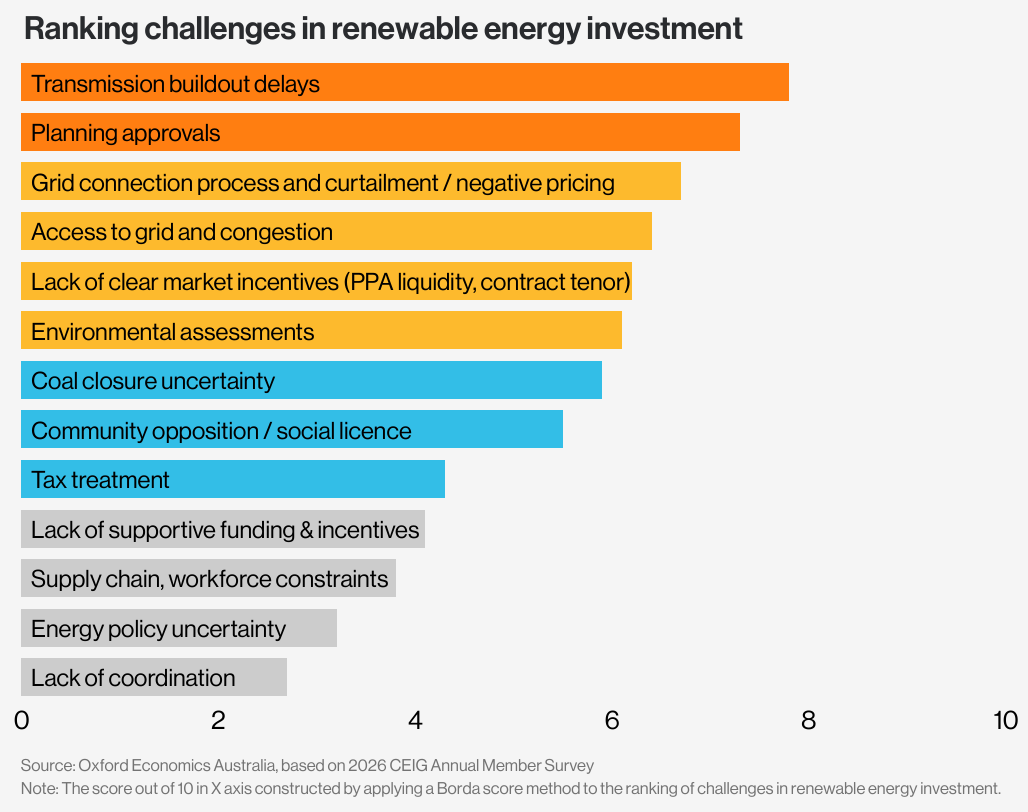
Transmission bottlenecks are the number one concern, followed by planning approval delays, grid connection issues and negative pricing:
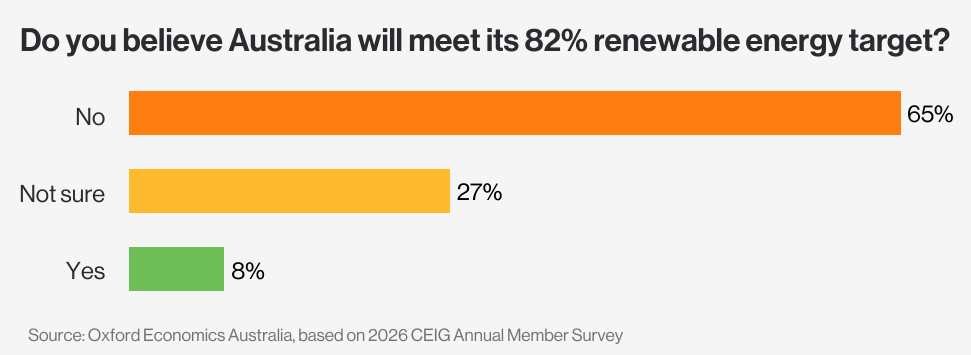
Just 8% believe Australia is on track to achieve the 82% renewable electricity target by 2030:
The survey comes as AEMO reported that projects took 30% longer to become operational in FY 26 (i.e., from 14 → 18 months).
Coal plants to remain operational for longer:
According to the latest version of AEMO’s flagship report, the 2026 ISP released in June, over 5 GW of coal is scheduled to close in 2029.
By 2035, Australia is scheduled to have lost around 15 GW of coal capacity, almost all from Victoria and NSW.
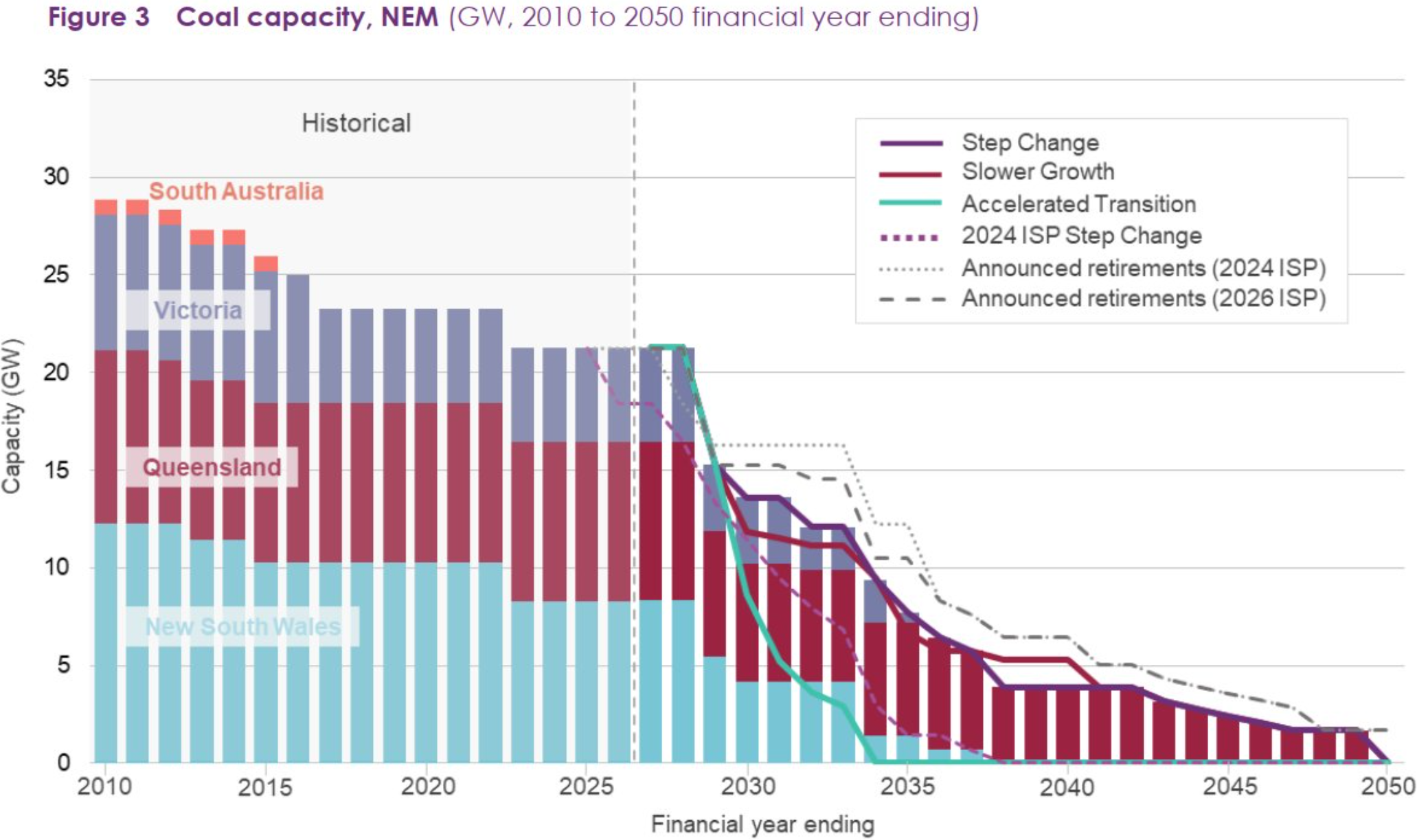
With Australia’s electricity demand set to soar due to the build-out of data centres, projected strong population growth, the electrification of the vehicle fleet, and the need for more water desalination plants, the notion that we could eliminate 15 GW of baseload non-weather-dependent generation for intermittent wind and solar generation is unrealistic and would lead to energy shortages.
Recognising this fact, the Queensland government extended the life of its coal power stations by at least another decade into the 2040s and beyond.
Last week, the physics reality hit NSW and Victorian policymakers.
Energy analyst firm Rystad warned that Australia’s east coast electricity market could face an acute supply deficit early next decade if coal-fired power plants retire as scheduled.
Between January 2020 and July 2026, just four wind farms started construction in NSW, with a combined capacity of only 1GW.
“Thus the more likely outcome over the next five-to-ten years will be an extension to the coal plants, particularly in NSW, as the volume of wind generation is simply not being built to replace the retiring volumes”, Rystad said.
Origin Energy – the owner of NSW’s largest coal generator Eraring also released its latest annual results on Thursday and warned that rising costs and low wholesale electricity prices are undermining the prospects for its 1.5 gigawatt Yanco Delta wind farm in NSW.
Essentially, Origin claimed that wind is high cost. As a result, wholesale power prices will have to rise significantly from where they are to make wind investable, even with subsidies.
“There are two things going on”, CEO Frank Calabria said. “You’ve obviously got lower wholesale prices right now, and secondly, you’ve got inflation costs”.
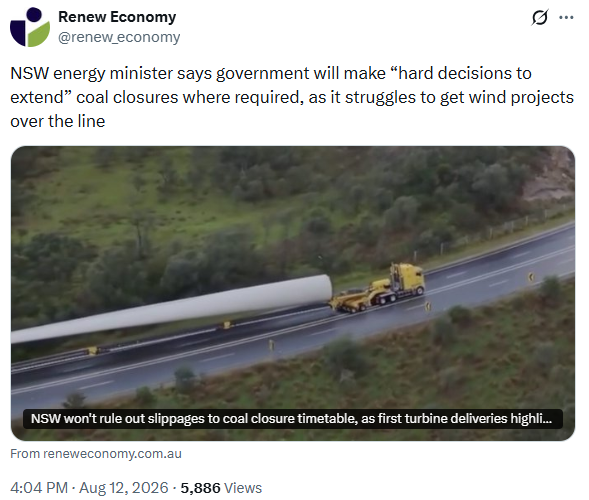
Not surprisingly, the media reported last week that the NSW government is actively examining extending the life of the state’s coal-fired generators:
Over the past three months, coal has accounted for 70% of NSW’s electricity generation, according to AEMO:
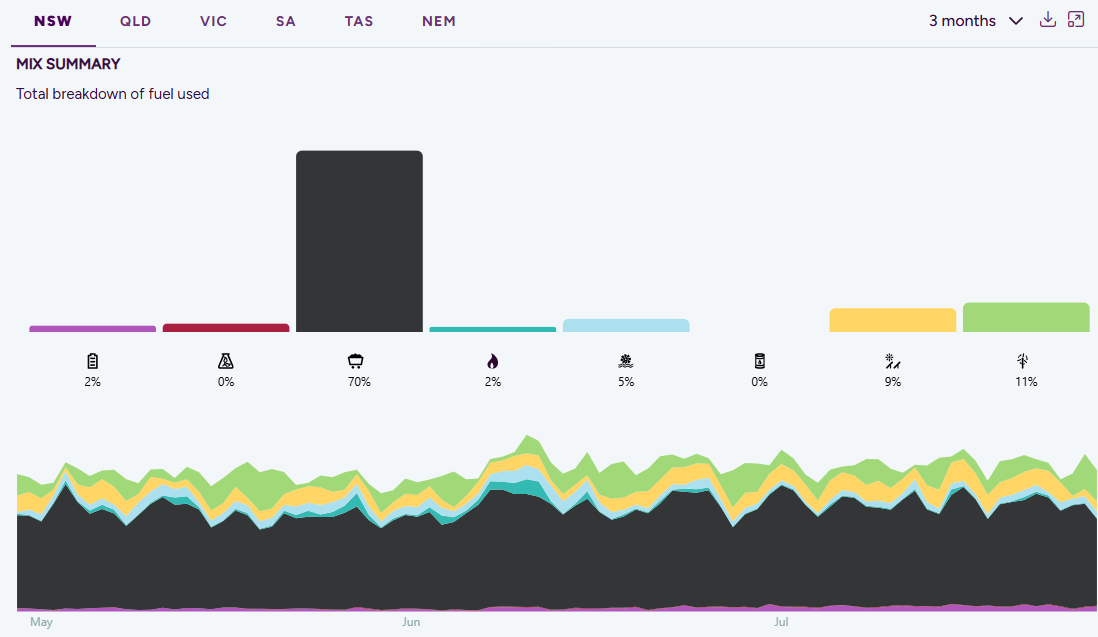
NSW Power Mix – Past 3 Months
Therefore, replacing baseload coal with intermittent, weather-dependent sources is incredibly challenging.
Similar forces are at play in Victoria.
AEMO warned last week that Victoria and South Australia may face supply shortages from July 2028 because the Yallourn power station’s closure removes nearly 25% of Victoria’s generation, and replacement renewable capacity—especially wind—is not being built fast enough.
As illustrated below by AEMO, coal accounted for 61% of Victoria’s electricity generation in the past 3 months:
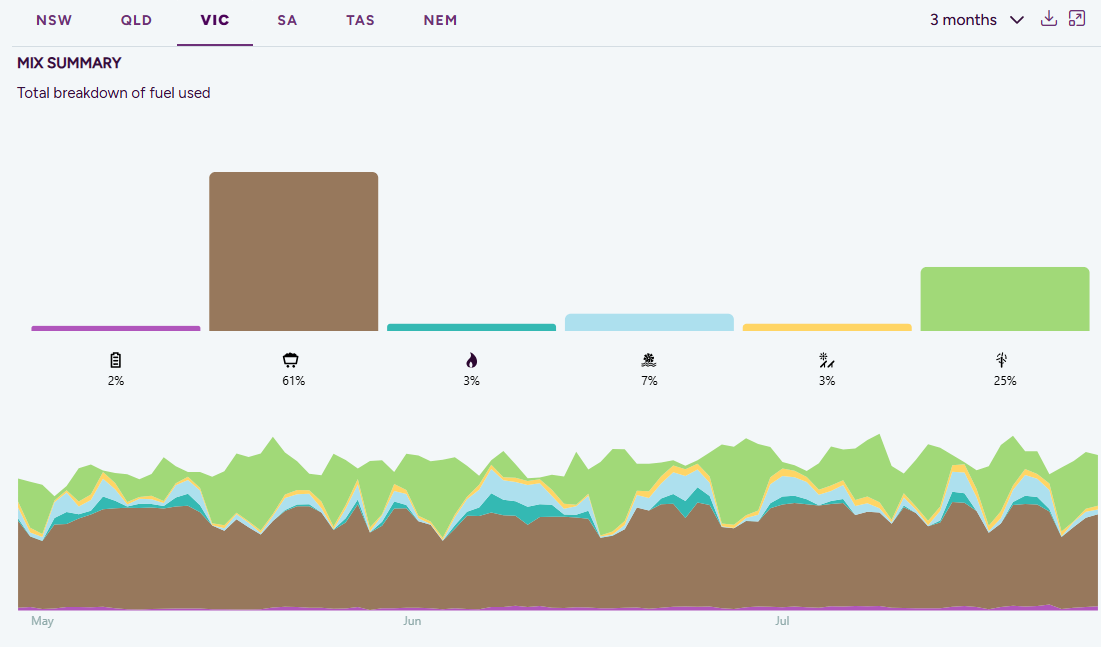
VIC Power Mix – Past 3 Months
Last week, the Victorian Coalition pledged that it will not force the early closure of coal plants if it wins the November state election.
“To keep the lights on for everybody, we’re going to still have to rely on our coal-fired generators in the Latrobe Valley to supply a consistent, constant base load power for Victoria”, National Party member for Morwell Martin Cameron said.
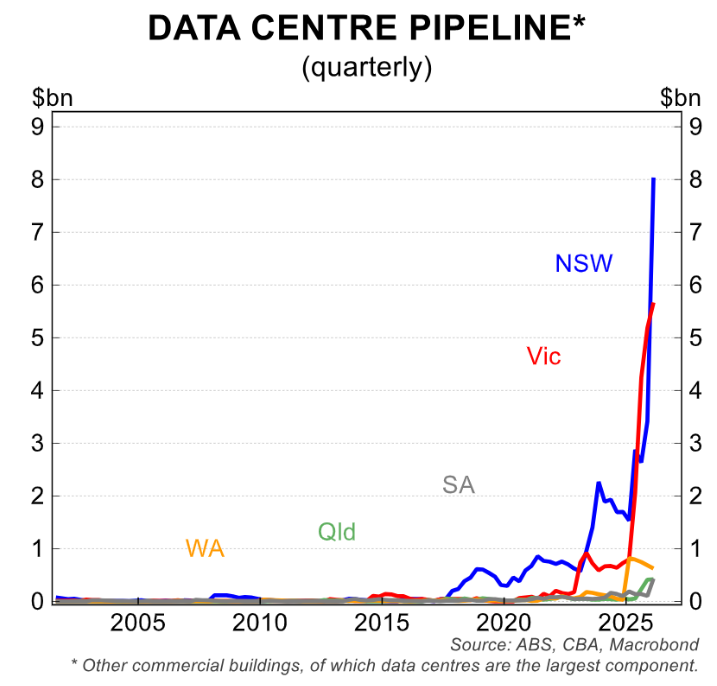
The reality is that Labor’s 82% renewable energy target by 2030 was never remotely realistic. The situation is worse now with the rapid build-out of data centres, especially in NSW and Victoria.
My view remains that Australia should emulate China’s approach to energy. That is, build more of everything and aim for energy abundance with a balanced diet of generation sources.
Economies run on cheap energy. Yet, Australia’s current policy would rather keep smelters alive with billions of dollars of taxpayer funds than implement a decent energy policy that would make them more competitive.