I reported last week how the homebuilding industry is facing a raft of headwinds that will inevitably slow the construction of new homes and further imperil the government’s housing targets.
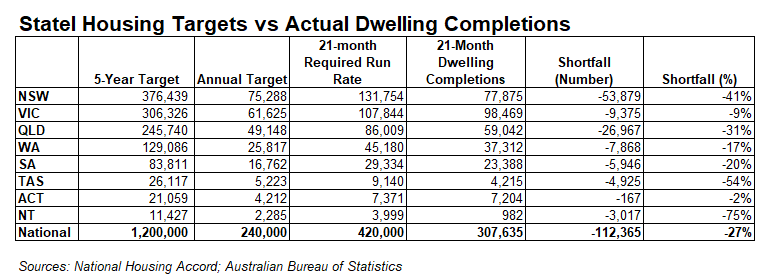
Australian housing construction is tracking 27% below target
The latest Statement of Monetary Policy (SoMP) from the Reserve Bank of Australia (RBA) warned that the recent house price correction, coupled with the federal budget’s investor tax changes, elevated interest rates, and rising construction costs, will hamper new home construction, limiting supply.
“While many housing builders continue to work through their existing pipelines, construction activity is expected to slow over the year ahead given lower sales volumes over recent months”, the RBA SoMP notes.
“Developers also note that sales momentum is softening, although demand for greenfield land continues to exceed supply in some regions. Contacts cite a range of drivers for this softer sales outlook, including higher interest rates and borrowing costs, elevated construction costs and the uncertain outlook for housing prices (in part due to tax and other policy changes)”.
“Demand conditions for construction and property development remain weaker in Victoria than other states”.
The federal budget argued that the changes to negative gearing and capital gains tax would boost new home construction because they target concessions at new builds over established homes.
However, the sharp correction in dwelling values, driven in part by the changes, is working against construction because it makes new developments harder to justify financially and scares off buyers.
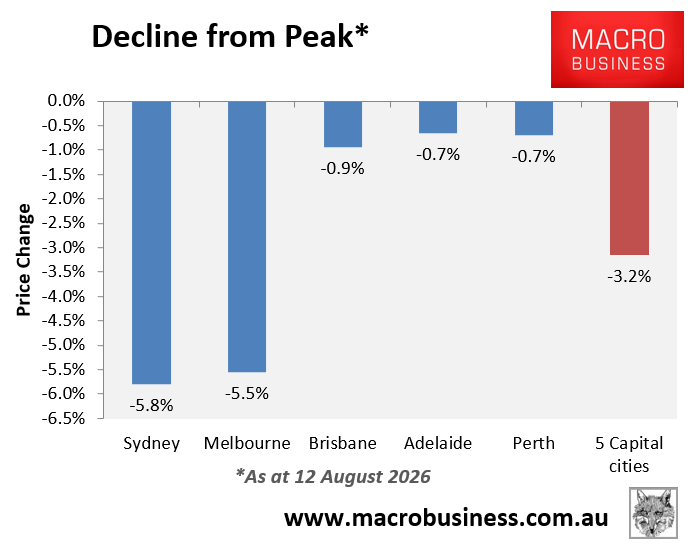
As noted by apartment developer Tim Gurner last week:
“Right now you’ve got sentiment problems, you’ve got debt problems, capital problems, construction issues”, Gurner said. “It’s never been harder to develop residential real estate. What we’re seeing in the market now with clearance rates and pricing, that’s not a fundamental real estate issue; that is purely a sentiment and sentiment of fear that has been created by the government”.
“It is saying directly to the government: your policies will limit supply. That’s as simple as that”, he said.
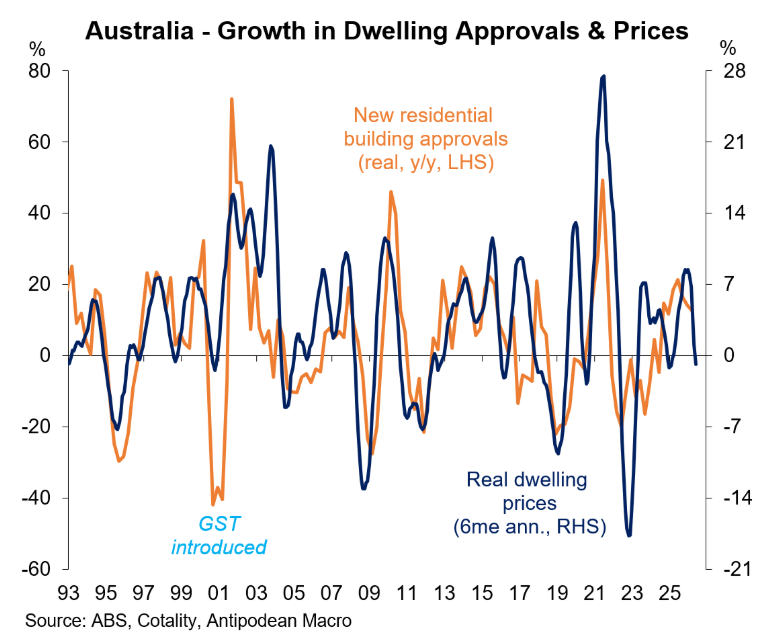
As illustrated below by Justin Fabo at Antipodean Macro, dwelling approval rates tend to correlate with prices. Therefore, the correction in values suggests that the rate of construction will slow.
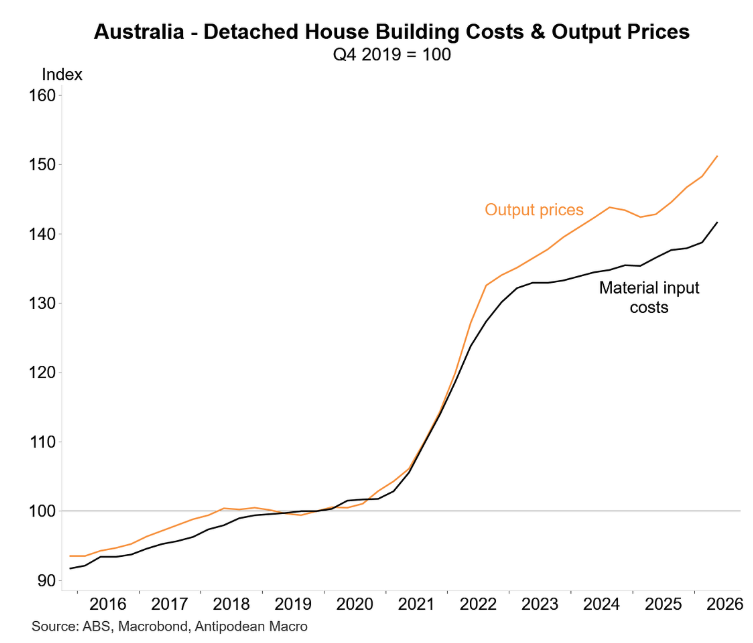
Add soaring costs – both labour and materials – and near-record insolvencies in the construction industry, and the macroeconomic conditions are unconducive to supply.
All of which is particularly unfavourable news for homebuilders and tenants, the latter of whom are desperately in need of more rental housing.