Last week’s economic data shook Australia’s interest rate markets.
To recap, the policy-relevant trimmed mean inflation printed at 3.6% in the year to July, above forecasts of 3.5%. The monthly and quarterly pace of trimmed mean inflation also accelerated.
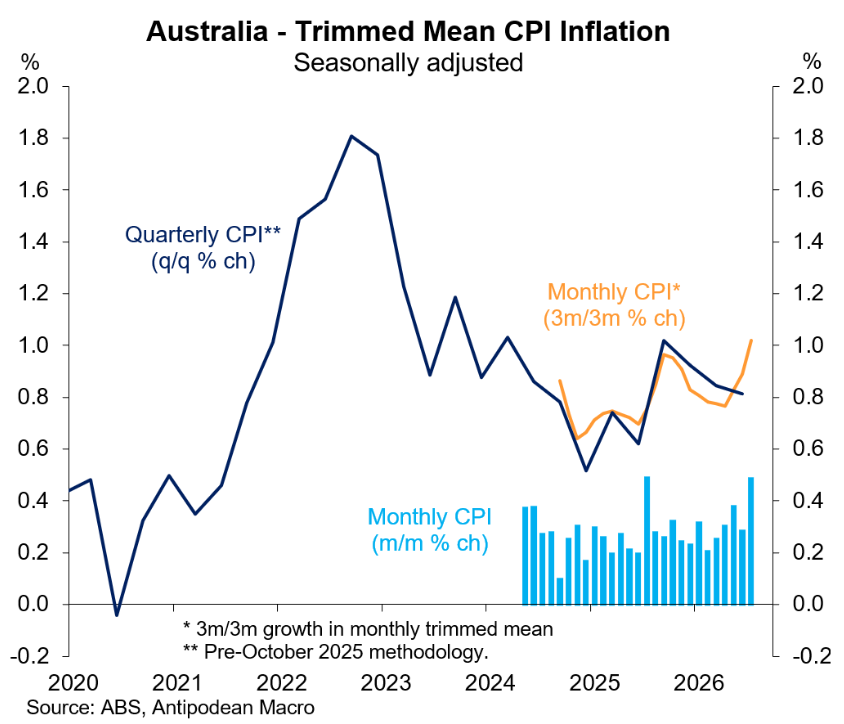
Chart from Justin Fabo at Antipodean Macro
Australia’s inflation is also primarily domestically driven, with market services inflation rising by 4.1% in the year to July and housing inflation rising by 5.0%.
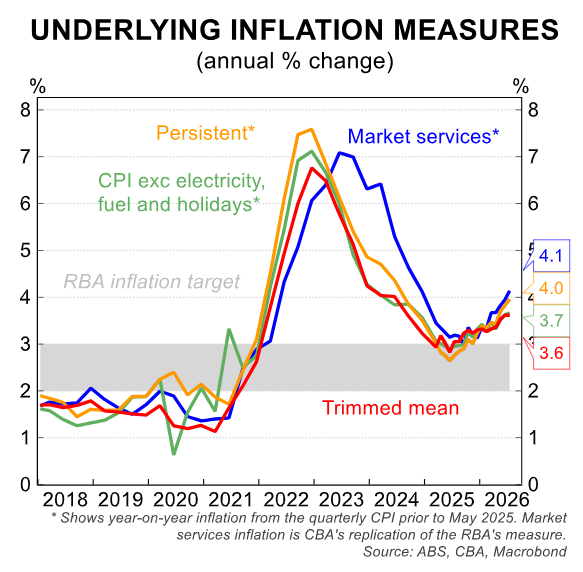
Chart from CBA
As a result, Australia now has one of the highest underlying inflation rates in the developed world.
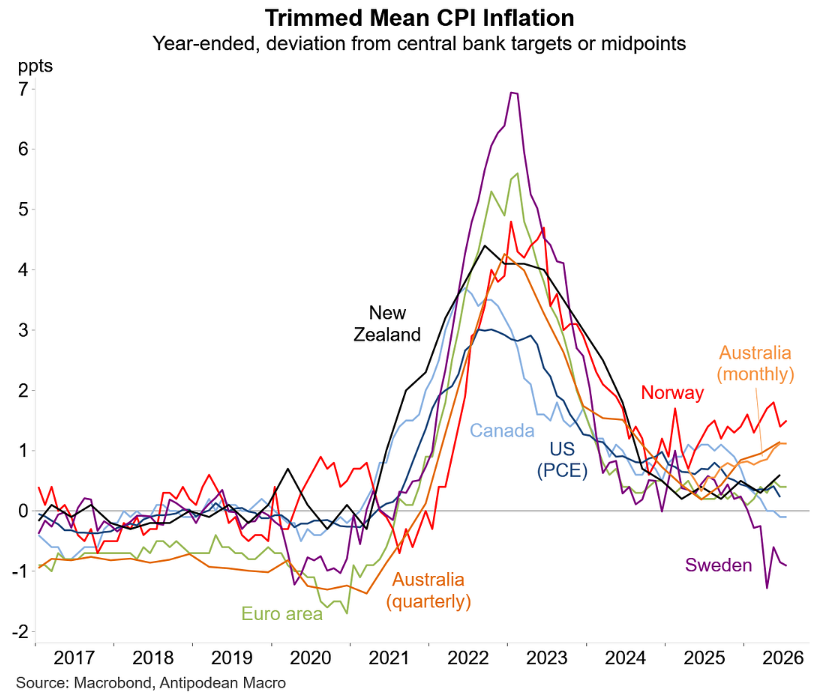
Chart from Justin Fabo at Antipodean Macro
To add further insult to injury, the Australian Bureau of Statistics on Thursday reported that household spending growth hit its highest rate since June 2023, with strong growth recorded across both discretionary and non-discretionary segments:
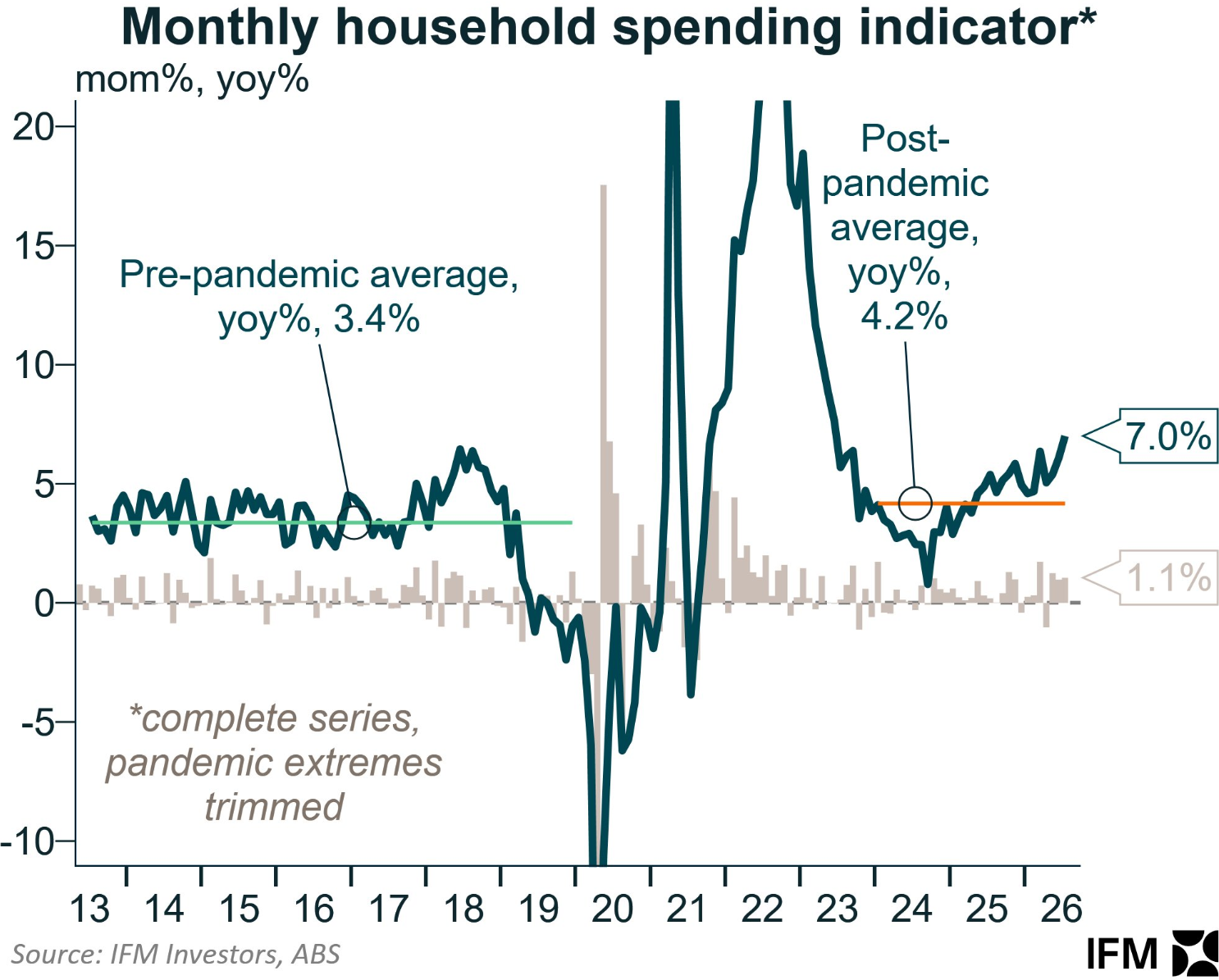
Chart from Alex Joiner at IFM Investors
Both sets of data would likely concern the Reserve Bank, particularly in light of its hawkish commentary in the minutes of the latest monetary policy meeting, which were released early last week.
As a result, financial markets and economists shifted to expecting further tightening.
As the CBA chart shows below, market pricing for the terminal cash rate had been stable near 4.5% since mid-June. The only exception was a brief spike in July as the Middle East conflict flared. Over that period, the data was evolving broadly in line with economists’ and the Reserve Bank’s expectations.
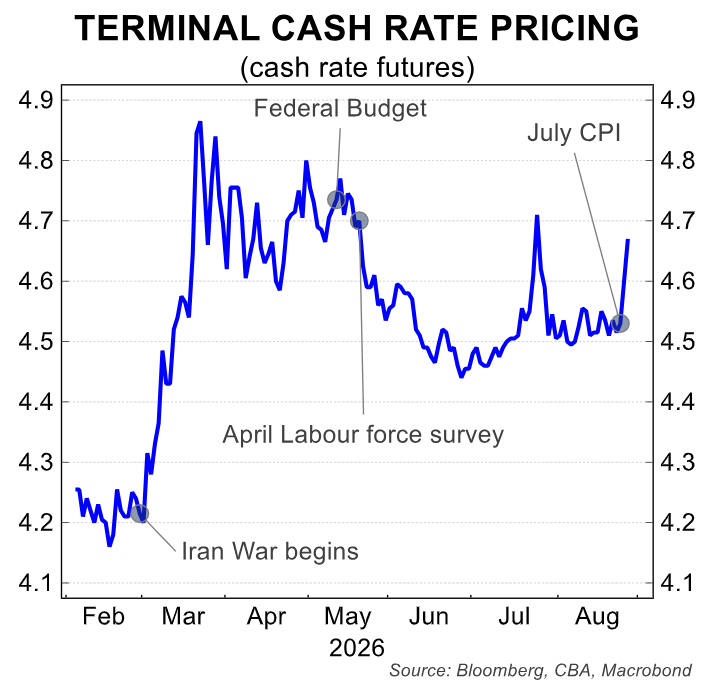
Chart from CBA
Many economists were tipping that the official cash rate would remain steady at 4.35% and that rate relief would arrive by mid-2027.
However, last week’s CPI shocker for July broke those expectations and signalled that inflationary pressures in the Australian economy remain too strong, warranting further monetary tightening.
Market pricing for the terminal rate has moved to around 4.7%, from around 4.5% before the release.
CBA, Goldman Sachs, and others now expect another rate hike at the Reserve Bank’s November meeting, although September’s meeting is also now considered “live”.
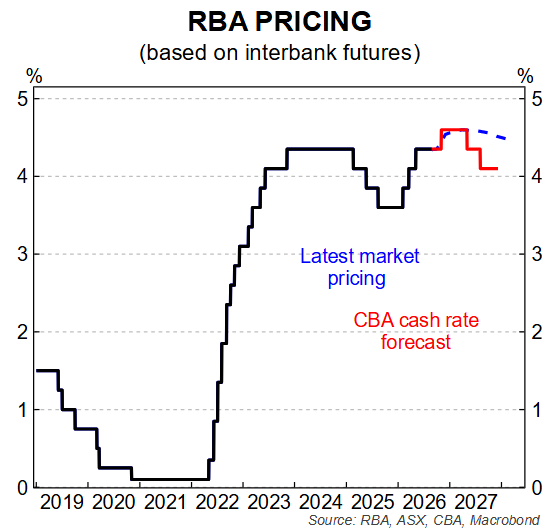
Chart from CBA
Further rate hikes, should they come to pass, would deal another hammer blow to the nation’s housing market, which is already facing its deepest price correction in more than 40 years.