Australia’s housing market has endured more than 25 years of demand-side policy stimulus in the form of home buyer grants, shared equity schemes, low-deposit schemes, and the like.
Every single time one of these policies has been implemented, they have added fuel to Australia’s housing bonfire and helped propel home values higher.
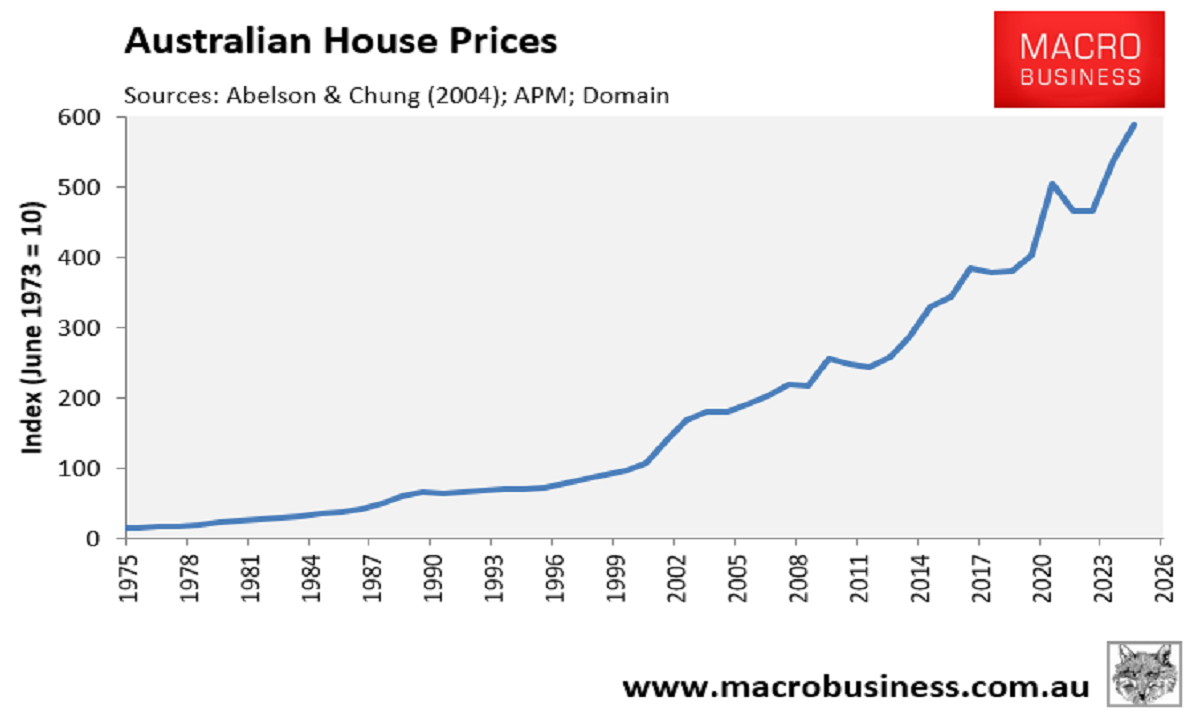
As a result, demand-side policy interventions are almost always self-defeating with respect to affordability, as they drive up property prices.
The latest example of this policy tomfoolery was the Albanese government’s expanded 5% home deposit scheme, introduced on 1 October 2025, which was marketed as an affordability measure.
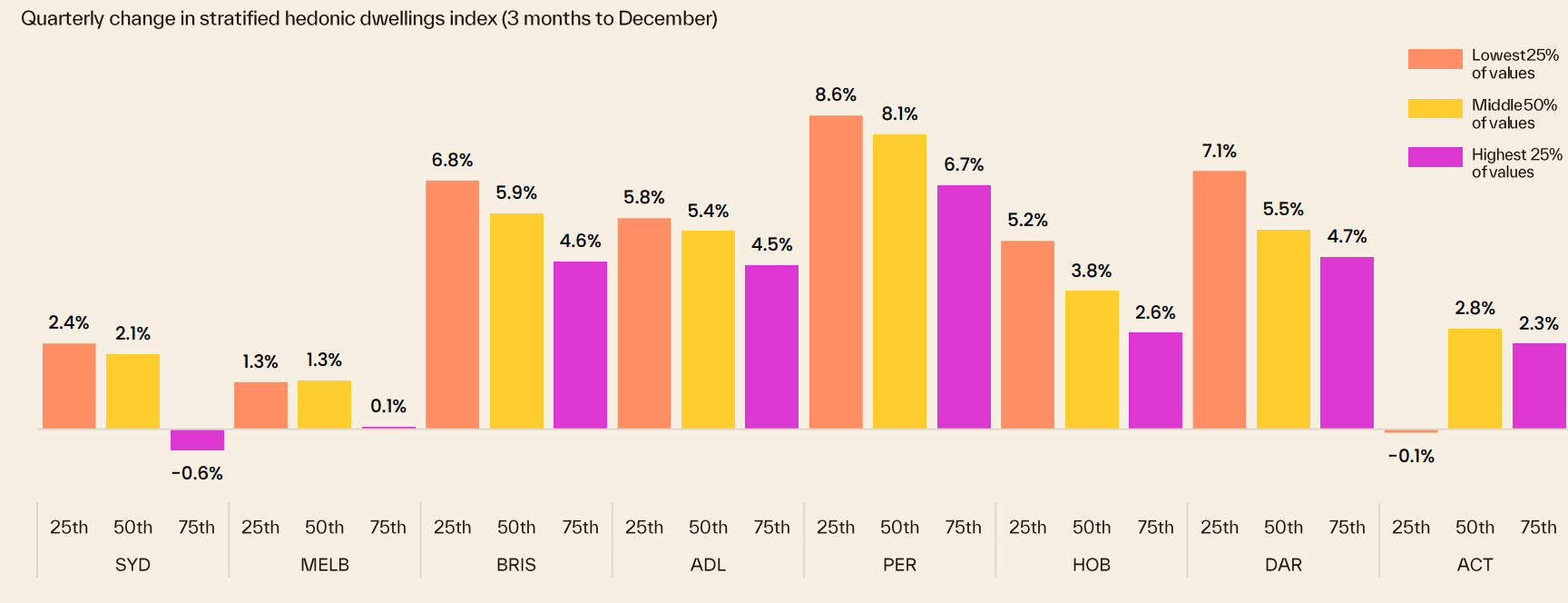
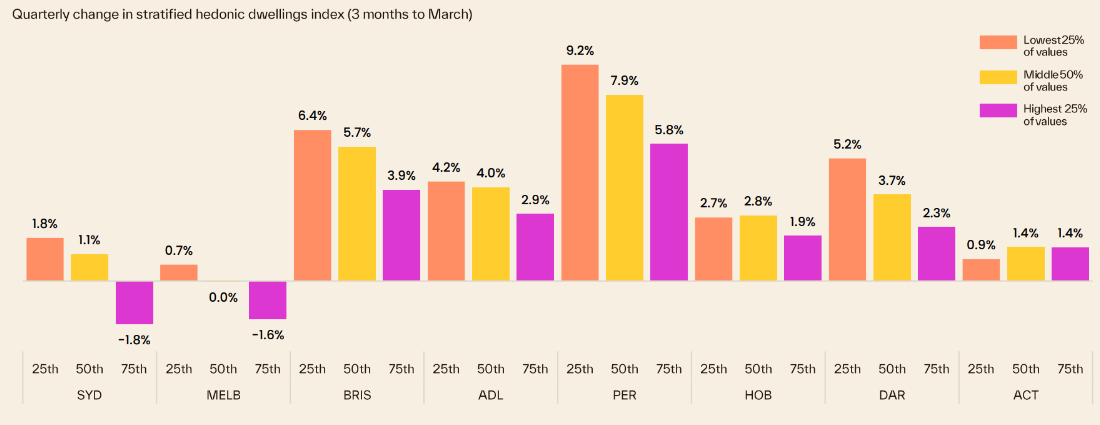
Cotality’s housing chart packs make it clear that prices for homes in the bottom 25% quartile, which are well within the 5% deposit scheme’s price caps, have risen the fastest since the scheme came into effect.
Cotality – 3 months to December 2025:
Cotality – 3 months to March 2026:
Cotality – 3 months to June 2026:
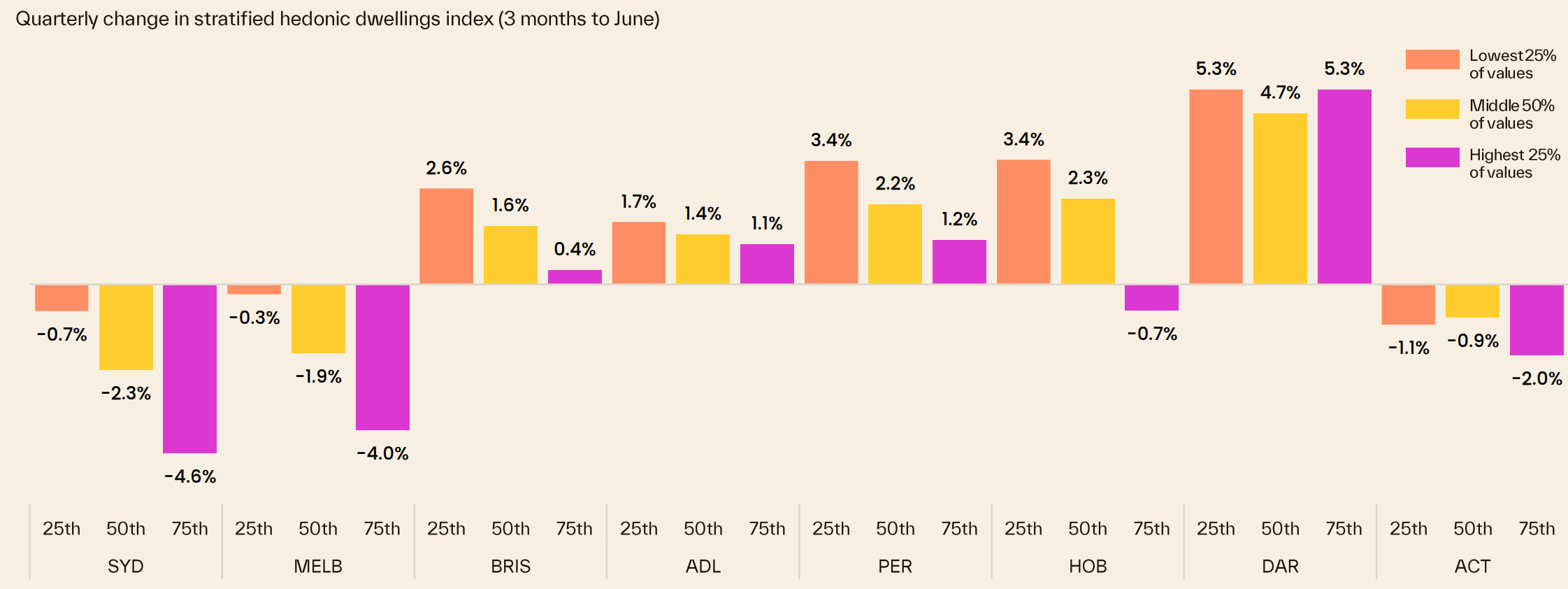
In contrast, the most expensive 25% of homes, which are outside of the price caps, have recorded the slowest price growth across all capital city markets except Darwin.
Not to be outdone, One Nation has proposed a taxpayer-funded “people’s bank” operating through Australia Post that would offer 5% fixed 30-year mortgages, well below current market rates of around 6.2%.
Under the proposal, borrowers would need only a 5% deposit, which could come from superannuation or a first‑home buyer’s grant.
One Nation proposes to fund the “people’s bank” by abolishing the $11.5 billion Housing Australia Future Fund.
UNSW’s Richard Holden lambasted the proposal, arguing that it could require 10–50 times more than $11.5 billion of funding because anyone paying more than 5% would refinance immediately.
This could shift half or more of all mortgage lending onto the government’s balance sheet.
Holden also argued that underpriced loans attract riskier borrowers, worsening default risk, and that governments are poorly suited to commercial credit assessment compared with private banks.
Challenger’s Jonathan Kearns warned that a 5% deposit means the government would absorb losses if prices fall, noting that downturns of 5–10% are common.
Australia’s history with state‑run banks (e.g., State Bank of Victoria, State Bank of SA) ended with multi‑billion‑dollar taxpayer bailouts.
Kean added that cheaper government mortgages would inflate demand, pushing prices higher, not lower.
Ultimately, the solution for unaffordable housing is lower prices, not more demand-side policy gimmicks that inflate demand, mortgage debt, and prices.
Policies like One Nation’s “peoples bank” will ultimately make the housing affordability situation in Australia much worse.