According to the Real Estate Institute of New Zealand (REINZ), New Zealand house prices have fallen for more than 4.5 years after peaking in late 2021.
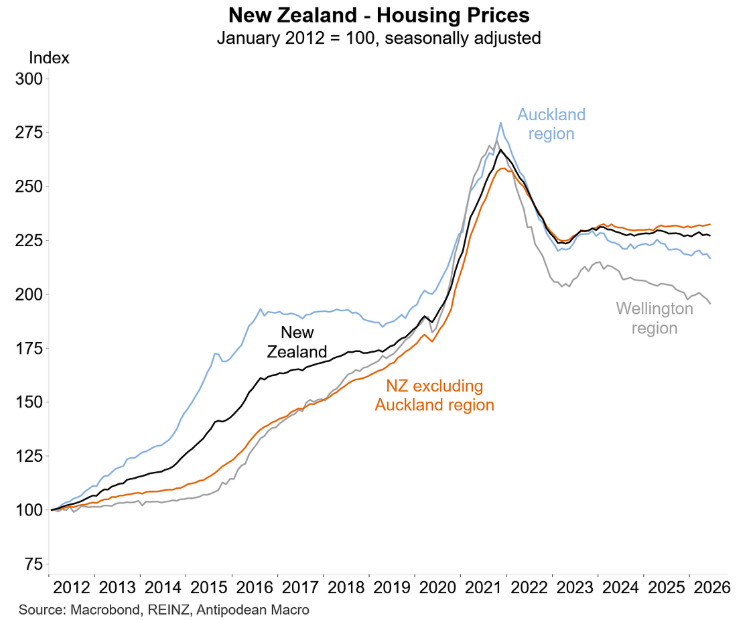
The REINZ reported that house prices declined another 0.3% in June to be down 0.8% over the year. June house sales also declined by 1% in June to be down 4% on the year.
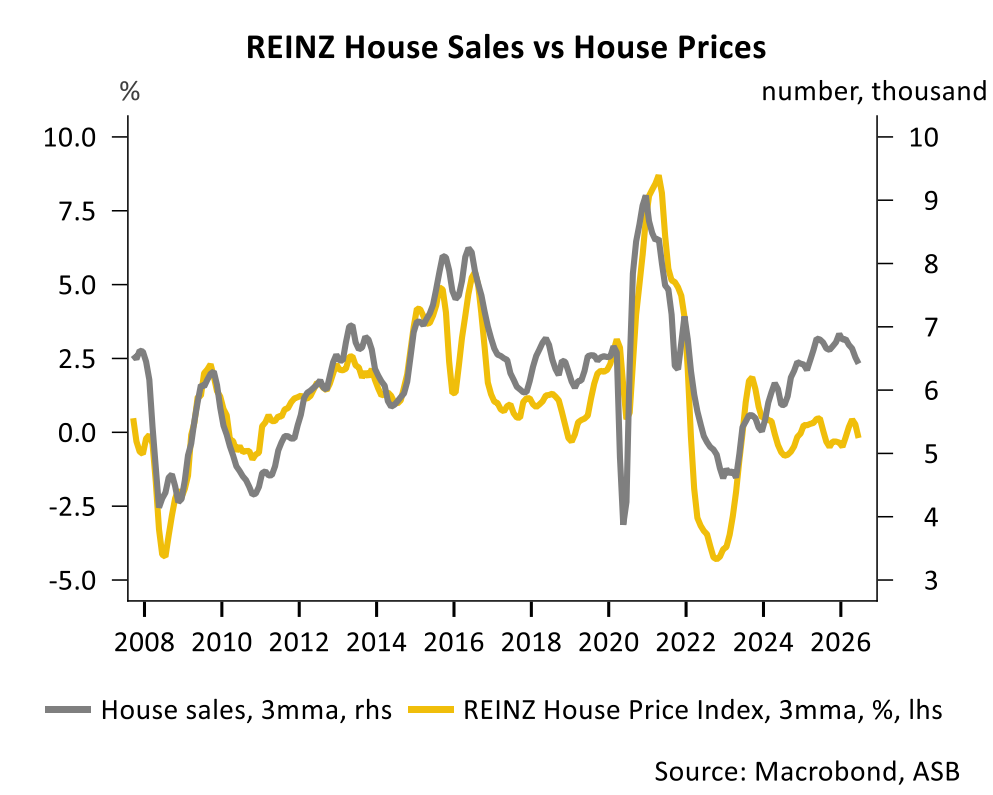
“Supply remains ample, with elevated stock, strong new listings growth and the median of days to sell at 45.5, well above pre-COVID averages, leaving buyers with plenty of choice and little urgency
to rush”, major bank ASB noted.
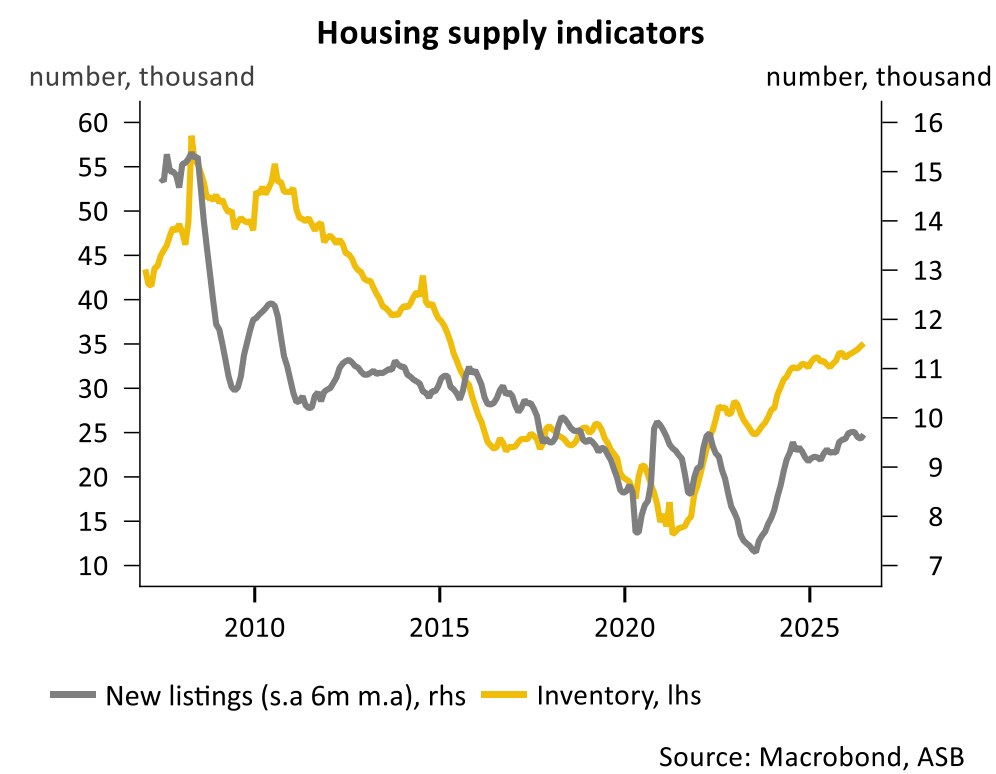
“We retain our view that it will, in aggregate, remain relatively dormant over 2026, with a non-negligible risk it could disappoint for a bit longer”, ASB said.
After experiencing one of the world’s largest price booms at the beginning of the COVID-19 pandemic, New Zealand has experienced one of the largest crashes since late 2021.
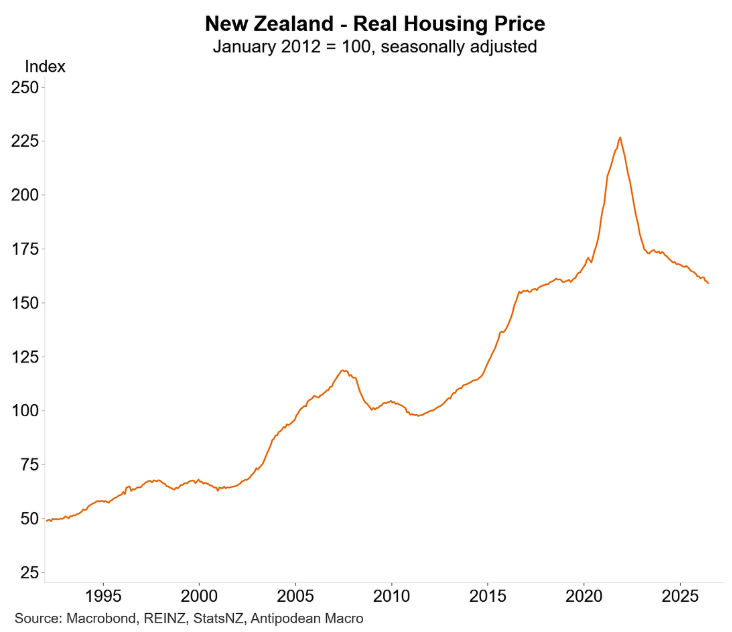
Indeed, according to Justin Fabo at Antipodean Macro, New Zealand house prices are now tracking at the same level as March 2018 in real inflation-adjusted terms:
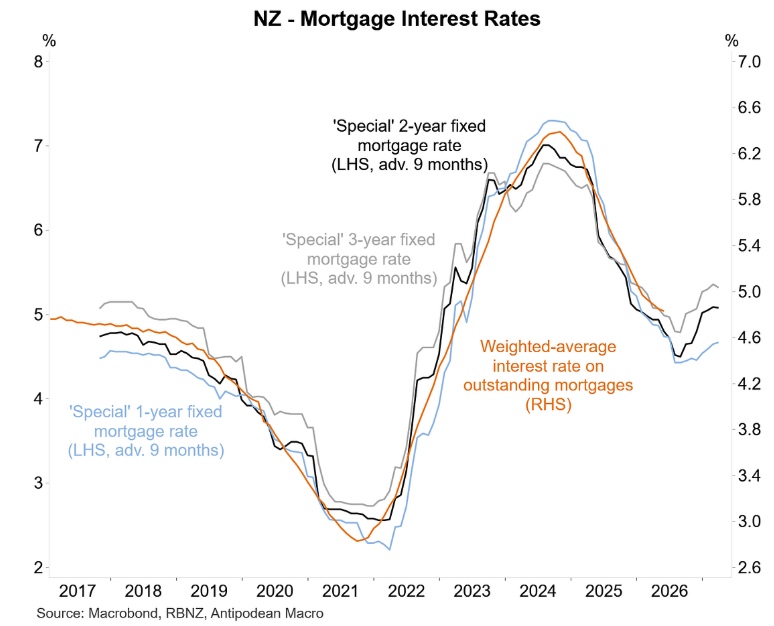
Mortgage rates in New Zealand have also declined sharply, meaning that the cost of purchasing and holding housing has fallen dramatically.
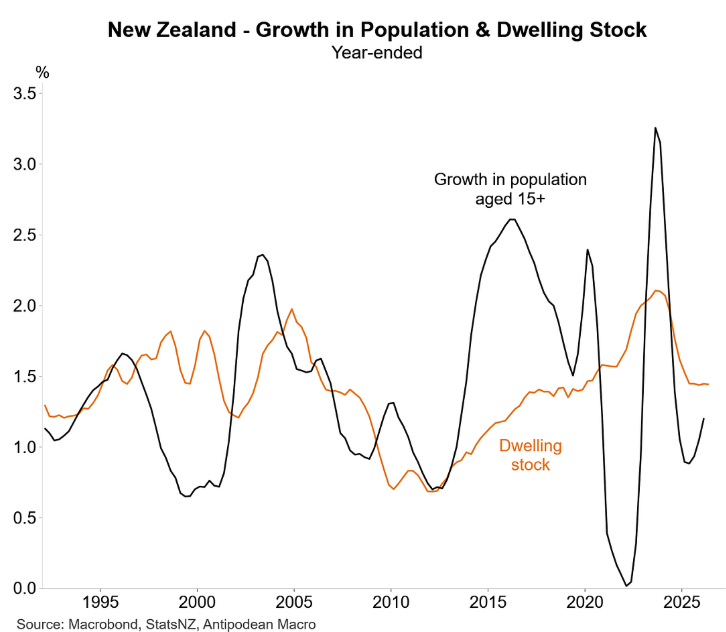
Meanwhile, the sharp decline in immigration into New Zealand has meant that new housing supply is growing faster than population demand.
As a result, rents in New Zealand have fallen, improving affordability for tenant households.
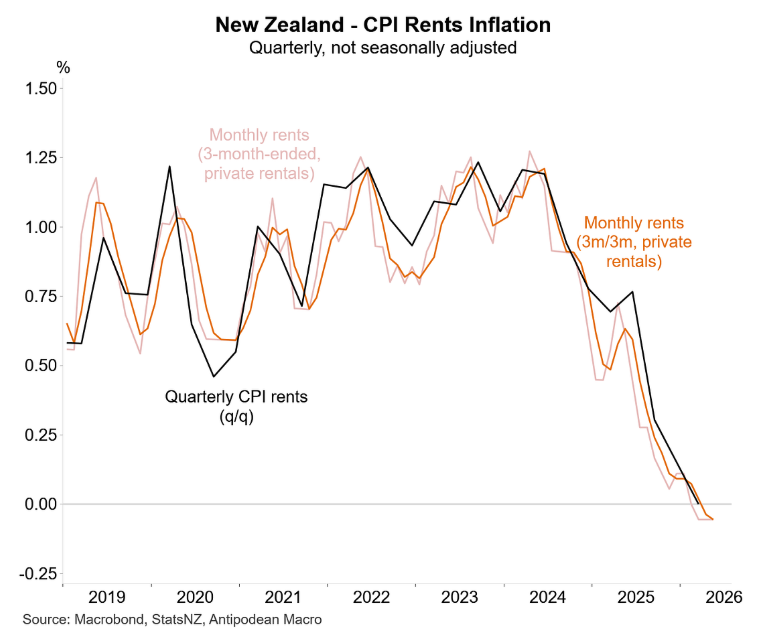
Therefore, while purchase and rental affordability have worsened in Australia, the situation has improved for buyers and tenants in New Zealand.