

With the release of the latest Cotality quarterly Rental Report, the dire state of the nation’s rental market has again been confirmed.
Nationally, the rental vacancy rate was 1.7%, remaining near all-time lows and showing less than zero progress in addressing the rental crisis since Cotality’s data from this time last year, when the vacancy rate was 1.6%.
Amidst this challenging environment, Cotality Australia Head of Research Gerard Burg noted that:
“With vacancy rates compressed so tightly, tenants are left with very little leverage,”
As a result, growth in asking rents has continued to accelerate, up to 5.9% in the June quarter from 5.7% in the first quarter of this year.
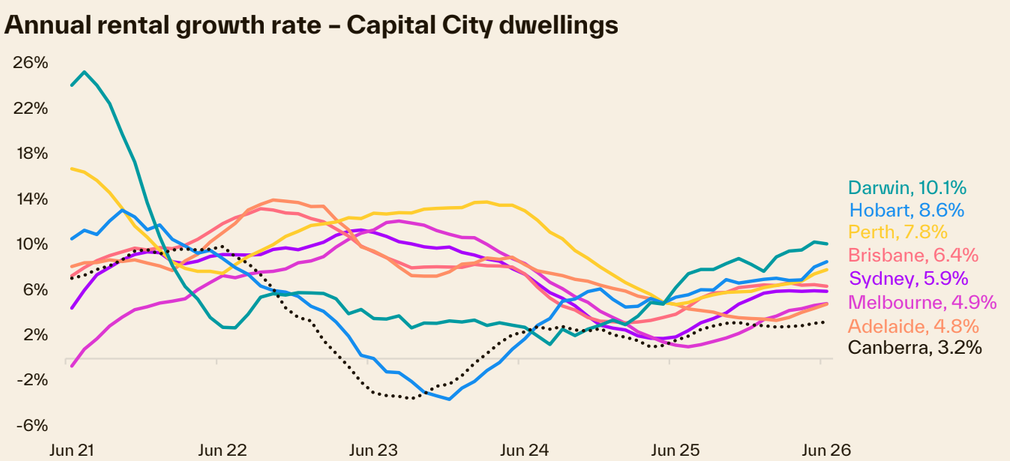
Unsurprisingly, with rental growth far outstripping wage growth, rental affordability has continued to deteriorate.
“We are seeing a profound shift in affordability across the market. In March this year, the typical household was allocating roughly one-third of their gross income to rent, compared to around 27% just five years ago,” Burg said
Amidst demand continuing to outstrip supply, whether based on the underlying numbers from the federal government’s National Housing Supply and Affordability Council (NHSAC) or private providers such as KPMG or HIA, the only significant progress toward better balancing housing supply and demand has come from household formation being crushed further.
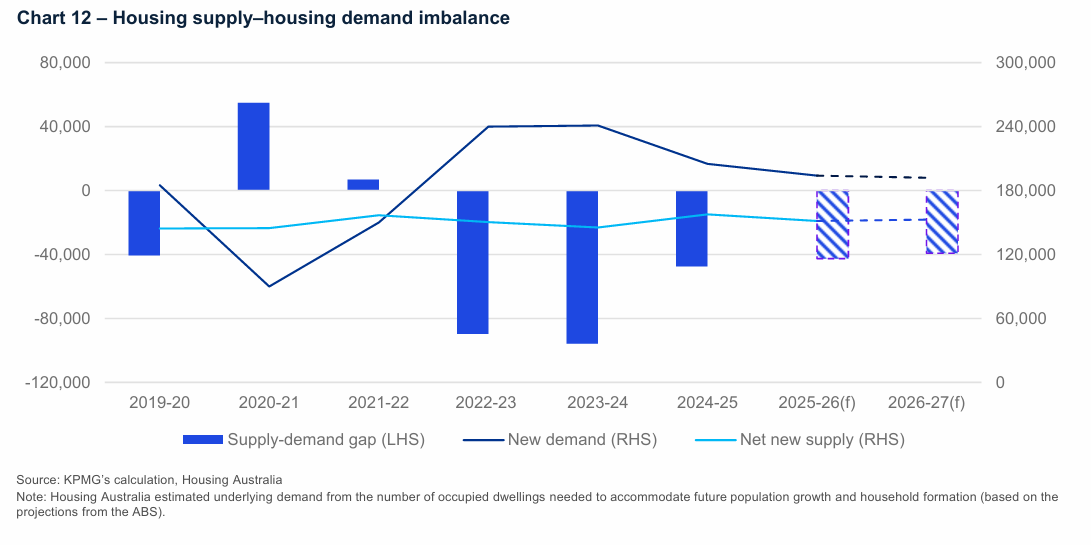
Source: KPMG
In the somewhat clinical words of NHSAC:
“Adults are increasingly living in larger households in response to affordability constraints, with high living and housing costs contributing to adult children staying in the parental home for longer.”
Or translated into more accessible terms, more Australians are banding together in order to afford or attain shelter in a deeply under supplied rental market.
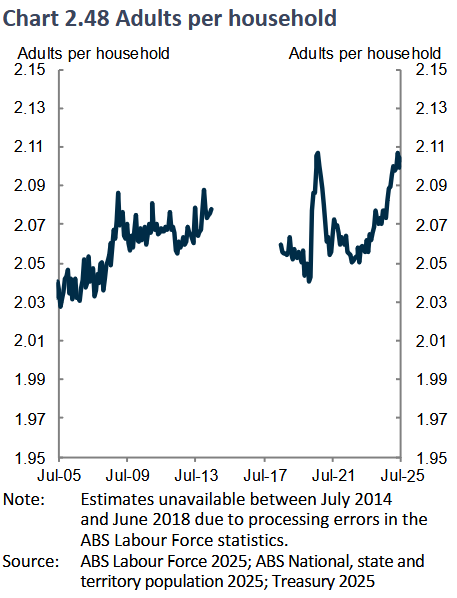
Chart: NHSAC
With the underlying economic settings broadly set to continue, the only major progress toward higher vacancy rates and lower rental growth is likely to come from continued downward pressure on household formation rates and households running out of scope to pay higher rents.
In the words of Cotality’s Gerard Burg:
“We are approaching a threshold where rental affordability acts as an increasing constraint on further growth, particularly in regional areas where lower median incomes mean households are spending upwards of 35% of their income on rent.”
Meanwhile, even if one takes the highly optimistic updated forecasts from NHSAC at face value, the next 4 years combined are expected to deliver fewer new homes than 2023-24 did.
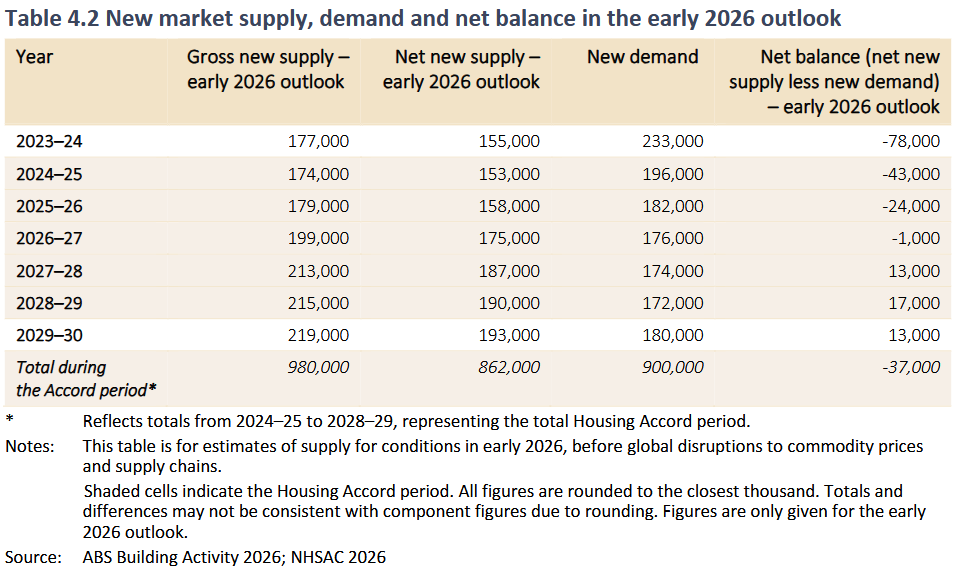
Ultimately, the Albanese government has pursued a collection of settings in which housing supply is completely unable to keep up with demand and outside of elements of the Canberra bubble, this is a well-established and known fact.
