The single most significant problem facing the Australian economy is low productivity growth.
Australia’s labour productivity growth has ranked among the poorest in the OECD over the past decade and has barely increased since then.
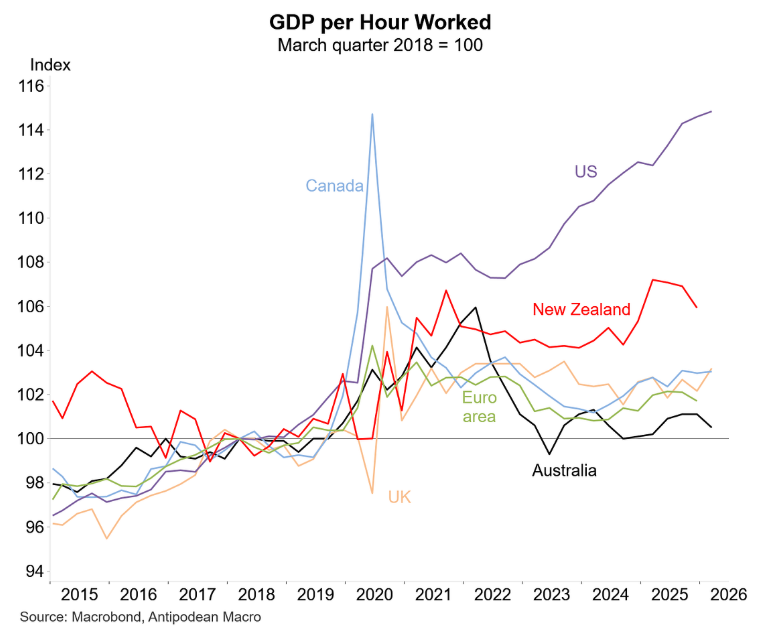
Chart by Justin Fabo at Antipodean Macro
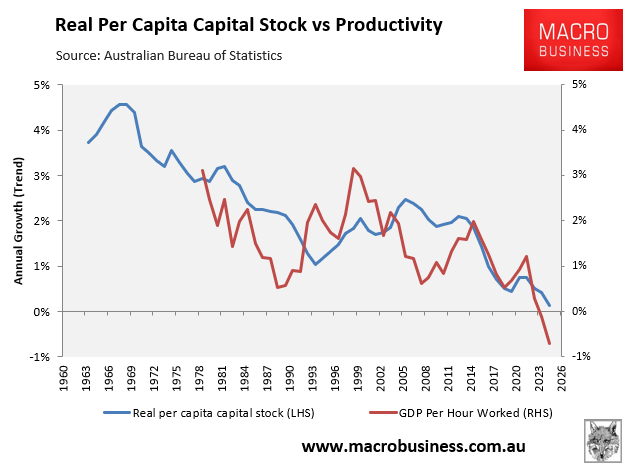
Part of the reason for Australia’s poor productivity growth relates to so-called ‘capital shallowing’ – i.e., the nation’s population has expanded quicker than business, infrastructure, and housing investment, thereby resulting in less capital investment per worker.
Part of the productivity problem also relates to the explosive growth in the non-market sector, driven in part by the expansion of the NDIS, where labour productivity hasn’t grown for 25 years:
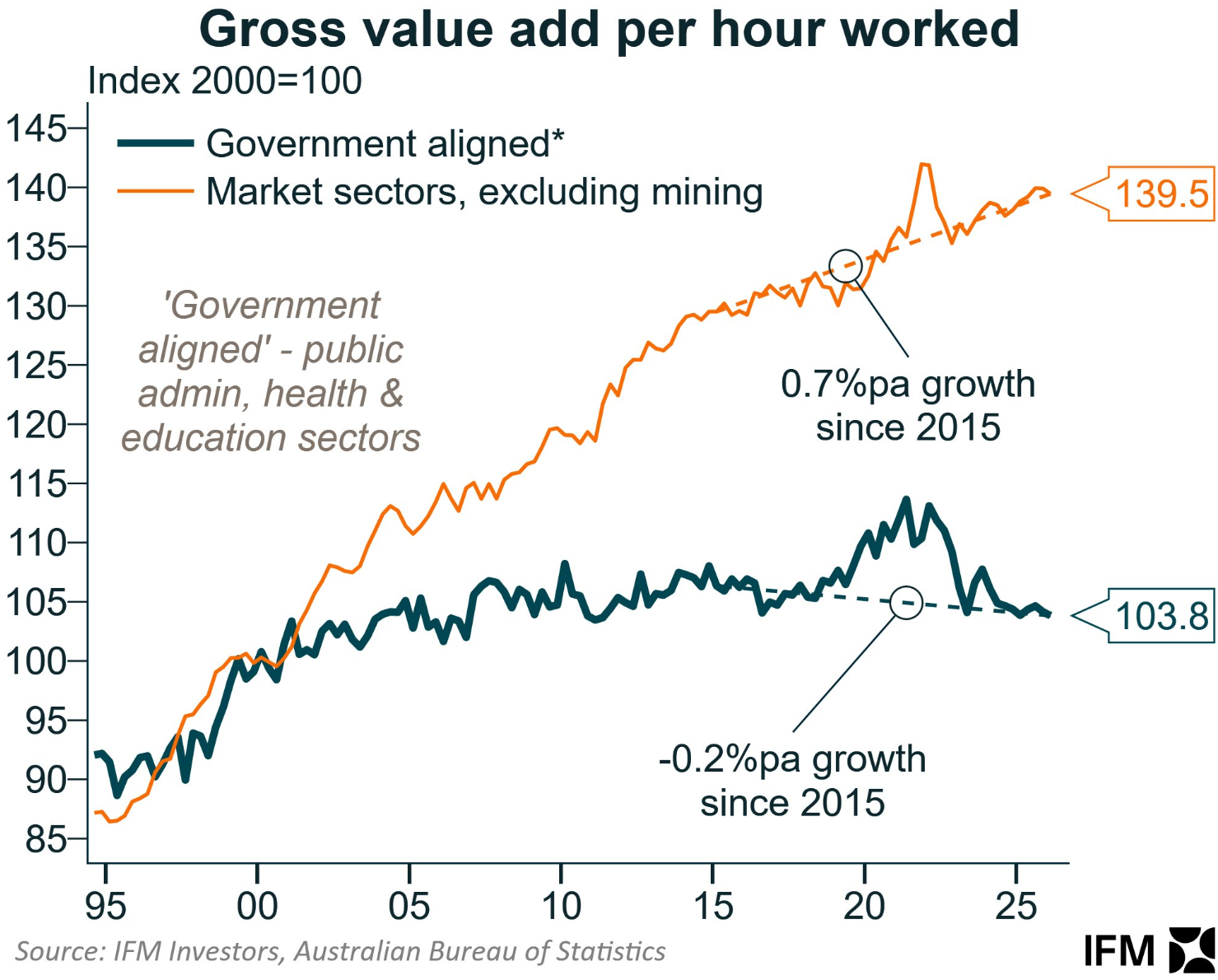
Chart by Alex Joiner at IFM Investors
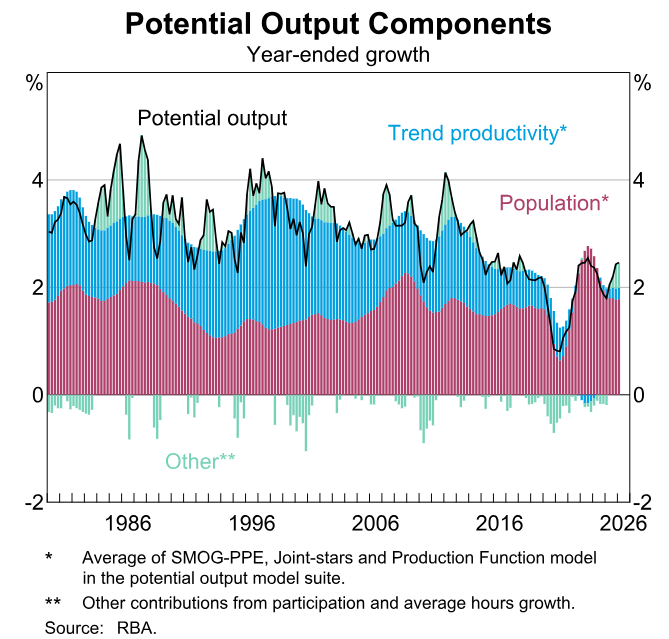
The upshot is that, with Australia’s productivity growth so poor, the economy has become increasingly reliant on population growth via net overseas migration to drive GDP growth.
Last week’s speech from RBA Assistant Governor (Economic), Sarah Hunter, contained the following chart showing how population growth has become the economy’s main growth driver, replacing productivity growth:
This impact is also illustrated in the below chart showing the trend collapse in per capita GDP and labour productivity growth as the immigration rate has increased:
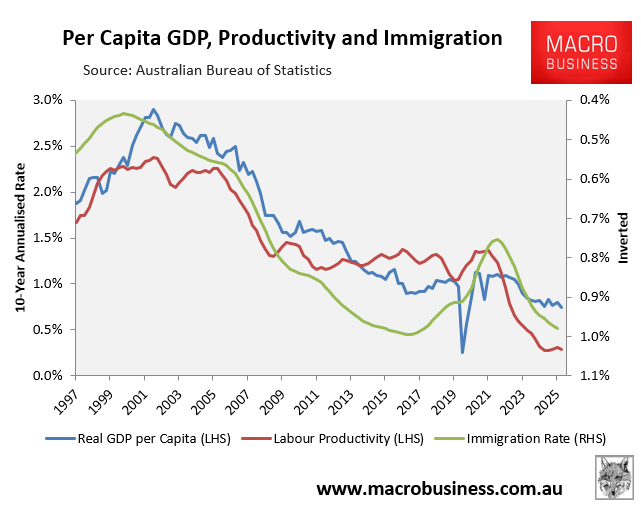
The reality is that the Australian Treasury’s “Three Ps” of productivity, participation, and population have largely been replaced by “One P”: population growth through immigration.
As a result, per capita growth and living standards are stuck in the low growth zone and won’t improve until productivity does.
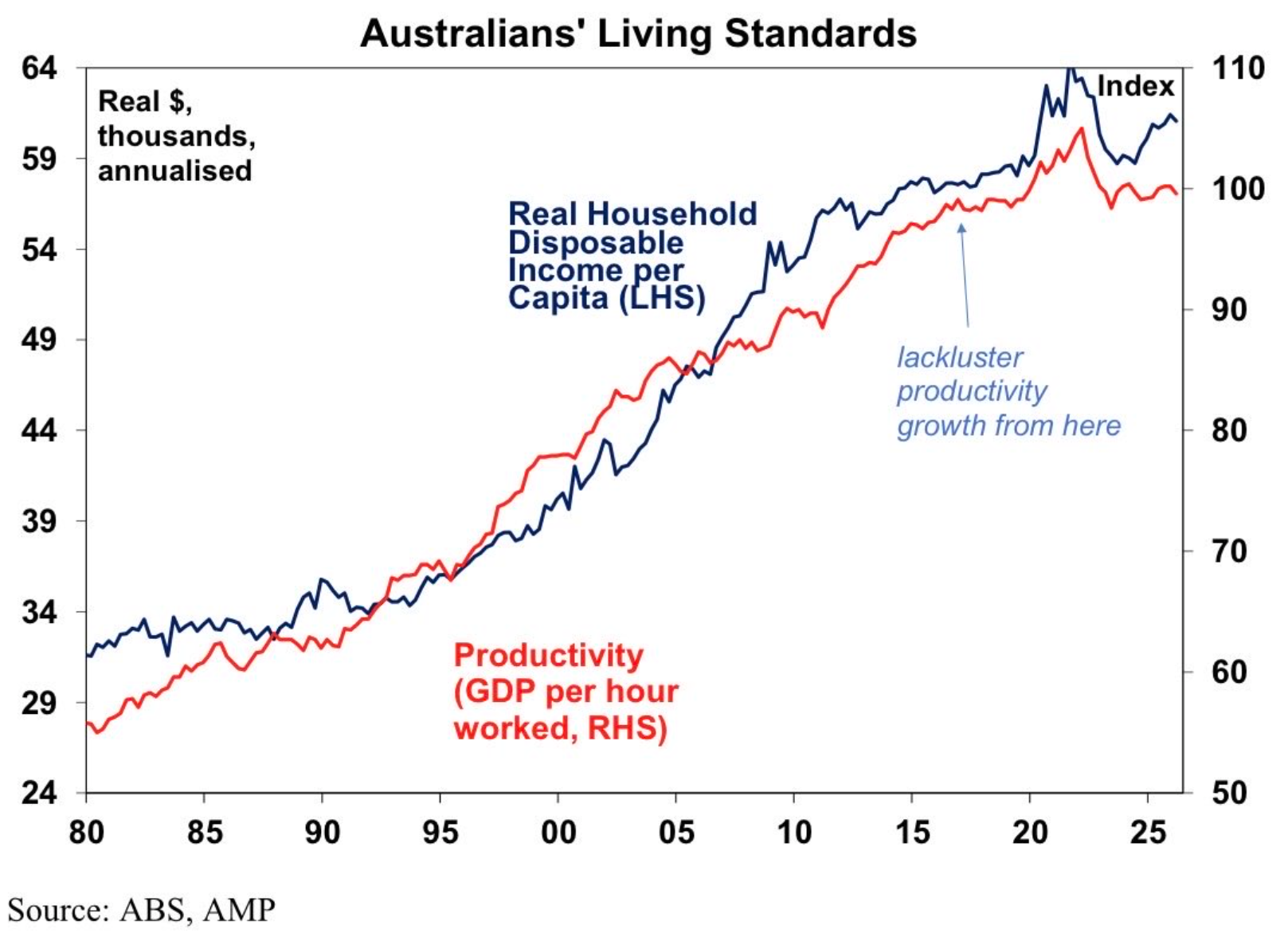
Chart by Shane Oliver at AMP
The federal government can create the illusion of growth by running a high immigration policy.
However, doing so will only worsen the living conditions of regular Australians, who will have to compete harder for housing, infrastructure and services.