Australian housing affordability continues to deteriorate amid rising mortgage rates and rents.
However, the polar opposite is occurring in Canada, where home prices and rents are declining, and mortgage rates remain below their recent peak.
Canadian purchase affordability continues to improve:
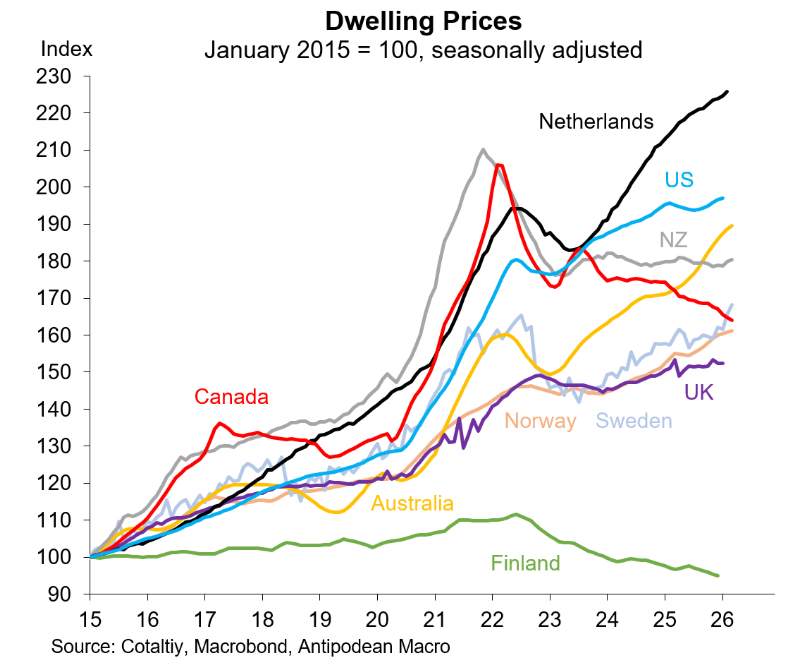
The following chart from Justin Fabo at Antipodean Macro shows that Canadian home prices have declined by around 20% from their recent peak:
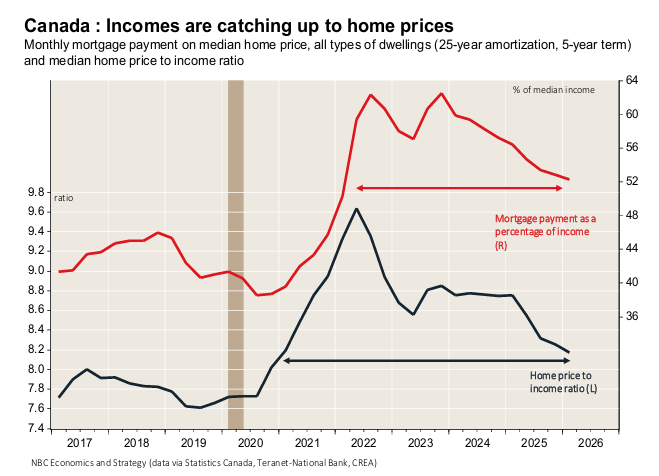
The National Bank of Canada noted in its latest weekly economic update that housing affordability has improved for a record nine consecutive quarters, with average mortgage payments relative to incomes falling to their lowest level in four years:
However, at 52.3% nationally, mortgage payments relative to incomes remain expensive, especially in Vancouver and Toronto:
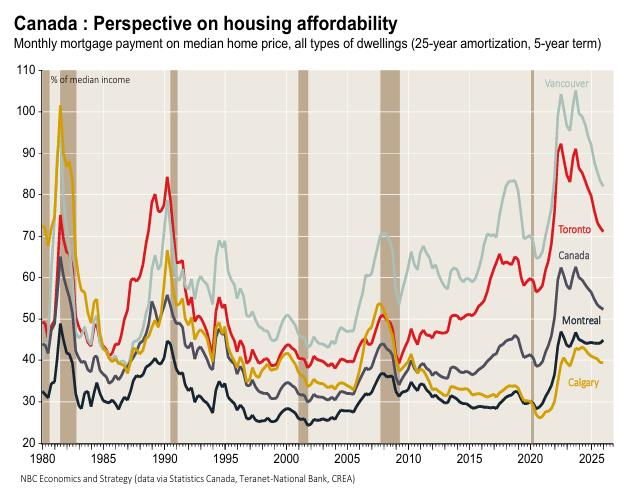
“Interest rates have been a key factor in improving affordability since Q4 2023, falling seven times on a quarterly basis”, the National Bank of Canada notes.
However, it also states that “there is no doubt that the population contraction in the three largest urban centers” is also contributing to the weakness in home values.
“Meanwhile, incomes continued to grow at a healthy pace in Q1, accounting for most of the improvement in affordability during that quarter”, the National Bank of Canada wrote.
“On a quarter-over-quarter basis, wage growth outpaced house price growth. As a result, the house price-to-income ratio is at its lowest level since the first quarter of 2021. We expect this metric will continue to improve in 2026”.
Canadian rental affordability improves amid negative immigration:
Amid growing pressure on housing and infrastructure, as well as political backlash over high immigration levels, the centre-left Canadian Liberal government announced sweeping immigration cuts in October 2024 to “pause” population growth.
The measures include reducing annual permanent-resident targets, restricting international-student and temporary-worker admissions, and tightening asylum and border rules.
Canada cut its permanent residence targets from 500,000 to 365,000 by 2027.
Canada has set specific targets for NPRs, including international students (where reductions are most substantial) and temporary foreign workers.
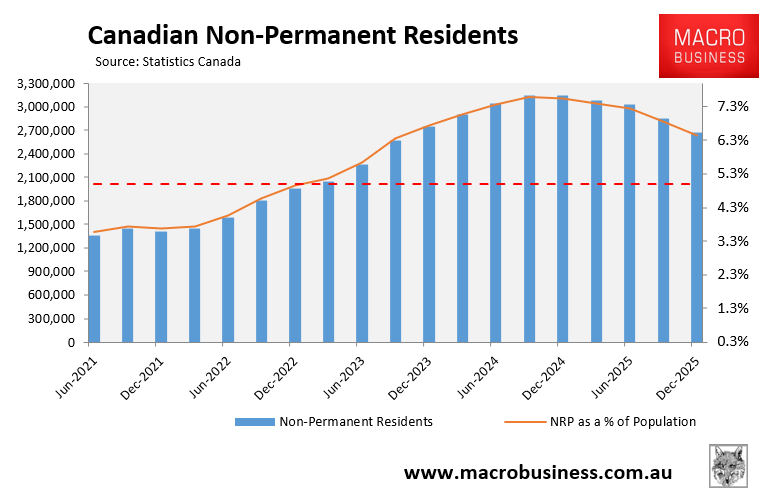
By the end of 2027, NPRs are forecast to make up about 5% of the Canadian population, down from 7.6% at their peak.
Canada’s immigration reforms have proven extremely effective.
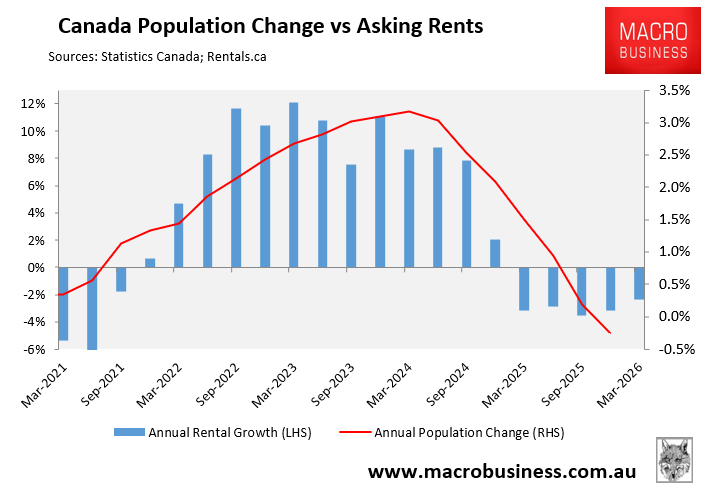
The Canadian population declined by 100,000 (0.25%) in the 2025 calendar year, the first reduction since records began in the Second World War.
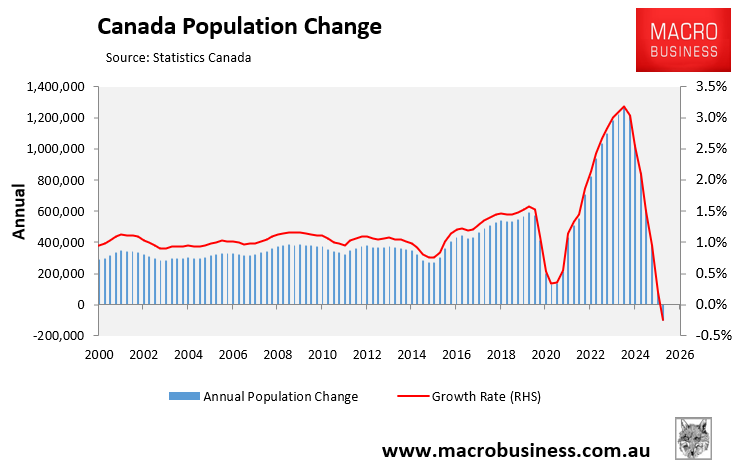
The stock of NPRs fell by about 462,000 in 2025, and their share of the population declined to 6.5%.
The impact on the rental market was immediate, with asking rents falling.
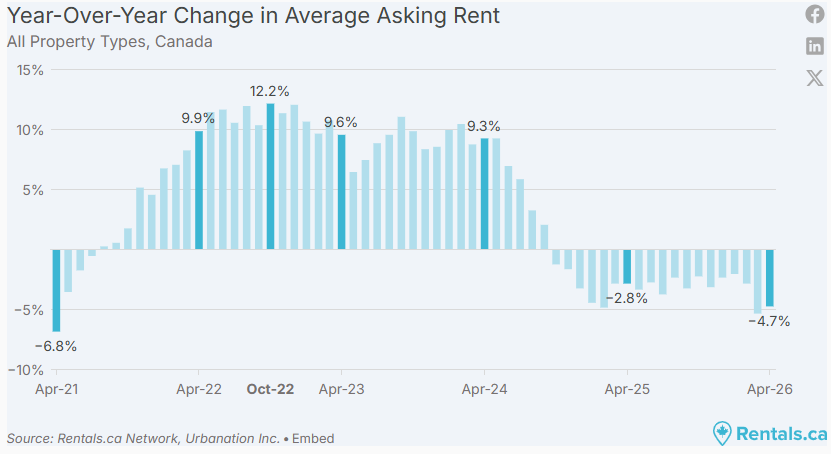
The latest data from Rentals.ca show that the average asking rent in Canada had fallen for 19 consecutive months in year-over-year terms, down 7.4% from April 2024:
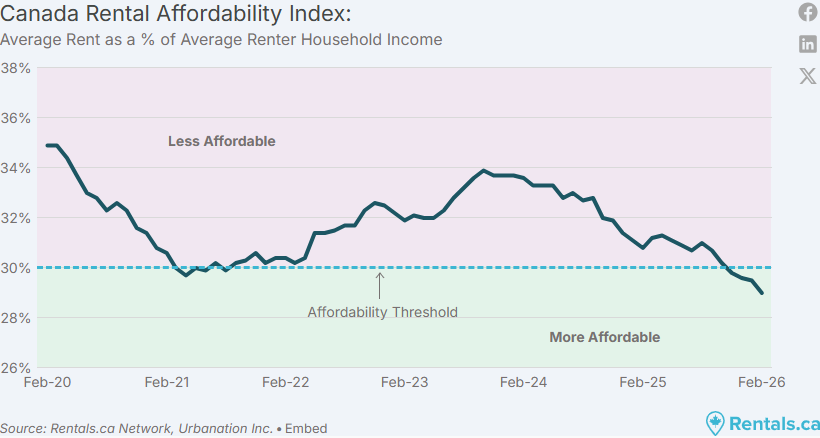
As a result, Canada’s rental affordability index has fallen below the standard 30% affordability benchmark:
There are clear lessons for Australia, which continues to suffer from its worst rental crisis in modern history amid historically high net overseas migration.