

As the world continues to attempt to come to grips with the loss of somewhere around 13 million barrels per day in oil, fuel and condensate supplies that normally transit the Strait of Hormuz, there has been an unexpected guardian angel acting in the world’s favour and at its own expense: China.
Instead of attempting to get its hands on every available barrel of oil as it did during a supply crunch in 2021, Beijing has stepped back from the global oil import market and allowed oil flows into the Middle Kingdom to dwindle significantly.
According to figures from the Oxford Institute for Energy Studies, over the past 5 years, China imported an average of 11 million barrels per day in April.
Yet this April, when the crunch came, total crude arrivals fell to 9.3 million barrels per day.
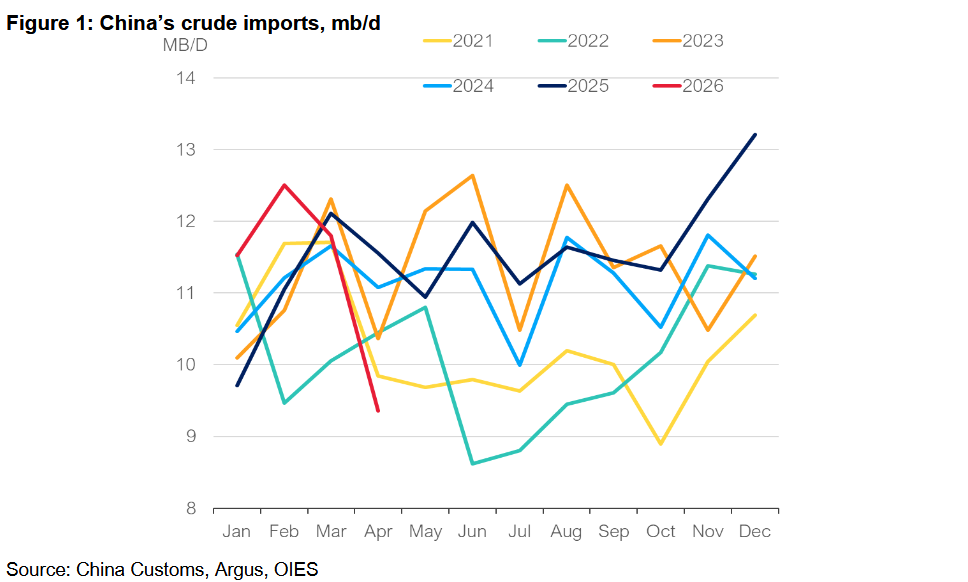
While the figures for the month of May are not yet entirely complete, data from logistics intelligence provider Kpler shows that seaborne flows of oil imports to China have fallen to 6.5 million barrels per day.
According to figures from commodity intelligence provider Argus, the loadings of Saudi oil exports heading to the Middle Kingdom are currently set for an all-time low for the month of June.
Which begs the question: how has China achieved this? How has it managed to slash its imports by potentially as much as 135 million barrels per month (4.5 million barrels per day) in May alone?
The Mechanics
This reduction in Chinese demand arguably has four major factors:
- The dramatic reduction in Chinese fuel and refined product exports
- China ceasing to build its commercial and strategic oil reserves
- The burning of commercial inventories of oil and fuel
- The ramp-up of the coal-to-chemicals industry
In terms of the reduction in fuel and refined products, that accounts for up to 1.2 million barrels per day in reduced oil demand, although some exports on a small scale have resumed in recent times.
According to estimates from the U.S. Energy Information Administration, China grew its oil reserves by an average 1.1 million barrels per day.
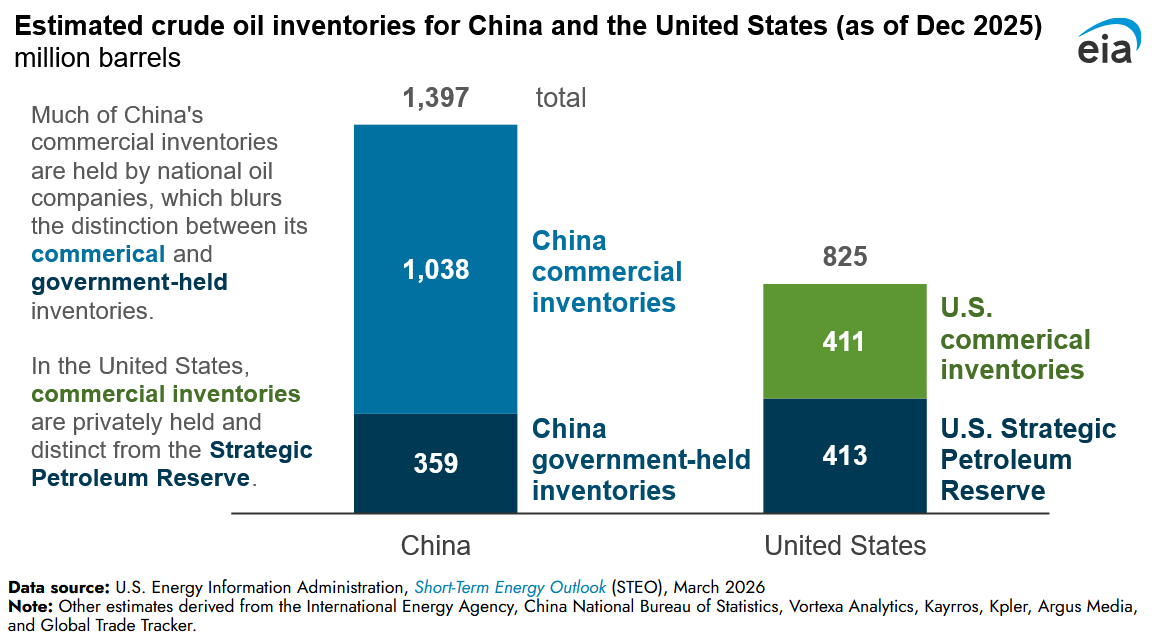
With this factor no longer in the mix, it is a relatively painless ~8.5% of the oil supply shortfall that is taken care of.
The more uncertain and murky factor in all of this is to what degree Chinese commercial inventories are being consumed, with potentially up to 66 million barrels a month being burned through based on the estimates of mitigation factors stated above.
Unlike most of the world, which relies on gas and oil to produce everything from naphtha for plastics to urea (fertiliser), China instead meets a sizeable proportion of demand for these vital chemicals through the coal-to-chemicals industry.
For example, according to recent estimates shared by Reuters, China secures as much as 80% of its urea from the coal-to-chemicals industry.
While this is a dirty and highly energy-intensive process, it allows the Middle Kingdom a level of self-reliance and energy security that would not be obtainable without it.
The Takeaway
For what reason China has taken on the role of balancing supply and demand within the oil market is unclear, but it is a major reason why the current crisis has not worsened significantly more swiftly than it has.
Along with jawboning from President Trump and the U.S. burning through its own reserves of fuel and oil to supply the world, it has instead driven something of an eerie hubris regarding oil.
The question that may have the future of the entire global economy riding on it is: will China continue to play this role, and if so, for how long?
There are already signs emerging that elements of the U.S. supply response injected oil and fuel into the global market are running out of scope, in particular in the case of diesel exports, so the pathway that Beijing chooses from here could make or break energy markets in the months to come if the crisis persists.
