Every month, the Albanese government’s target of constructing 1.2 million homes over five years, or 240,000 dwellings per year, slides further into fantasy land.
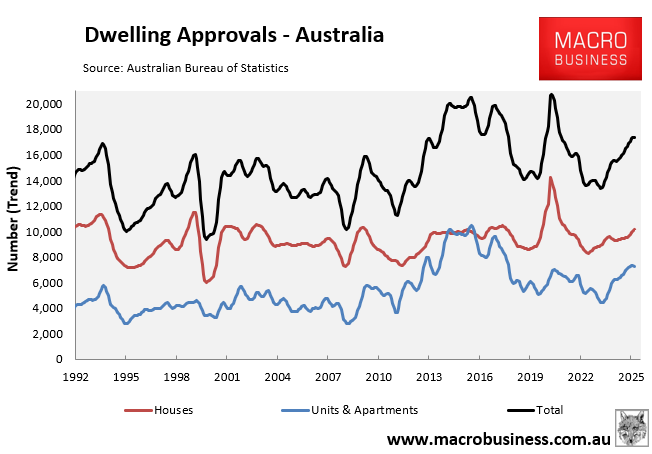
The Australian Bureau of Statistics (ABS) released housing approvals for April, which showed another 3.4% decline in approvals during the month in seasonally adjusted terms and zero growth in trend terms:
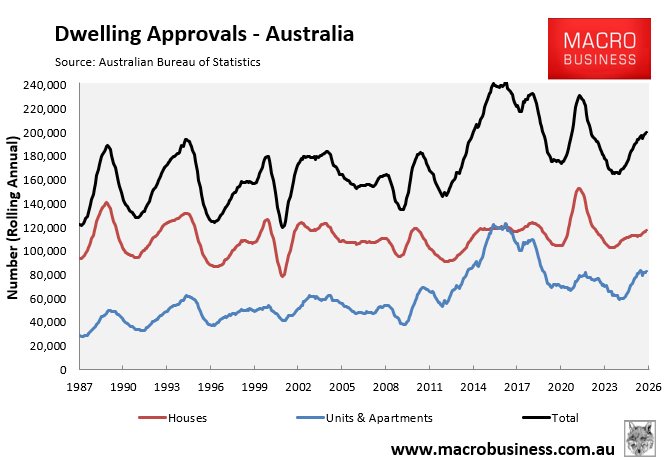
Over the year to April 2026, 200,423 houses were approved for construction, the highest figure since June 2022:
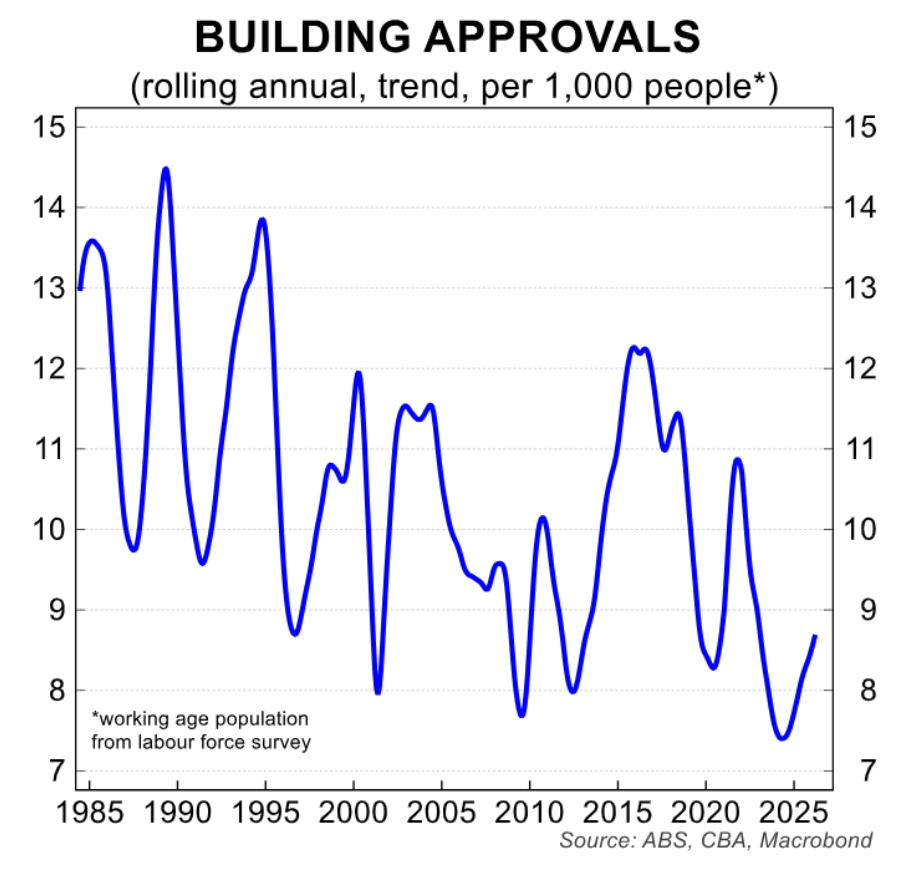
However, because of Australia’s rapid population growth, dwelling approvals per capita are tracking at historically low levels, according to CBA:
Despite the annual increase, dwelling approvals remain considerably behind the Albanese government’s construction target:
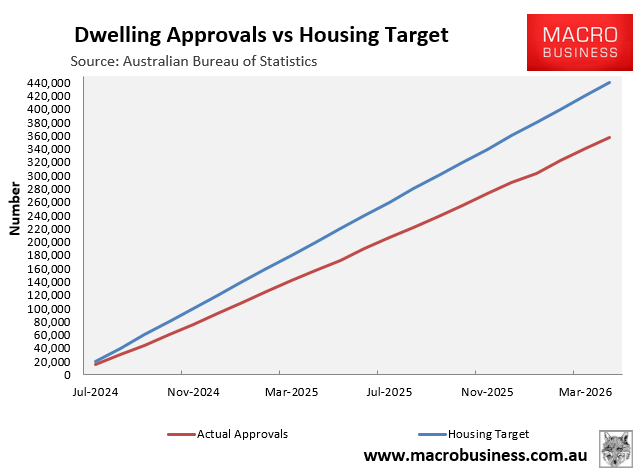
Over the first 22 months of the National Housing Accord, which began on July 1, 2024, 357,300 units were approved for construction, which is 82,700 (19%) fewer than the required run rate to reach the target.
However, just because a house is approved does not guarantee that it will be built. Over the last decade, dwelling approvals have outpaced completions by 4%.
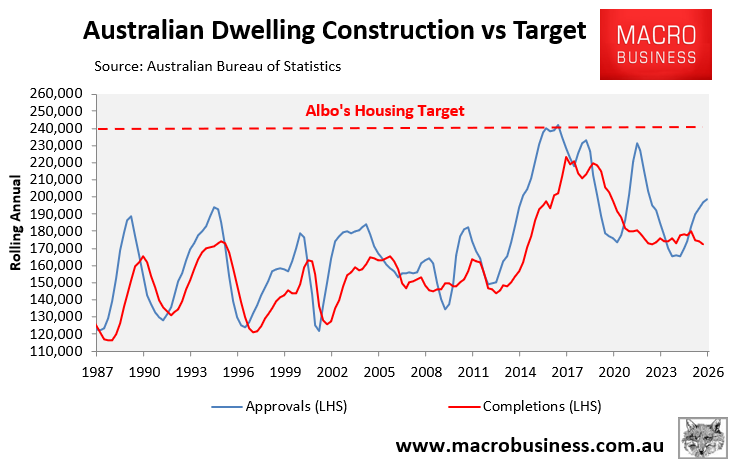
As a result, these numbers suggest that actual development will fall even further behind the housing target.
Furthermore, the structural increase in interest rates and energy prices is putting pressure on building costs and margins, which is likely to limit supply in the future.
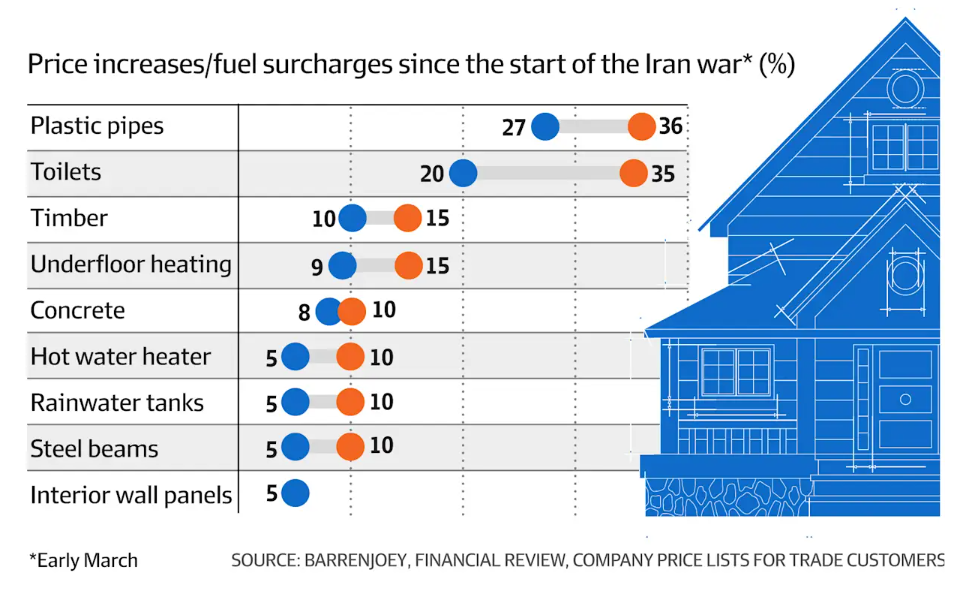
For example, Satterly Property Group predicted that the war in the Middle East could cause the cost of new homes to rise by up to $50,000.
Deicorp, a privately held Australian property development and construction company, recently warned that “feasible projects are now marginal, and marginal projects are now unfeasible” due to cost increases.
Various members of the building industry have also claimed that they are on the verge of bankruptcy as diesel and other input costs grow, reducing profitability.
Reflecting these cost pressures, CBA last month lowered its forecast for dwelling construction and now anticipates that completions will fall behind the 1.2 million target by 315,000 dwellings (i.e., 26%) by 2028-29.
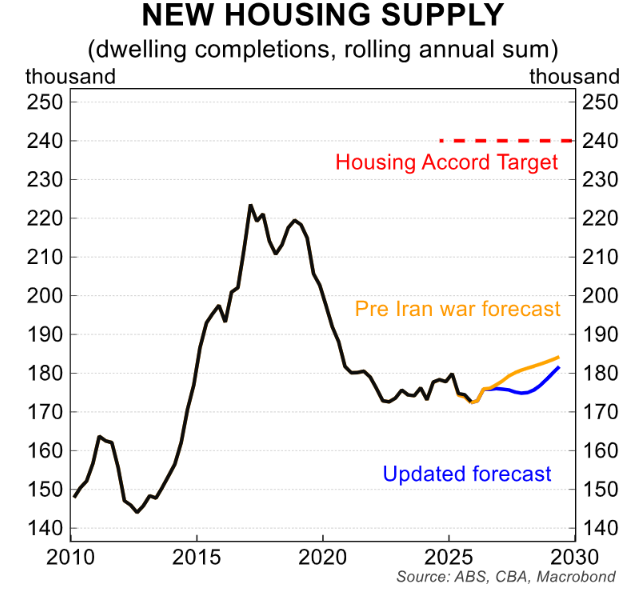
The economic reality is that the housing supply curve continues to shift leftward, meaning fewer homes will be built at higher prices.
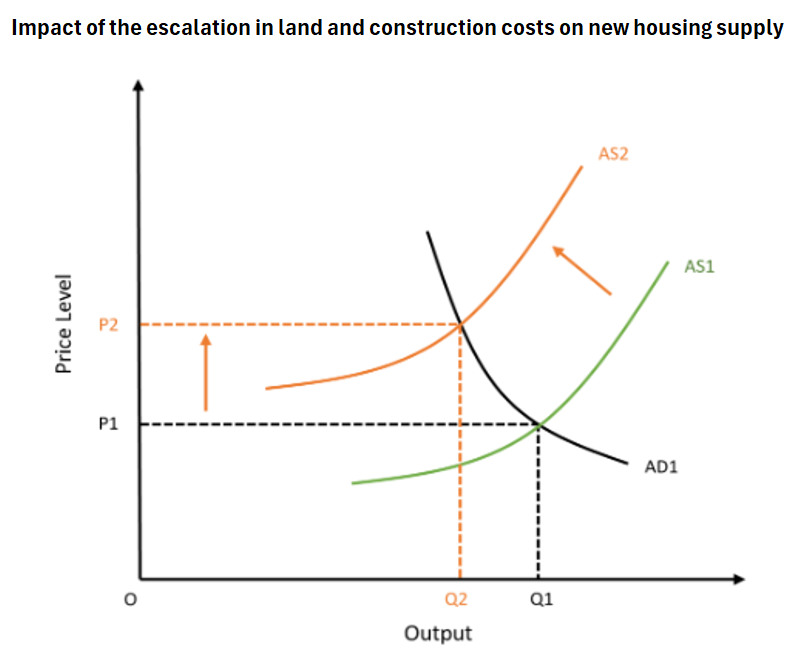
To reach equilibrium between supply and demand, the federal government must reduce immigration levels.
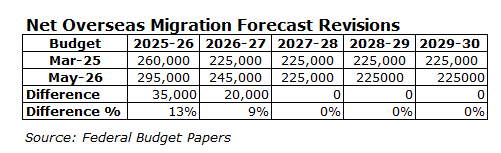
Instead, the latest federal budget increased the net overseas migration forecast by 55,000:
Increased housing demand from immigration and lower supply necessarily mean that the housing shortage and rental crisis will worsen.