

Earlier this month, it was reported that a 37-year-old woman in Wagga Wagga gave birth to twins in a makeshift homeless camp along the Murrumbidgee River.
After going into labour, an ambulance was called, and she was assisted by her partner and another resident of the camp.
One of the twins did not survive, with the mother and the second newborn taken to Wagga Wagga Base Hospital in a critical condition.
The two were later transferred to a hospital in Sydney.
The mother had been living in the homeless camp for five months, with the Sydney Morning Herald noting that state government agency Homes NSW had been in contact with the mother for several years and that she had previously used their housing services.
Around 34 people are living in homeless camps in the immediate area, with some having been there for over a year, establishing larger structures with privacy screens, off-grid power setups and even small gardens.
According to the latest statistics, there are almost 700 people on the social housing waiting list in Wagga Wagga, despite the city’s population of just over 69,000.
Currently, the waiting period for individuals considered a level 1 need, those in most critical need of help, is 4 years, while for others the wait is 7 years.
Wagga Women’s Health Centre president Vickie Burkinshaw stated that some on the waiting lists have lost hope due to long wait times and the challenges of applying for and retaining social housing.
“There are mini cities being built”.
“It shouldn’t have taken a death to get to this level of emergency because it’s been on a slow boil for years”, Burkinshaw said.
Homelessness Australia chief executive Kate Colvin was scathing about the issue, stating the underlying conditions have been building “for years”.
“The uncomfortable truth is that tragedies like this don’t come out of nowhere. They are the result of a housing system that has broken to the point that there is no safe housing or adequate support available, even for a mother with a newborn baby,” Colvin said.
Unfortunately Colvin’s assessment is absolutely correct; Australians have been hit by a double whammy of a falling share of public and social housing as a proportion of dwelling stock and a collapse in the rental vacancy rate.
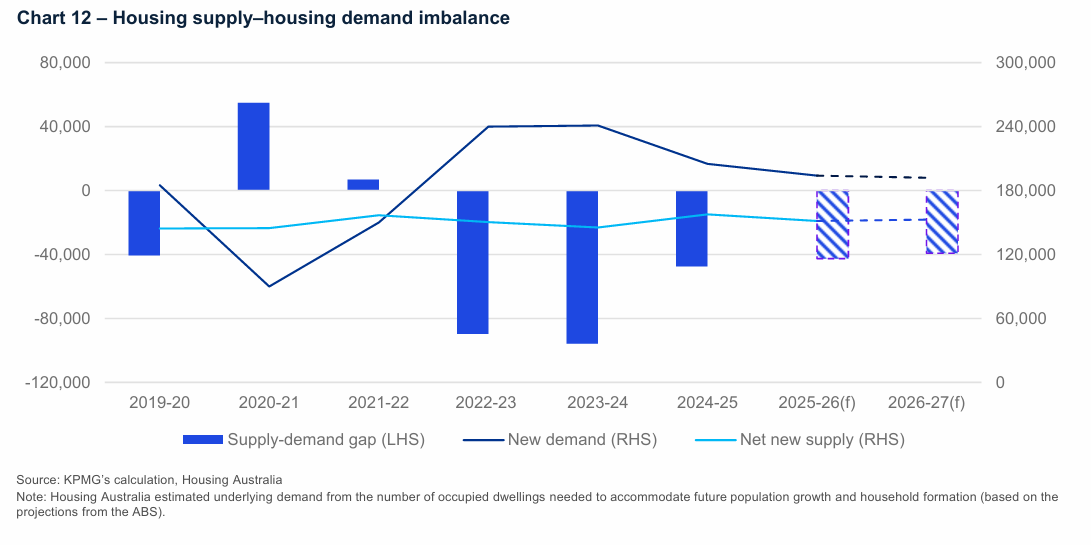
At an aggregate level this trend is illustrated by the chart below from KPMG, which reveals that despite cuts to migration from the absolute peak, even the current status quo is seeing the housing deficit currently growing at more than 40,000 homes per year.
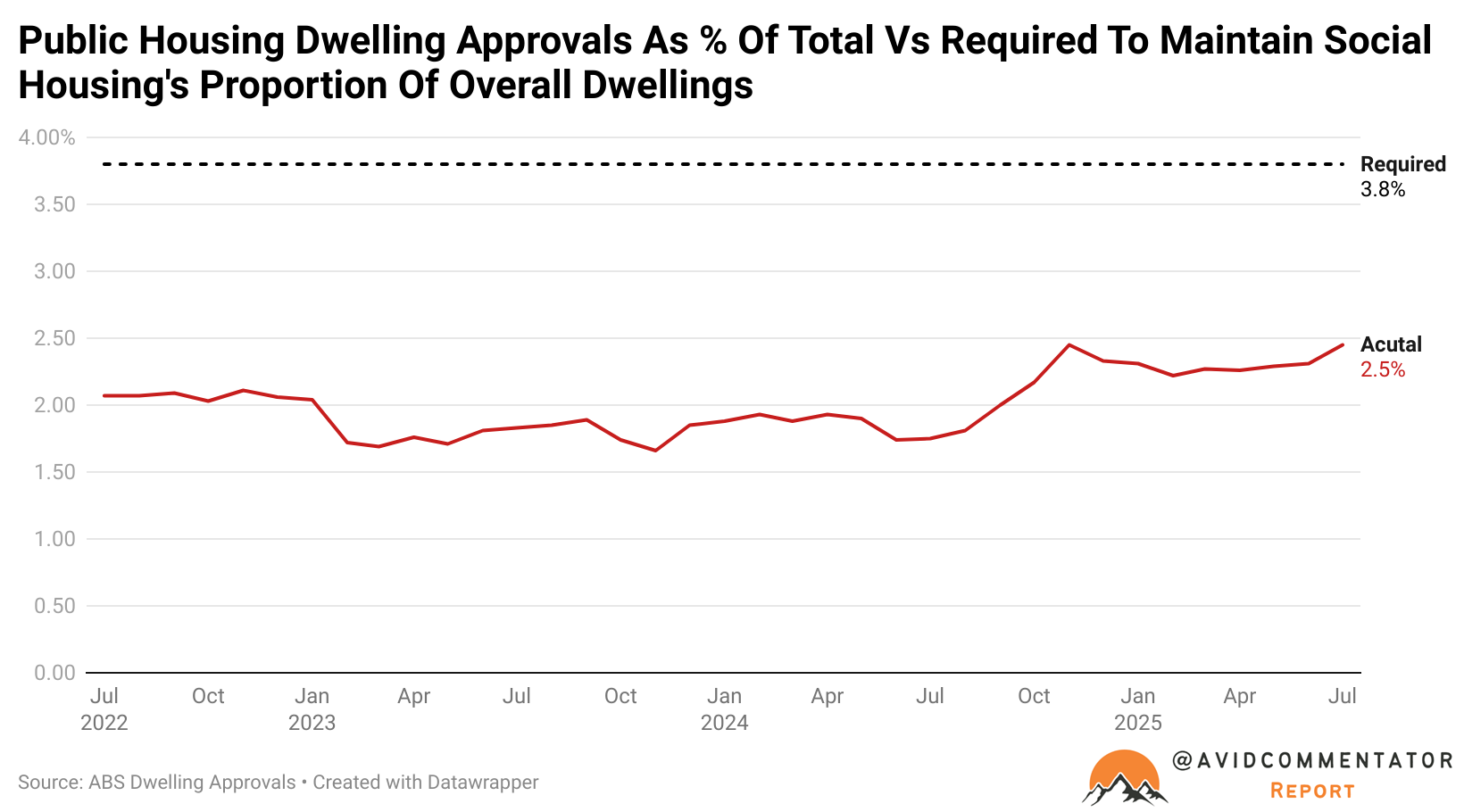
Meanwhile, dwelling approval data from the ABS reveals that the proportion of new homes set to be constructed as social or public housing dwellings is far below the level required to maintain social housing’s current share of overall dwelling stock.
In short, the amount of public and social housing available per capita continues to plummet with each passing year.
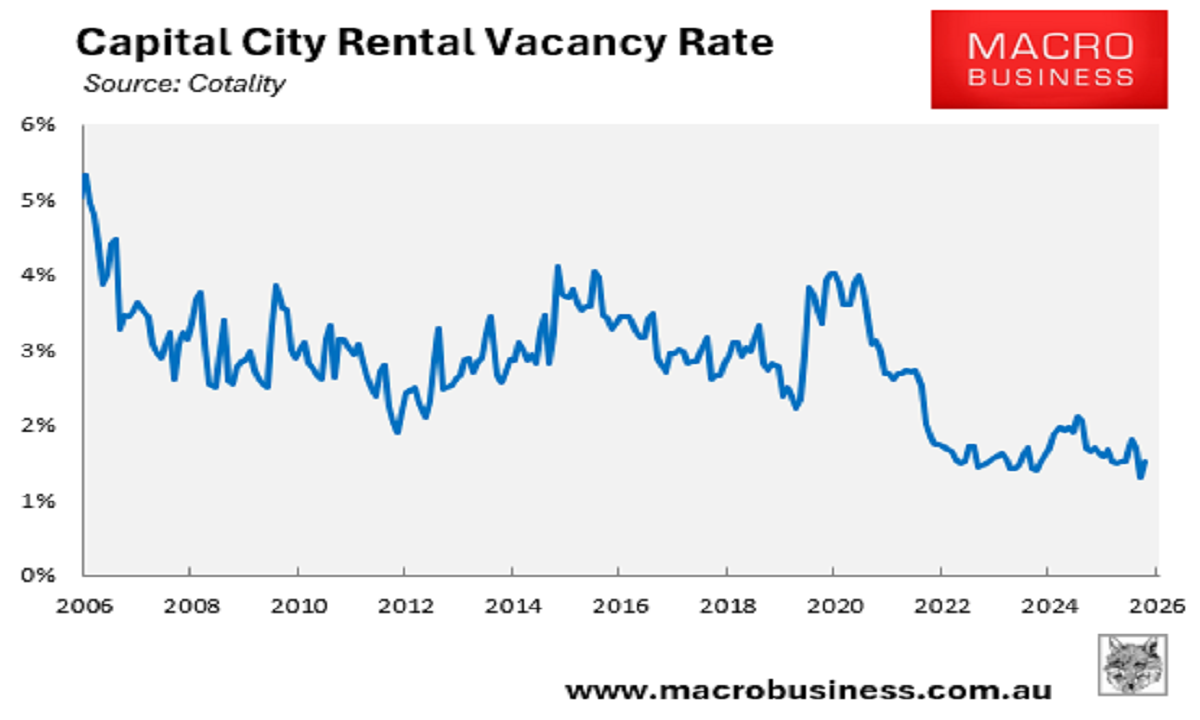
In terms of the broader rental sector, vacancy rates remain deeply depressed near all-time lows for the data set from Cotality (formerly known as Corelogic).
Despite the fact that it has been over four years since the nation’s international borders reopened and nearly five years since the pandemic was declared over, Australia is no closer to resolving the rental crisis today than it was then.
The Takeaway
The loss of this child’s life in Wagga Wagga is heartbreaking and one wishes things could have turned out differently.
But the conditions its mother was living in, a homeless camp on the side of a riverbank, are unfortunately increasingly all too common.
In the cold and clinical language of the National Housing Supply and Affordability Council’s latest report:
“Adults are increasingly living in larger households in response to affordability constraints, with high living and housing costs contributing to adult children staying in the parental home for longer.”
Or put somewhat differently, more people are being forced to cohabitate, whether they want to or not, in order to keep a roof over their head.
This is illustrated by an accompanying NHSAC chart, which shows the number of adults living in each household at its highest level in two decades, excluding the distortion driven by the pandemic.
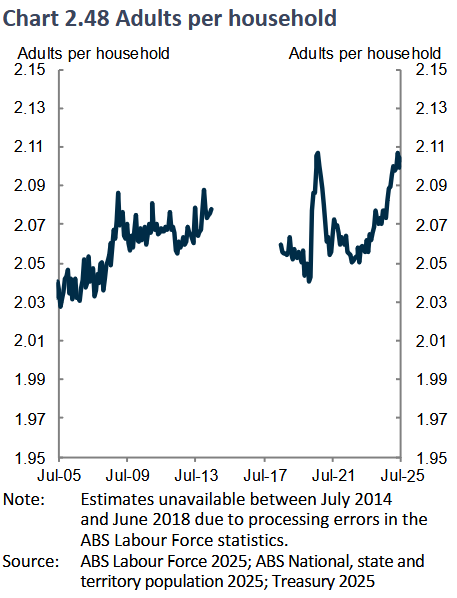
Yet this trend occurs amidst a backdrop of the ongoing meteoric rise in the proportion of households occupied by a single individual.
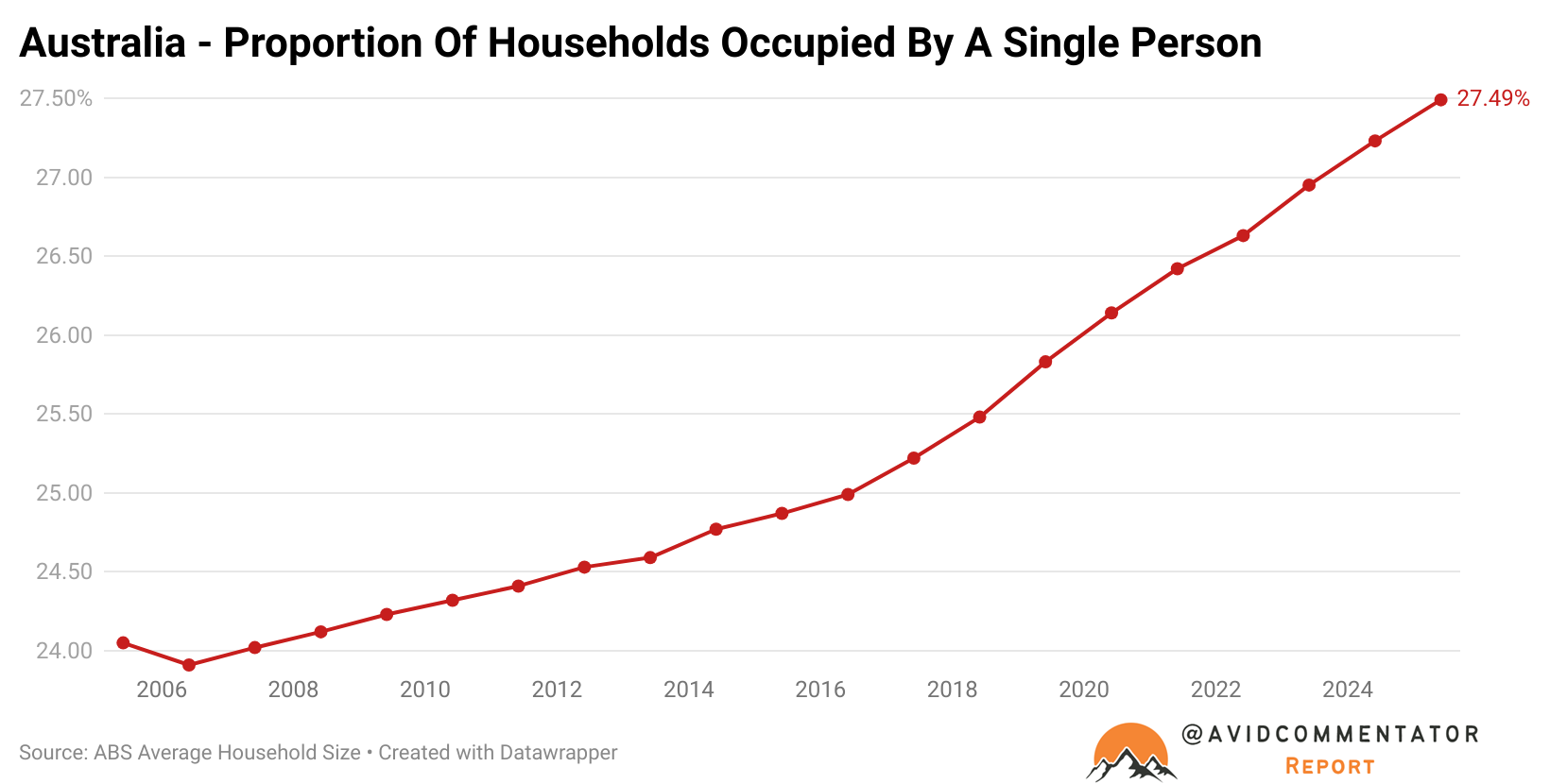
How are we forced to square that particular circle?
More adult-aged Australians are being forced to live with each other whether they want to or not.
The other more dire side of that is people who, for whatever reason, don’t have that option.
They don’t become part of the multi-generational or shared household statistics; they join the ranks of the nation’s homeless living in cars, on riverbanks, in caravan parks and in all manner of other circumstances to keep some degree of shelter over their heads.
The reasoning for all of this comes down to primary school-level maths: the federal government is growing the population much faster than new homes can be built to house those additional people.
Ultimately, the federal government has made the choice that life for vulnerable Australians when it comes to housing will be even more challenging than it already was prior to the pandemic and that should be seen as the failure of basic moral fibre that it truly is.
