The Albanese government’s expanded 5% deposit scheme for first home buyers took effect on 1 October 2025.
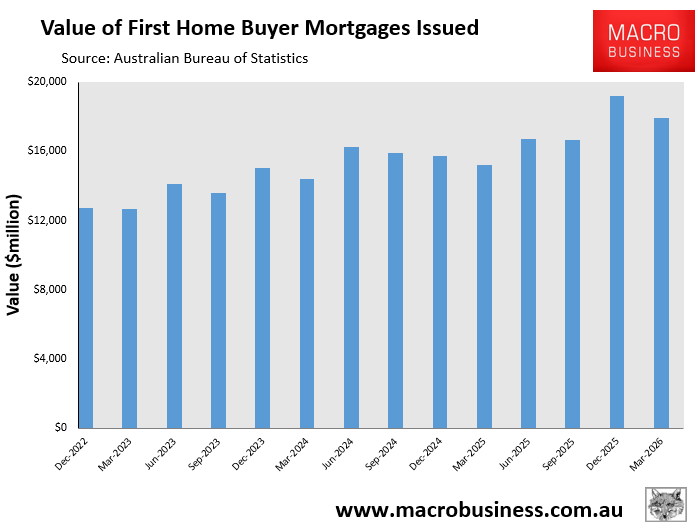
Over the first quarter of the scheme, mortgage demand from first home buyers spiked. A total of $19.310 billion was lent to first home buyers in the December quarter of 2025, an increase of 16% on the prior quarter and the highest value since the March quarter of 2021.
However, Wednesday’s housing finance data from the Australian Bureau of Statistics (ABS) showed that the momentum stalled in the March quarter of 2026.
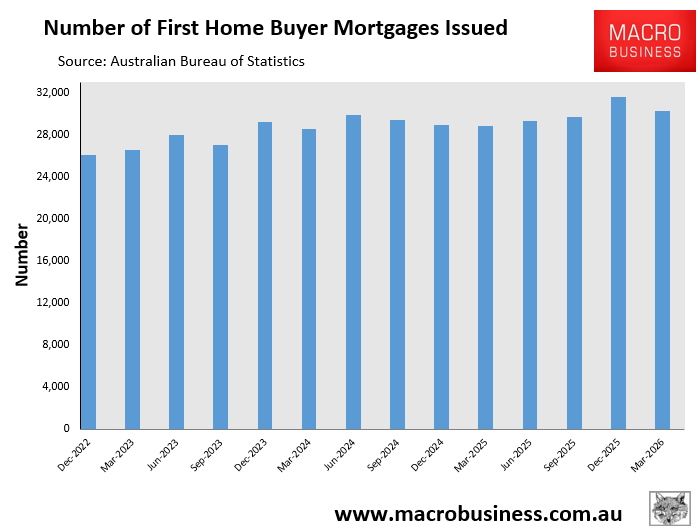
The number of mortgages issued to owner-occupier first home buyers declined by 4.3% to 30,241. However, the number of mortgages issued over the quarter was still 1.9% higher than the September quarter of 2025, before the expanded 5% deposit scheme came into effect.
The value of mortgages issued to owner-occupier first home buyers declined by a heavier 6.7% in the March quarter of 2026 to $17.9 billion. Even so, the value of mortgages issued over the quarter was still 7.5% higher than the September quarter of 2025, before the expanded 5% deposit scheme came into effect.
Overall, the data suggest that the expanded 5% deposit scheme provided short-term stimulus to the housing market, but that the impacts were front-loaded and have faded.
Indeed, recent analysis from Cotality showed that over the first six months of the expanded scheme, homes with values under the price caps increased in value by 6.7%, compared with a 3.6% rise for properties valued above the price caps.
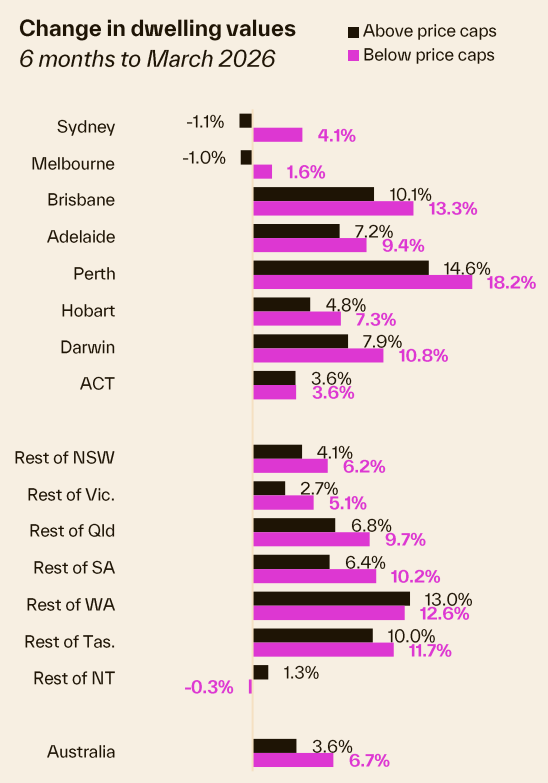
Source: Cotality
As a result, the expanded 5% deposit scheme drove up the prices of entry-level homes, ultimately making them more expensive for first home buyers.
Future first home buyers now face the prospect of paying more for housing and taking on larger mortgages than they otherwise would.