In the years following the COVID-19 pandemic, Australia’s construction sector experienced a sharp rise in construction insolvencies.
This wave of insolvencies was driven primarily by fixed-price contracts undertaken in the wake of the HomeBuilder stimulus. After these contracts were signed, supply chain bottlenecks sent material and labour costs soaring, which, combined with rising interest rates, weakened cash flow.
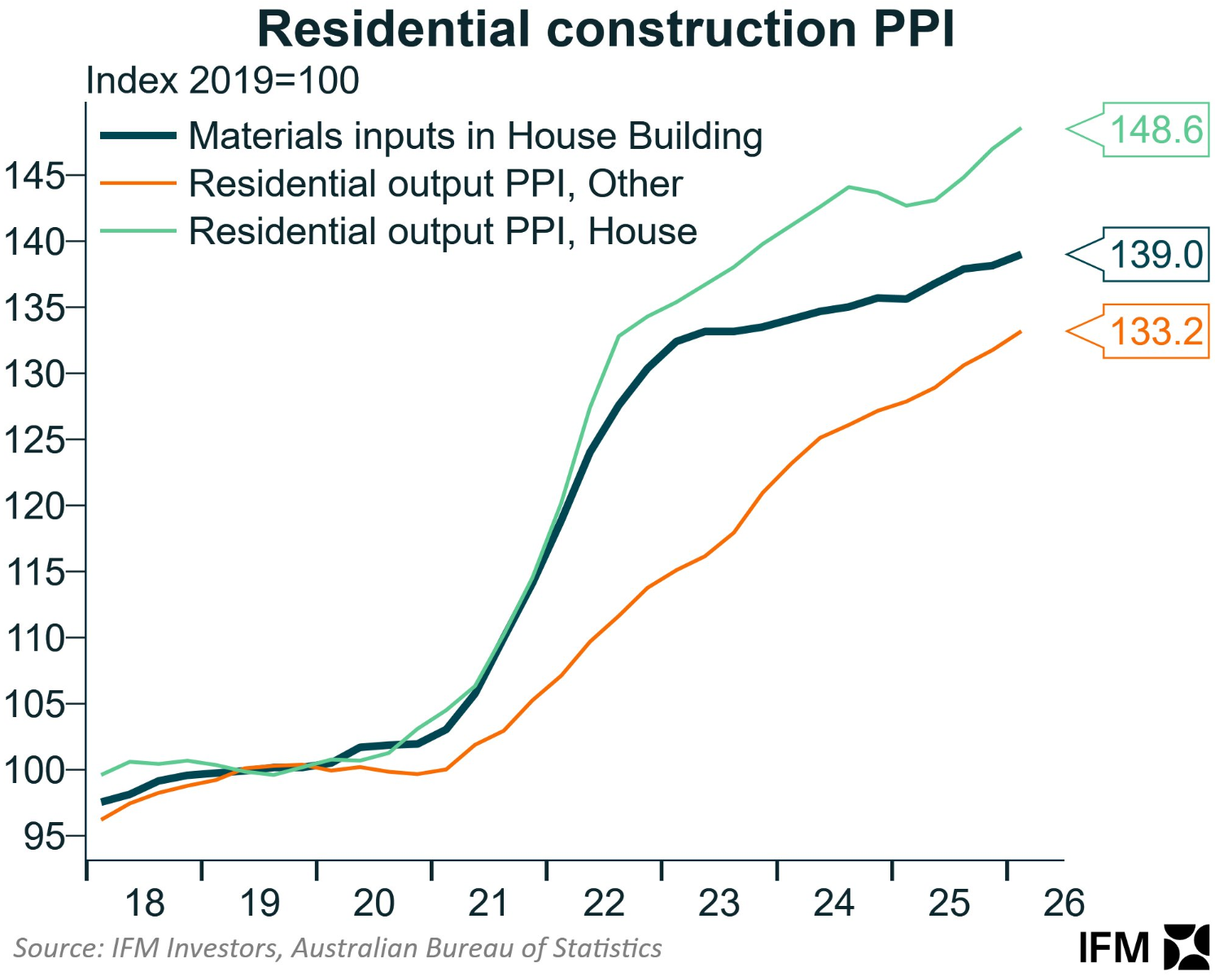
This combination of factors was a “perfect storm” that wiped out margins and pushed thousands of builders into insolvency.
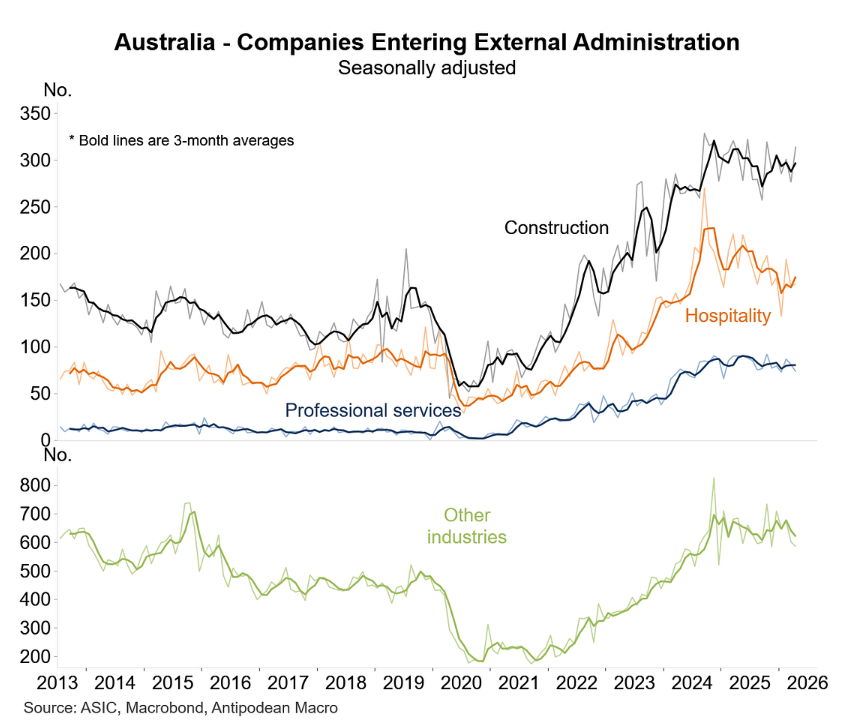
As illustrated below by Justin Fabo from Antipodean Macro, construction-sector insolvencies are creeping higher once more, this time driven by rising input costs from the war in the Middle East, alongside higher interest rates.
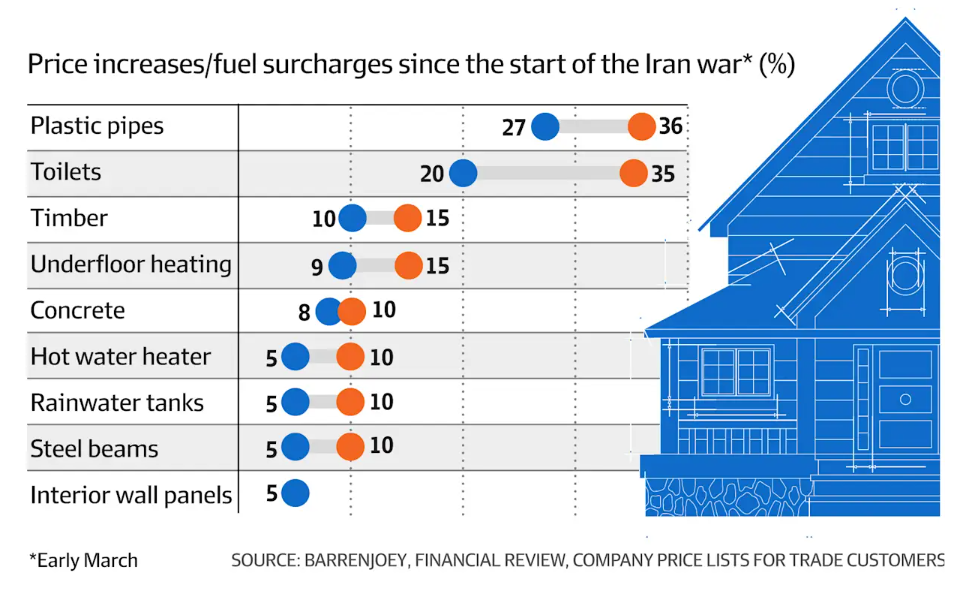
The following chart from The AFR shows the rise in costs across a range of inputs:
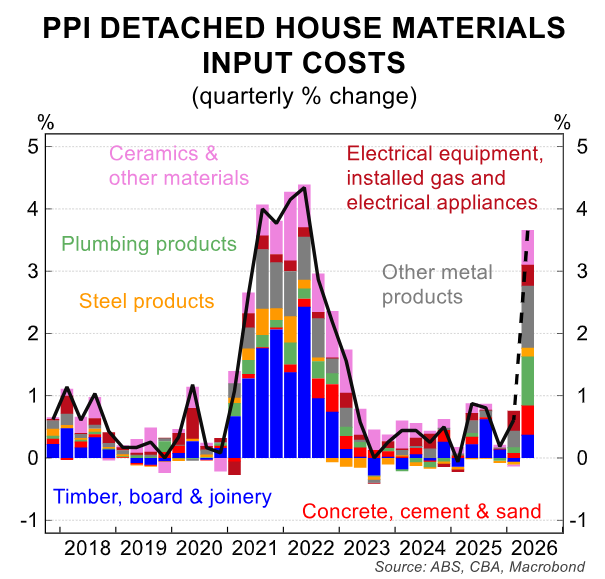
CBA’s chart below also shows a surge in construction-related input costs over the March quarter of 2026 in response to the global energy shock:
Satterly Property Group warned recently that the Middle East war could raise the cost of new homes by up to $50,000.
Deicorp, a privately held Australian property development and construction company, likewise warned that “feasible projects are now marginal, and marginal projects are now unfeasible” due to cost increases.
In her speech this week to the Bloomberg Forum for Investment Managers, Reserve Bank assistant governor Sarah Hunter noted that “some construction firms – who have been relatively highly exposed to transport and oil-derived raw materials cost increases – are reviewing prices for new contracts”.
At the same time, interest rates continue to rise. Following the RBA’s back-to-back-to-back rate hikes in February, March and May, financial markets expect at least one more 25 basis point hike this year.
Higher interest rates will increase developers’ financing costs and diminish consumers’ ability to pay, putting additional constraints on housing building.
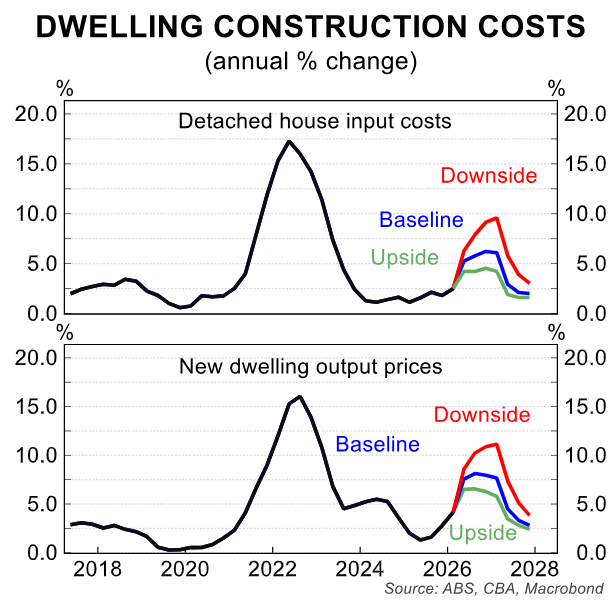
Indeed, CBA last week forecast that rising construction costs will materially reduce housing construction.
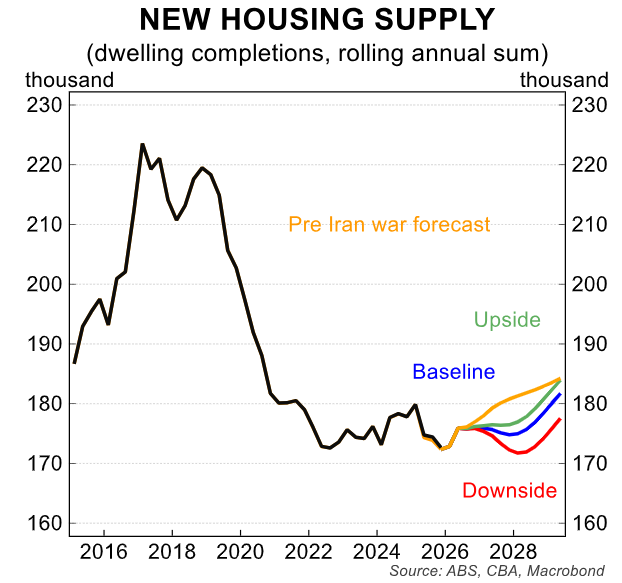
Under CBA’s base case, only 885,000 homes will be completed over the five-year National Housing Accord period to 2028-29, which is 315,000 (26%) fewer than the 1.2 million construction target:
Meanwhile, members of the building industry have warned that they are close to bankruptcy as fuel costs and regulatory changes severely affect their profits.
A recent Master Builders Victoria (MBV) survey revealed that 63% of members are locked into fixed‑price contracts, which prevent builders from passing on fuel and material cost spikes, and are pushing many towards staff cuts or exiting the industry entirely.
Several operators describe the situation as worse than both the post‑COVID material cost crisis and the Global Financial Crisis.
Yet materials costs continue to rise, pressuring margins amid the Middle East conflict.
Liam Bailey from the insolvency and restructuring group O’Brien Palmer noted that the construction sector had already been struggling before the conflict began and that builders are being squeezed by suppliers, developers and rising interest rates.
Matthew Hutton, a partner at insolvency and restructuring firm McGrath Nicol, agreed, noting that “we have seen a material increase in distress across the construction sector over the past couple of months”.
“Many construction businesses and subcontractors are looking at how they can deal with rising raw material costs due to increased fuel prices and continued wage pressures, particularly in circumstances where they are locked into existing fixed price contracts”.
“There is no wriggle room in their already tight margins”, he said.
Thus, the construction sector is facing a new period of pain with rising insolvencies.
This means that the Albanese government’s 1.2 million housing target, which is already tracking 27% below its required run rate, will inevitably fall further behind.
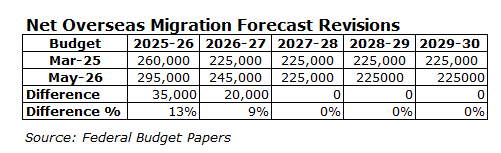
Alongside the 55,000 upgrade to net overseas migration in last week’s federal budget, it also means that Australia’s housing shortage will inevitably worsen.