The supply side of Australia’s housing market continues to worsen.
The National Housing Accord, signed by the federal government and the states and territories, set a target to build 1.2 million homes over five years, commencing on 1 July 2024.
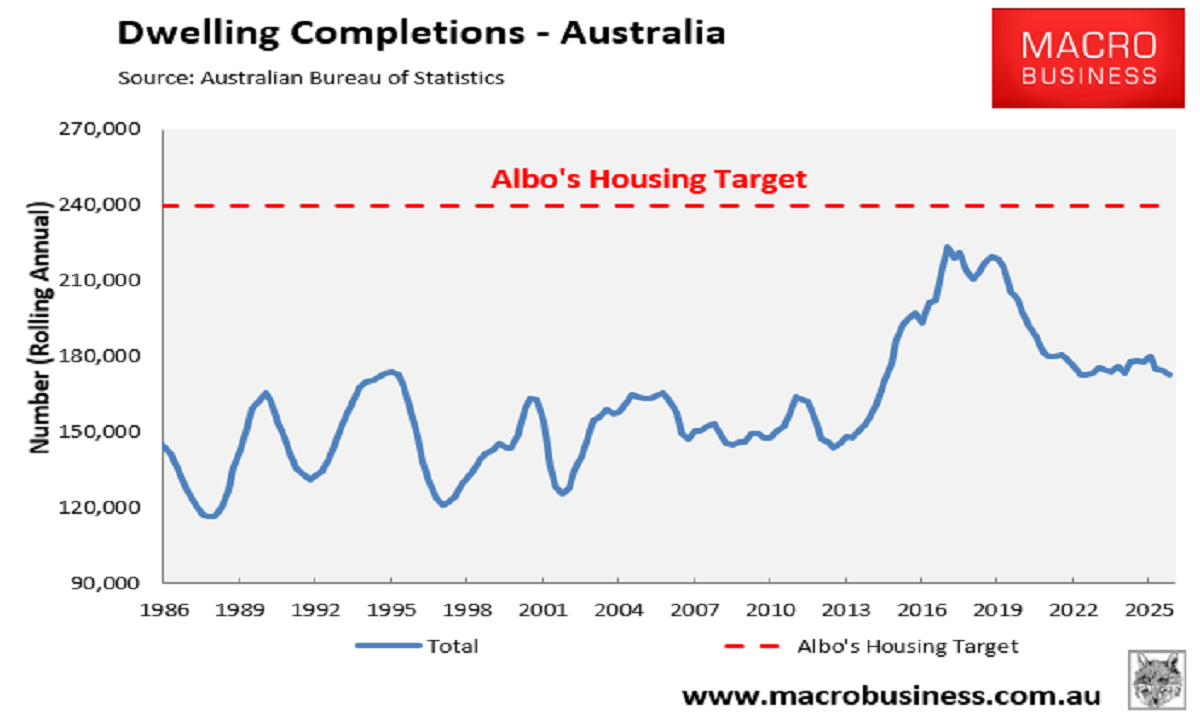
Last week, the ABS released housing construction data for the December quarter of 2025, which showed that the number of homes built in 2025 fell to only 172,657, 28% fewer than the 240,000 run rate required to meet the housing target.
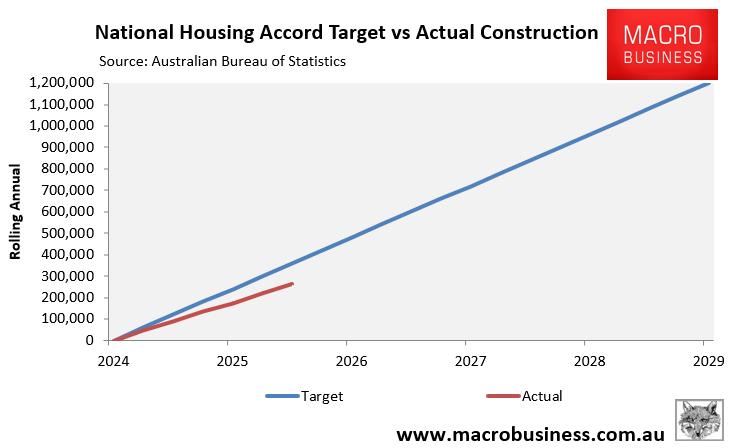
Over the first 18 months of the National Housing Accord, 97,400 (27%) fewer homes were built than required under the target:
The following table summarises how each of Australia’s states and territories is tracking against the targets of the National Housing Accord:
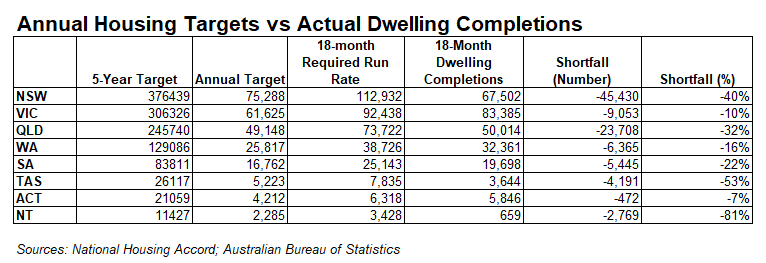
As you can see, all states and territories have fallen behind the required run rate to meet the construction targets, although some are tracking better than others.
Of the major states, New South Wales (-40%) and Queensland (-32%) are tracking furthest behind the target after 18 months, whereas Victoria (-10%) is tracking closest to it.
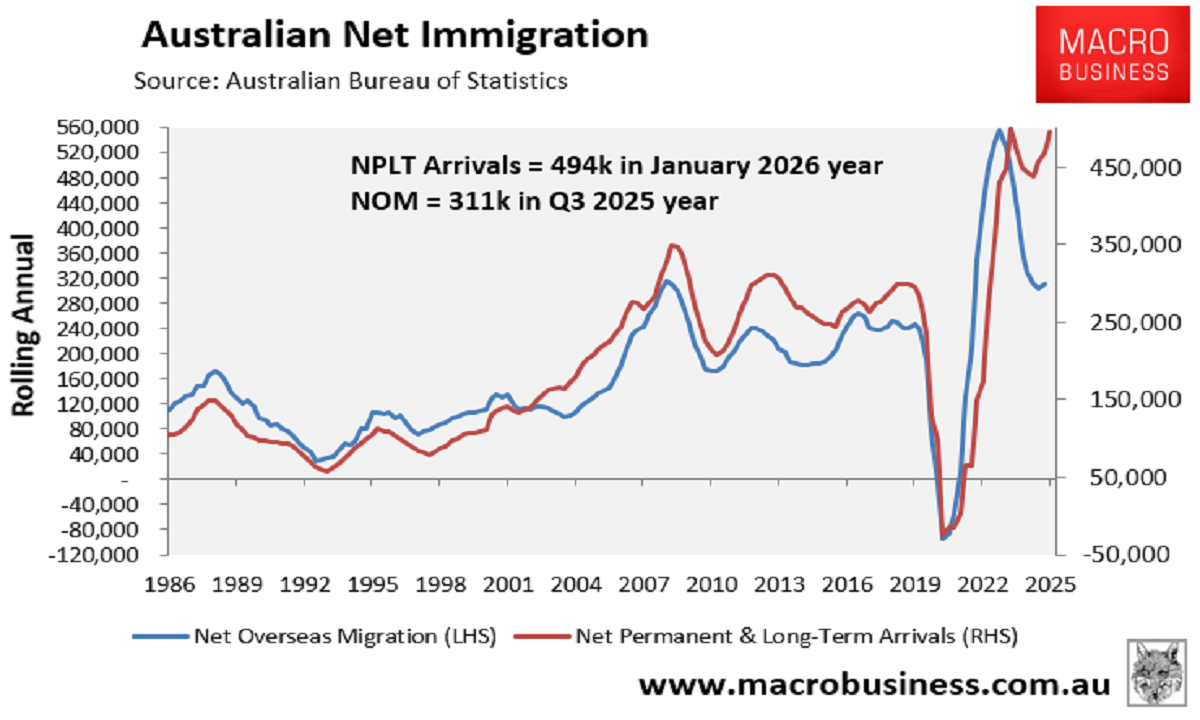
Regardless, the data suggest that Australia’s rental crisis will continue to worsen, especially given that the federal government has raised its net overseas migration forecasts for the upcoming federal budget by around 15% to above 300,000.
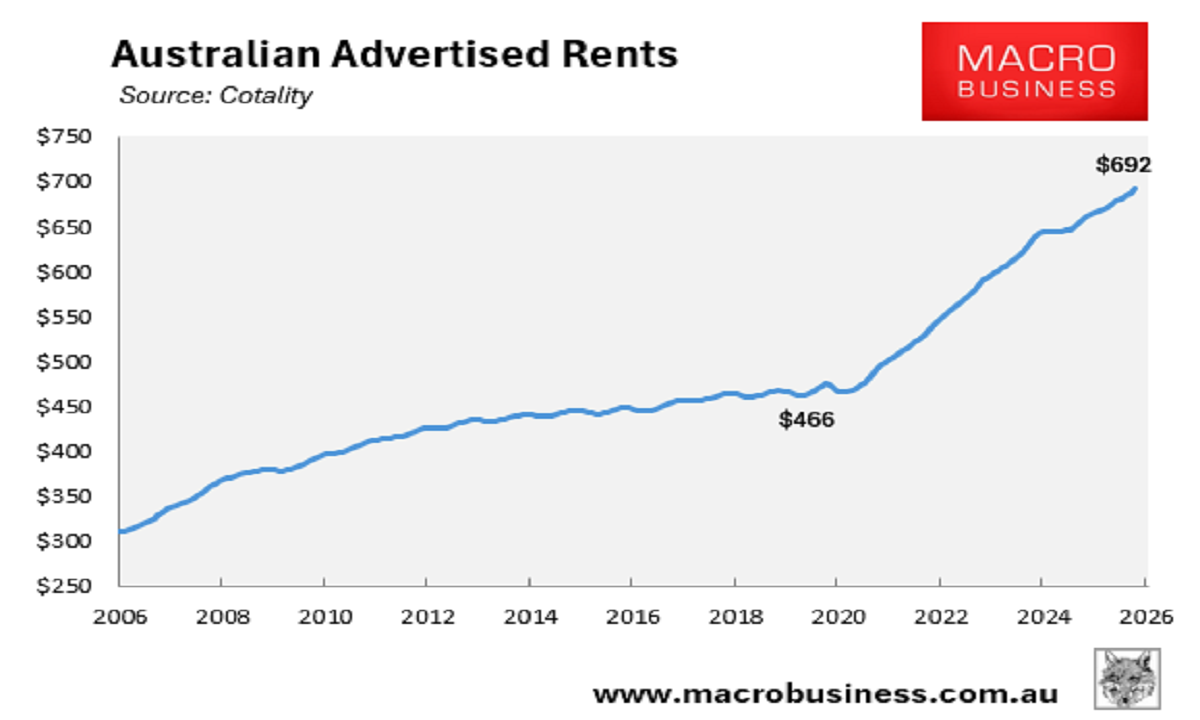
Cotality’s latest data showed that rental growth is accelerating and continues to outpace wage growth, meaning the rental crisis will inevitably worsen.
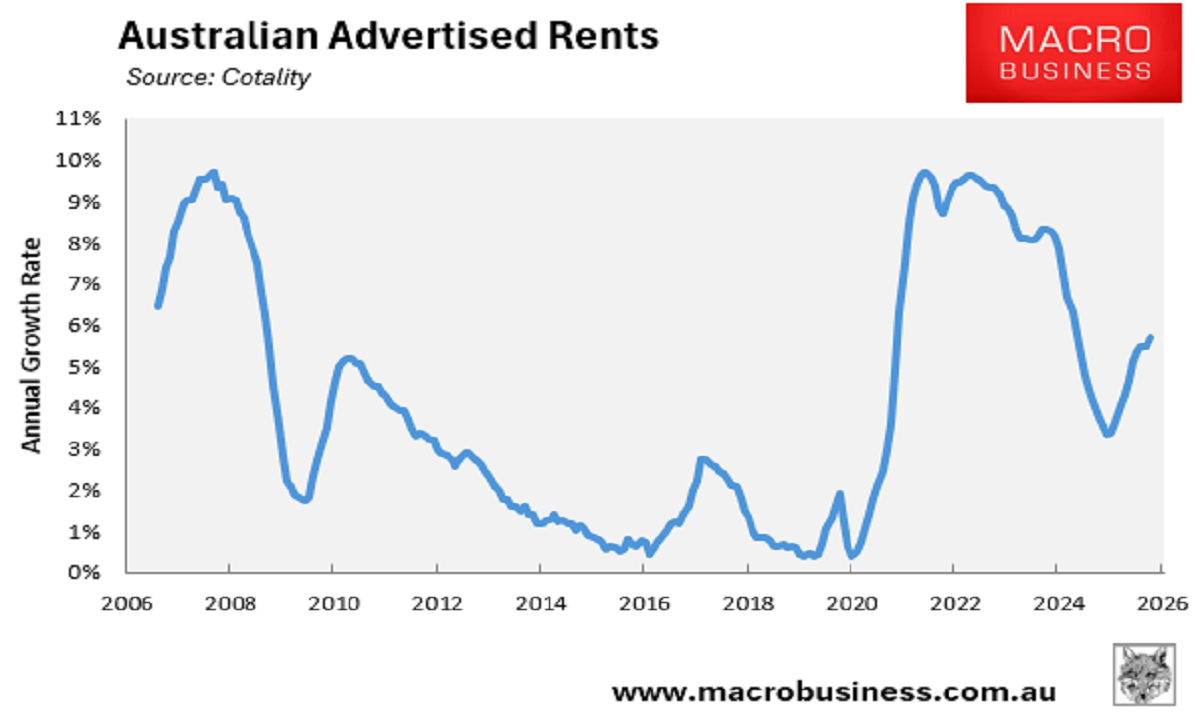
The acceleration in rents reflects the rebound in net overseas migration and net permanent and long-term arrivals late last year, which has added demand pressure to the market.
Developers and builders across Australia warned last week that the conflict in the Middle East has triggered a fresh supply chain shock, pushing up the cost of key construction materials and fuel and threatening the viability of new housing projects.
Nigel Satterley, CEO of Australia’s second-largest residential land developer, Satterly Property Group, warned that the war could add another $50,000 to the cost of building new homes.
Satterley cited a 37% increase in the cost of PVC piping due to the war, while cement has risen by 25%, and quarry products are up 50%.
The rise in diesel fuel prices has also increased the cost of preparing a block of land at the Satterly Property Group’s housing estates by up to $20,000.
Other developers told The Australian newspaper that rising costs are pushing more projects from marginal to unfeasible, worsening the already severe housing-supply bottleneck.
“Feasible projects are now marginal, and marginal projects are now unfeasible”, developer Deicorp warned.
To add further insult to injury, the RBA is tipped to raise interest rates two to three more times this year, which would take the official cash rate to an 18-year high.
Higher interest rates will increase financing costs for developers and reduce buyers’ capacity to pay, thereby acting as another constraint on housing construction.
Australia is therefore facing stronger housing demand from immigration amid a tightening supply, meaning the housing shortage will worsen.
The Albanese government must respond by copying Canada and slashing immigration to alleviate pressure on the housing market.