Last month, Tim Toohey from Yarra Capital warned that if AI is “deployed at scale in Australia over the next two years”, then the nation’s unemployment rate could rise to above 6% from 4.3% currently:
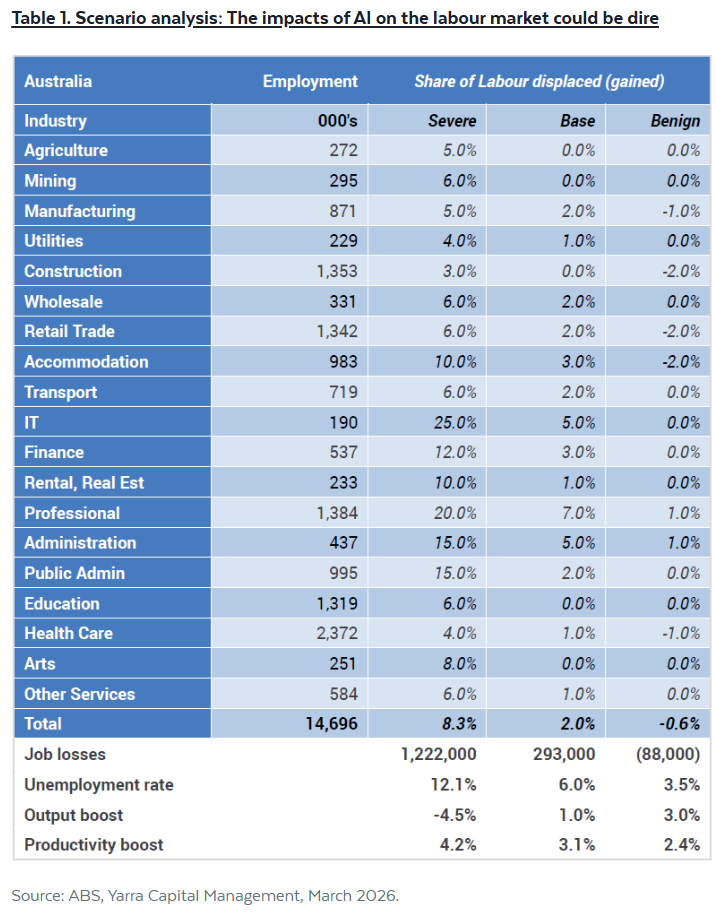
Shortly afterwards, a Mercer survey of Australian senior executives, human resources personnel, and employees revealed that 100% of HR managers believed their company would reduce headcount due to AI within two years, with 60% believing that one in five jobs would be lost because of AI.
The above analysis does not include the potential adverse effects on employment arising from the global energy shock and higher interest rates, which would compound the AI impacts.
Deloitte Access Economics has forecast that Australia faces a deep recession if the price of oil rises substantially from its current level of just over $US100 a barrel.
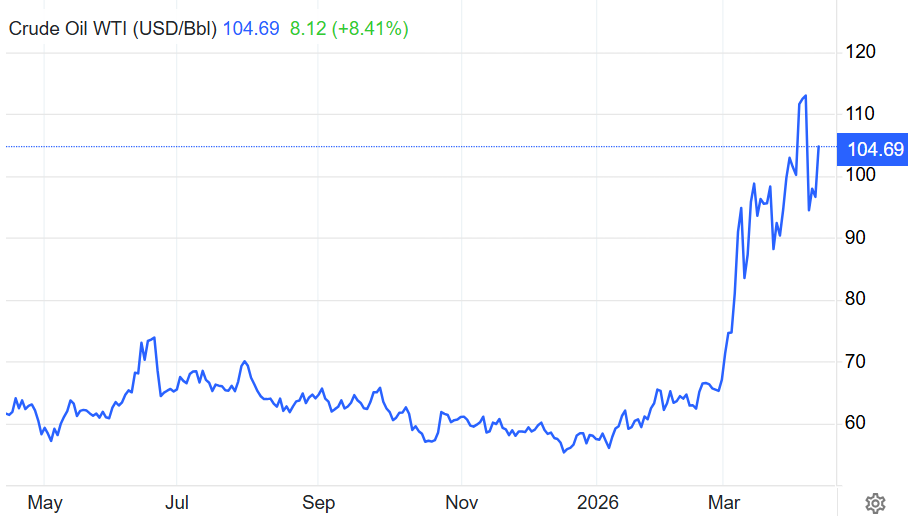
Deloitte modelling based on an oil price of $US150 a barrel would see more than 950,000 people out of work and an inflation rate of 6.6%.
If the global oil price were to hit $US175 a barrel, Deloitte’s modelling sees Australia with an inflation rate of 7.5% and an unemployment rate of around 6.8%.
Under both scenarios, the manufacturing and tourism sectors would be the hardest hit.
“The more severe scenarios would tip us well and truly into recession, with a big jump in unemployment. This would be the recession we didn’t ask for”, Deloitte Access Economics lead partner Pradeep Philip said.
However, Phillip admitted that the modelling did not account for government stimulus measures to cushion the economic impact.
Regardless, Australians face a potential sharp rise in unemployment driven by the combined forces of AI, higher fuel prices, and higher interest rates.
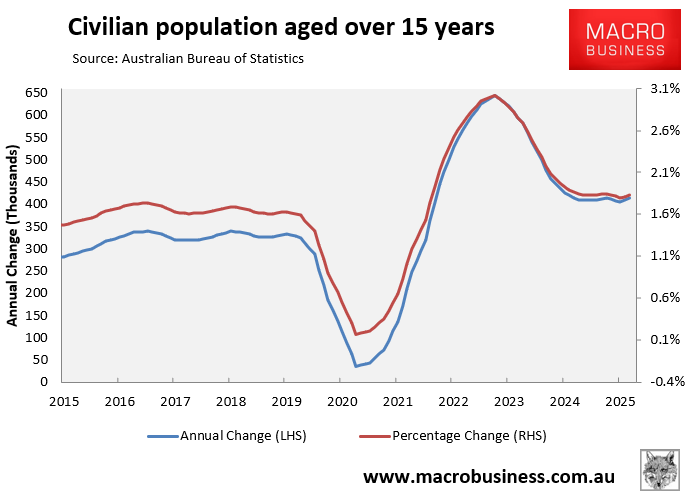
The federal government’s high immigration policy will compound the problem, as the labour force continues to grow at a quicker rate than before the Covid-19 pandemic, with 413,100 working-age adults added in the year ending February 2026:
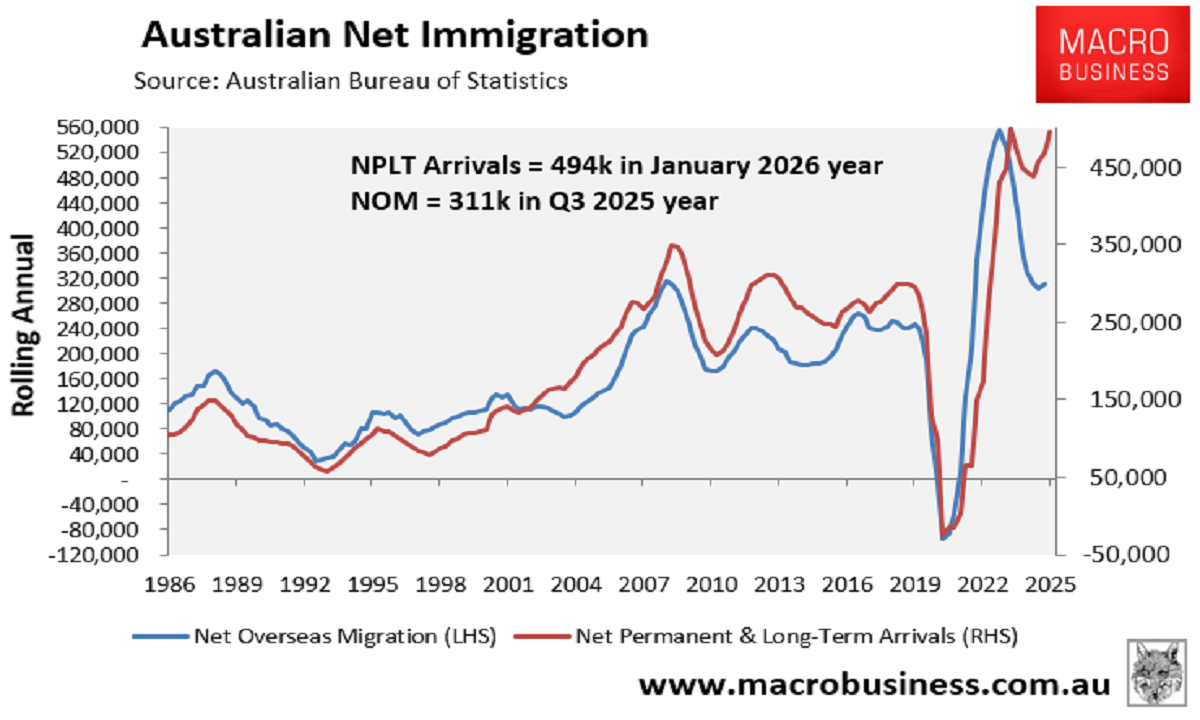
Treasurer Jim Chalmers stated last month that net overseas migration would remain higher for longer, implying that the labour force will continue to grow at a historically high rate in the coming years.
Strong labour supply growth in an economy with weak demand leads to rising unemployment.