Australia’s rental crisis continues in earnest.
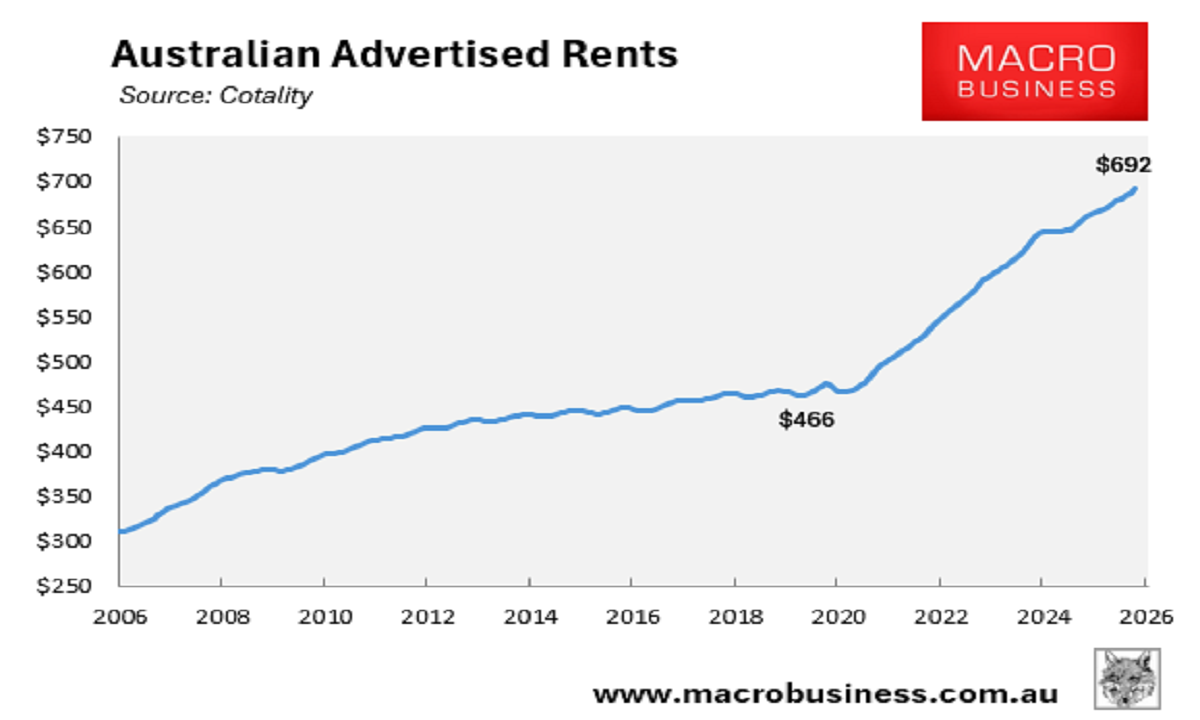
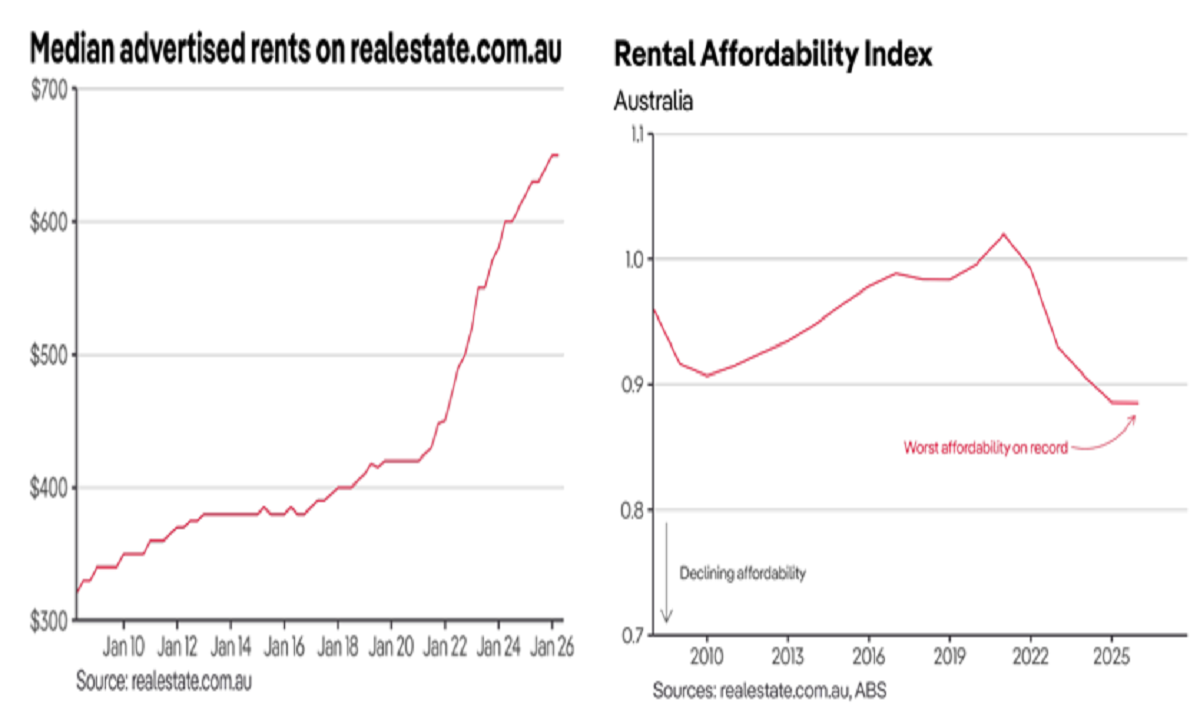
Following March’s 0.7% in national median advertised rents, rents in Australia have risen by an extraordinary 48% since December 2019, adding more than $11,700 to the annual cost of renting the median home:
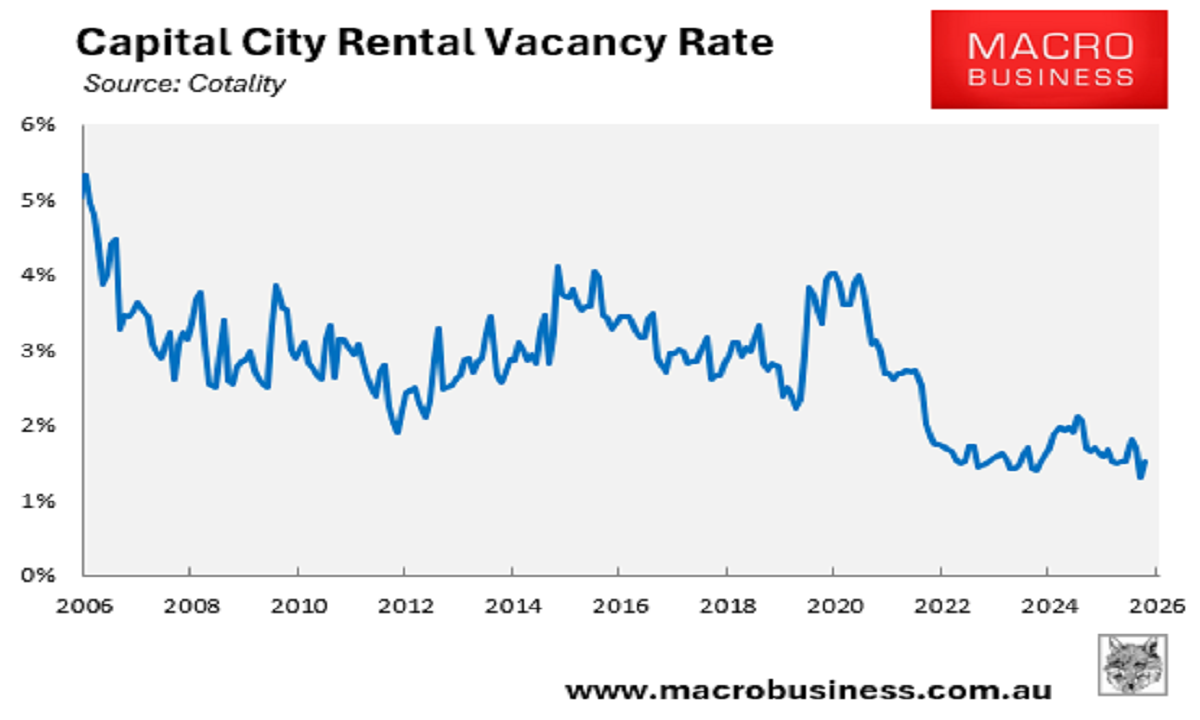
The rental vacancy rate has also fallen to a historical low, at half its level in March 2020, just as the COVID-19 pandemic was beginning.
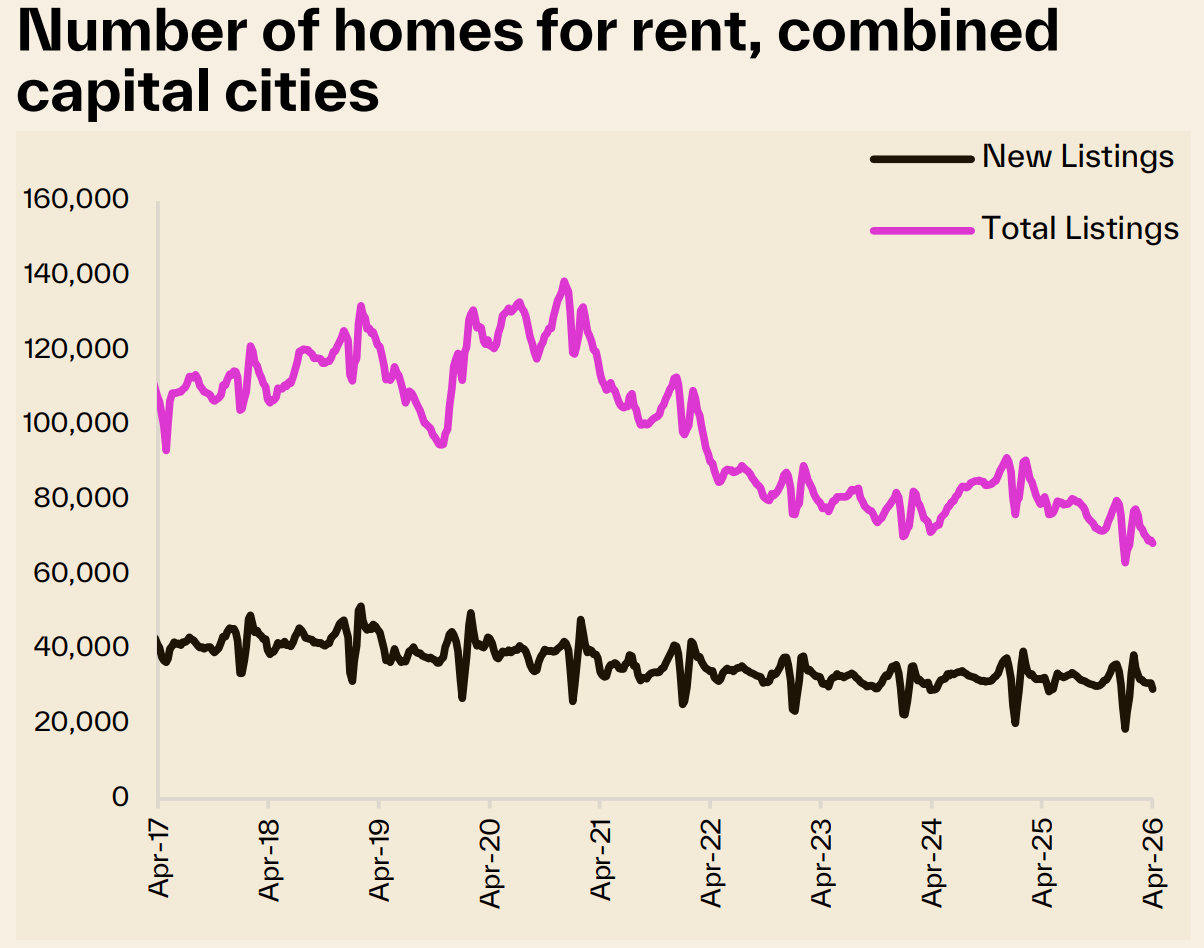
Actual rental property listings have also collapsed. According to data released this week by Cotality, the number of homes listed for rent across the combined capital cities has fallen by 13.8% over the past year, reaching the lowest level on record for this time of year:
Source: Cotality
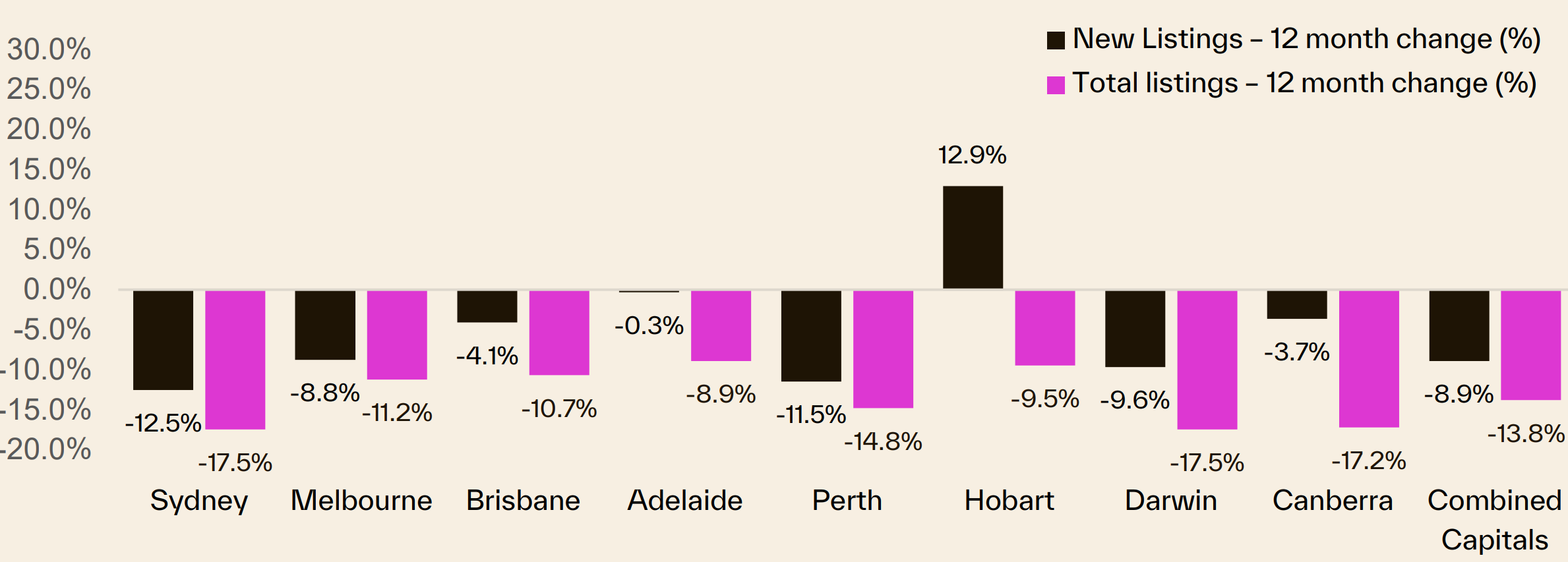
Total rental listings have also fallen sharply across every capital city market over the past year, according to Cotality:
Source: Cotality
Separate rental affordability data released last month by REA Group likewise showed that Australian rental affordability is tracking at its lowest level on record, following a surge in rents of more than 50% since the end of 2019:
Thus, the situation on the ground for Australian tenants is grim, with the collapse in the number of homes listed for rent resembling the Hunger Games.
The continuous, rapid influx of overseas migrants, which has recently accelerated, is worsening Australia’s rental situation.
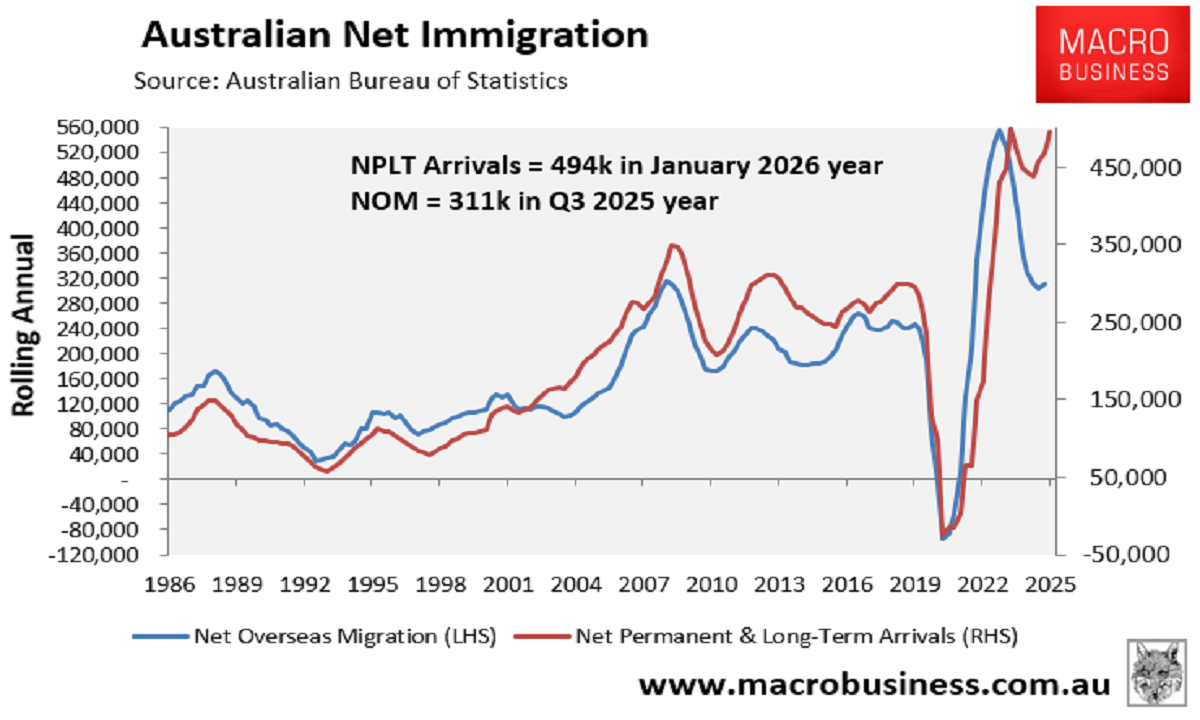
Treasurer Jim Chalmers conceded last month that net overseas migration (NOM) will be higher than expected due to fewer departures.
The upcoming federal budget will reportedly forecast NOM of more than 300,000 this financial year, up from 260,000 in last year’s budget.
NOM in the forward budget estimates will also likely be revised higher.
Australian tenants are facing a challenging situation: demand from immigration continues to expand, while supply remains very tight.
As a result, there will continue to be upward pressure on rents.
The logical policy solution would be for the Albanese government to dramatically reduce the number of migrants arriving to balance supply and demand, as Canada has done to great effect.
Otherwise, Australia’s rental crisis will worsen.