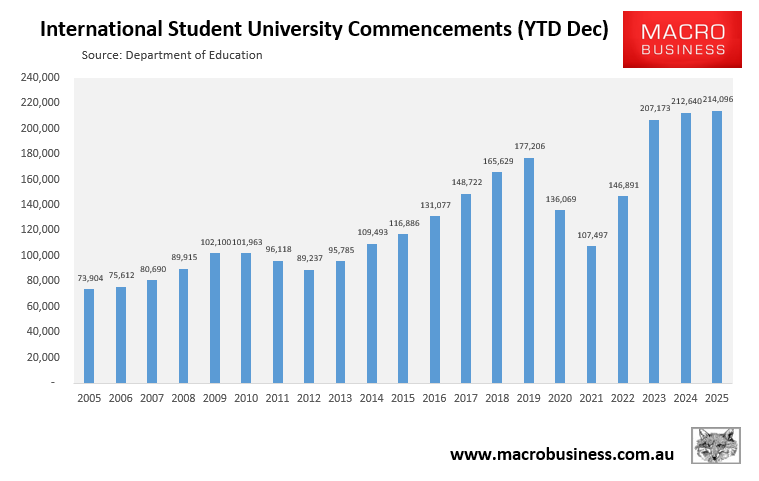
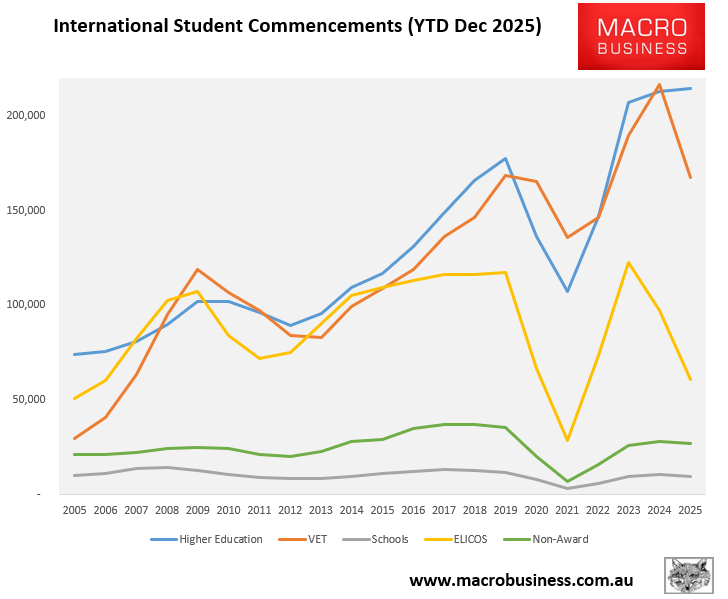
The Department of Education has released data showing that international university (higher education) commencements rose slightly (+0.7%) in 2025 to a record high of 214,100:
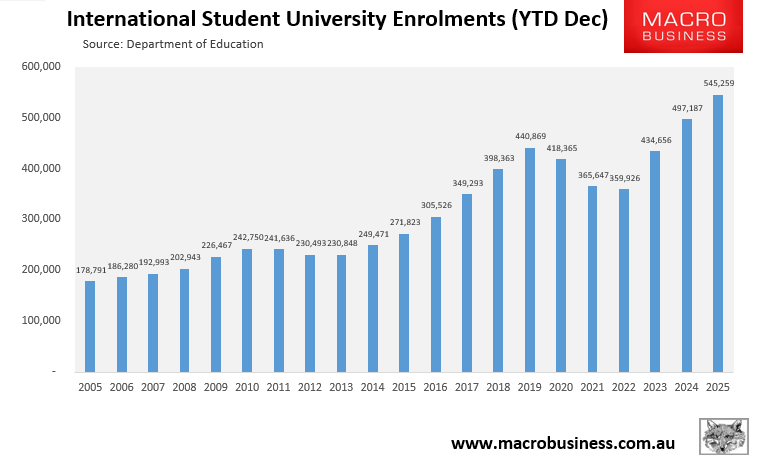
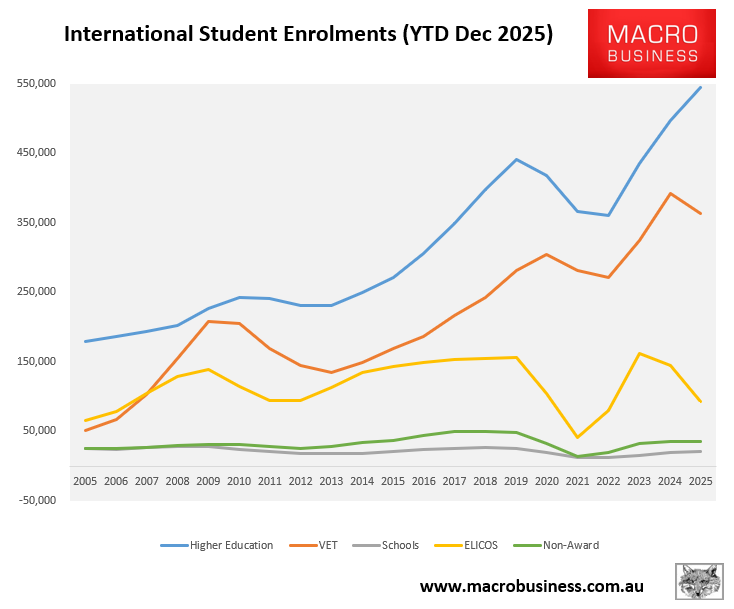
This pushed university international enrolment to a record high of 545,000, well above both 2024 and pre-Covid levels.
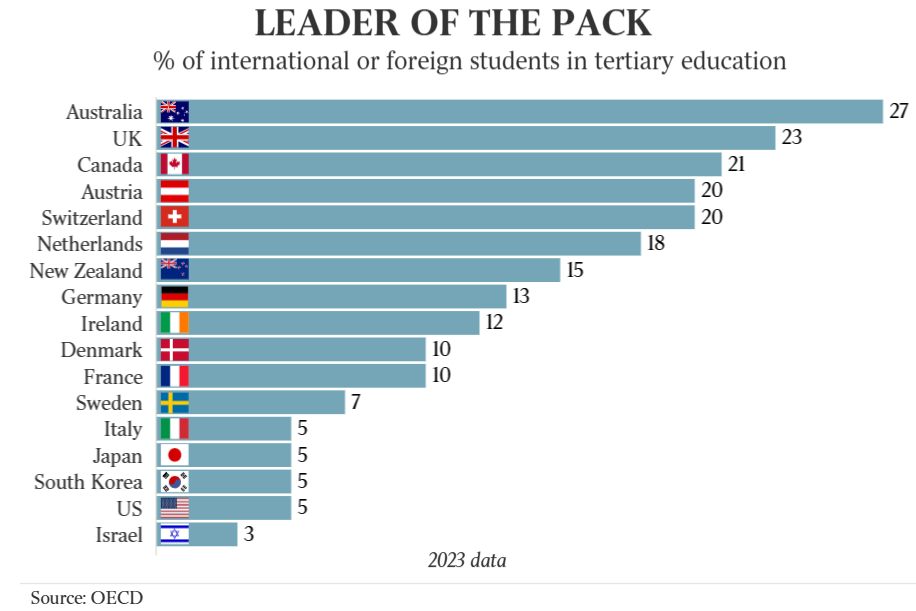
Australia already had the highest concentration of university enrolments in the developed world and this data suggests that this concentration has become even more extreme.
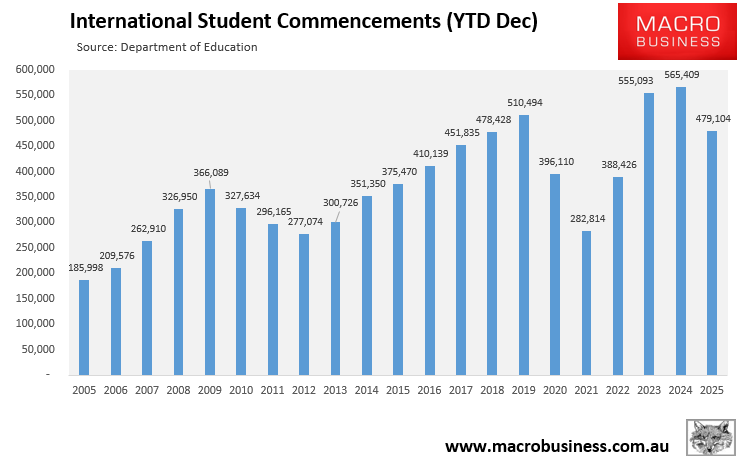
However, overall international commencements – i.e., encompassing higher education (universities), VET, ELICOS, and others – fell by 15.3% in 2025 to 479,100:
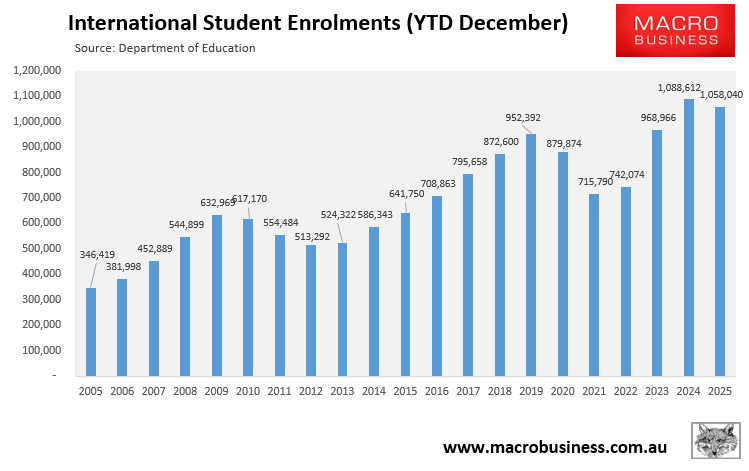
This drove the overall number of international enrolments down by 2.8% in 2025 to 1,057,000:
The decline in commencements was concentrated in vocational education (‑23%) and English‑language colleges (‑37%), together losing about 66,000 new students. International school commencements also fell 12%.
English‑language colleges (-35%) and VET (-7%) experienced a solid decline in overall enrolments in 2025:
The figures suggest the federal government’s strategy of prioritising “high‑quality” students over volume is working to some degree, although volumes are still overly excessive.
“Given the Albanese government’s determination to make our beleaguered sector even smaller, they will be happy with this latest data release”, claimed International Education Association of Australia chief executive Phil Honeywood.
“Every measure that they concern themselves with, including commencements and enrolments, shows a downward trend”.
Honeywood also claimed that net overseas migration (NOM) was being driven by other visa categories – particularly working holiday visas – and “not our international students”.
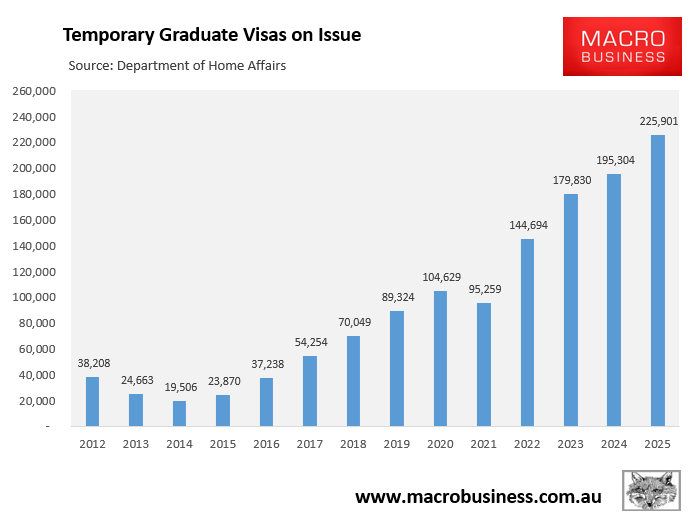
This is highly disingenuous by Honeywood, given that graduate visas alongside bridging visas (driven by former international students) were the fastest-growing temporary visa classes since the end of 2019:

Moreover, the tripling of international student numbers since 2005 is unambiguously excessive, as is the explosion in graduate visas:
Policymakers should aim to recruit a significantly smaller pool of excellent (genuine) students.
The government should force the international education sector to aim for quality over quantity via the following types of reforms:
- Significantly raise English-language standards and mandate entrance examinations for prospective students to study in Australia.
- Significantly increase financial requirements, mandating the payment of funds into an escrow account prior to arrival in Australia.
- Reduce the number of hours that international students are allowed to work and sever the direct link between study, work, and permanent residency.
- Only allow top-of-class graduates to receive graduate visas.
- Because Australian universities are non-profit enterprises that do not pay taxes, the government should impose a levy on international students to ensure that Australians receive a financial return from the trade.
Sadly, you will never see vested interests like Phil Honeywood prosecute the case.