Tobacco excise has climbed by around 60% since 2020 and now accounts for more than two-thirds of the legal cost of a packet of cigarettes.
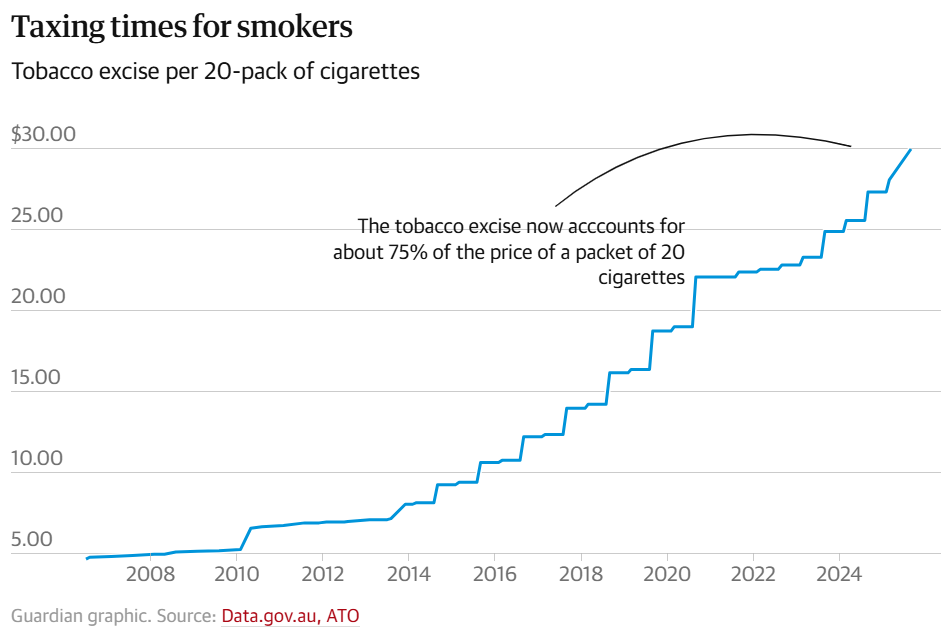
While illegal cigarettes are easily accessible and cost between $10 and $15 for a pack of 20, a legal packet of cigarettes now costs $40 or more.
Therefore, despite higher taxes, the federal government has recorded a significant decline in tobacco excise revenue, which is projected to decline further:
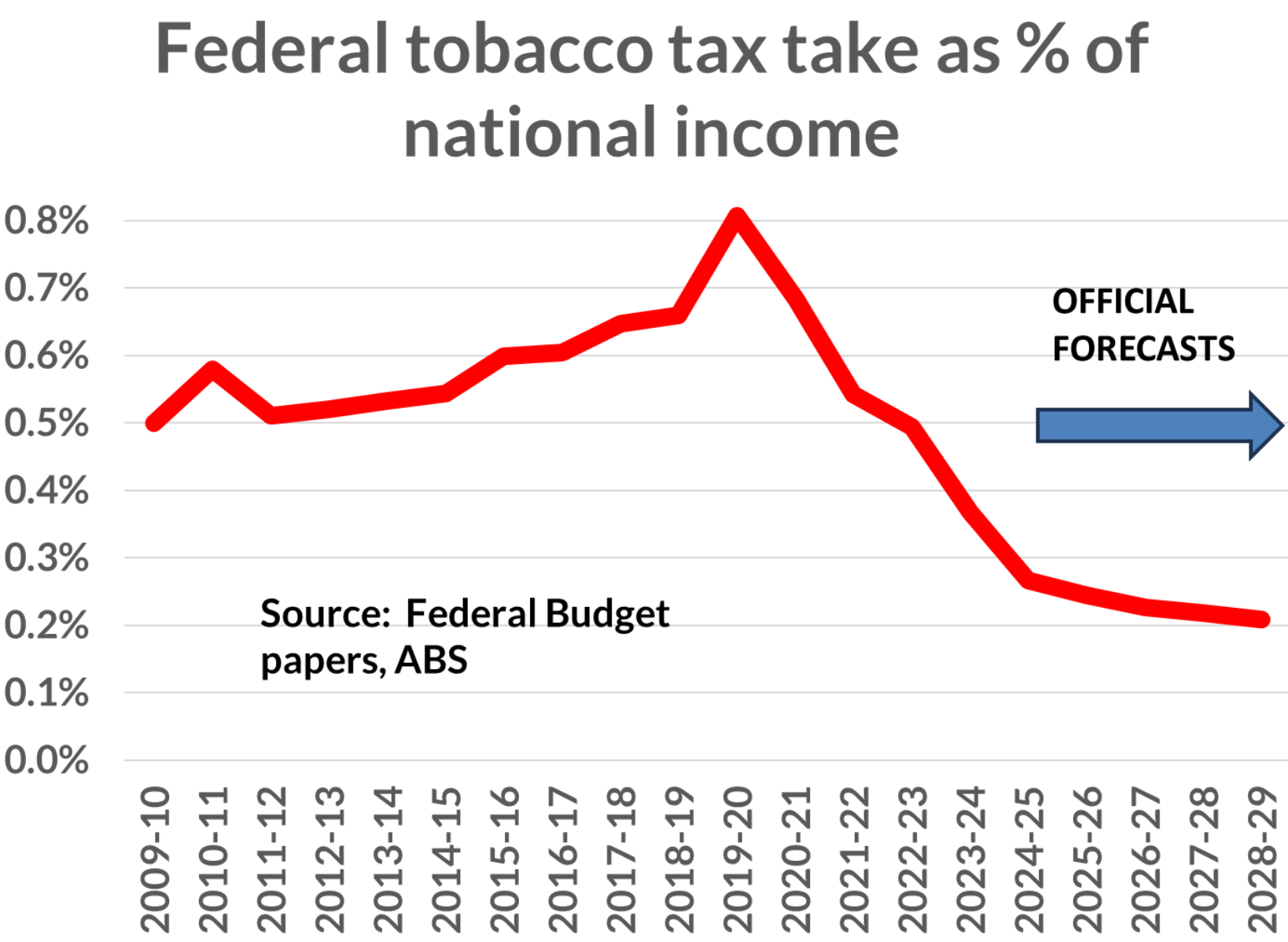
Chart by Chris Richardson
The absurdity of Australia’s tobacco excise regime was highlighted in The Age newspaper, which reported that Manchester United Kingdom is the most popular cigarette brand in Australia, despite being illegal to import or sell in the country.
It is understood that crime boss Kazem Hamad has taken a significant financial stake in the Manchester tobacco company, which is headquartered in London but which operates out of a free port zone in the United Arab Emirates.
Hamad’s investment means his transnational criminal syndicate essentially controls every part of the illicit tobacco market, enabling him to make billions of dollars in profit.
Australia’s Finance Minister Katy Gallagher was asked last week why the federal government could not look at a cut to the tobacco excise as part of a strategy to curb the illegal tobacco trade.
Gallagher told Senate estimates that the government keeps all of these matters under review, that there was no “single solution”, and that Treasury officials were consulting the departments of home affairs and health.
Lachlan Vass, a research manager at the e61 Institute, said Treasury’s examination of “price elasticity” and demand for tobacco would be a necessary step to costing potential reforms to the excise.
He said there is a case for at least freezing the excise to allow cigarettes to cost less in real terms over time as part of a wider health and enforcement strategy.
“When they do a policy costing they explicitly take into account the elasticity because they have to make a judgment about what this relative increase in the prices of tobacco means for the demand of tobacco”, Vass said.
Independent economist Chris Richardson agreed, noting that Australia’s punitive tobacco excise is fueling organised crime.
“That meant our policies have subsidised the fastest increase in the revenue of organised crime that Australia has ever seen”, he said.
Richardson previously estimated that had Australia earned from tobacco excise the same share of national income as in 2019-20, the federal budget would have received $69 billion more over the current four years of forward estimates—i.e., $16 billion this year, rising to $19 billion in 2028-29.
“The lost dollars are devastating”, Richardson concluded.
Tobacco taxation must rank as one of Australia’s most significant public policy failures, costing the budget a fortune in lost revenue, fueling organised crime, and worsening health outcomes by encouraging higher smoking rates via the black market.
The obvious solution is to lower tobacco excise and properly police the illegal market.