

In the debate over the appropriate level of migration into Australia, the argument is often made that there would be significant economic downsides if a major reduction in intake were to be realised.
On a very short-term time horizon, that is almost certainly the case.
With 10 out of the last 13 quarters seeing falls in per capita GDP growth and indicators like market sector hours worked flatlining over the last two years, it’s not hard to imagine that, without the artificial boost of a more rapidly expanding population, Australia could see a more significant economic downturn in headline terms.
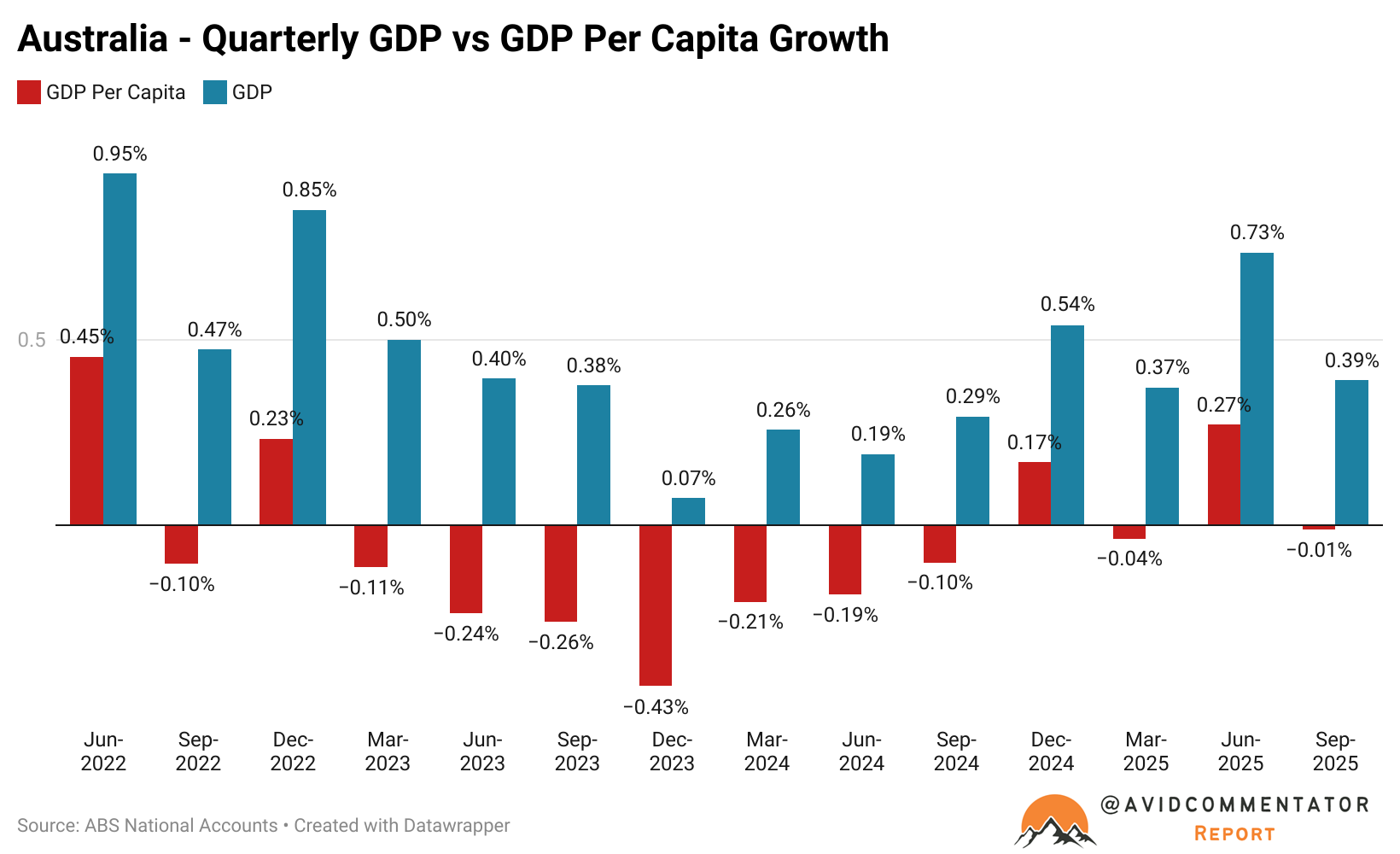
In this, Australia would not be unique.
Migration into New Zealand and Canada have been slashed dramatically to well below pre-Covid levels and headline GDP growth has deteriorated as a result.
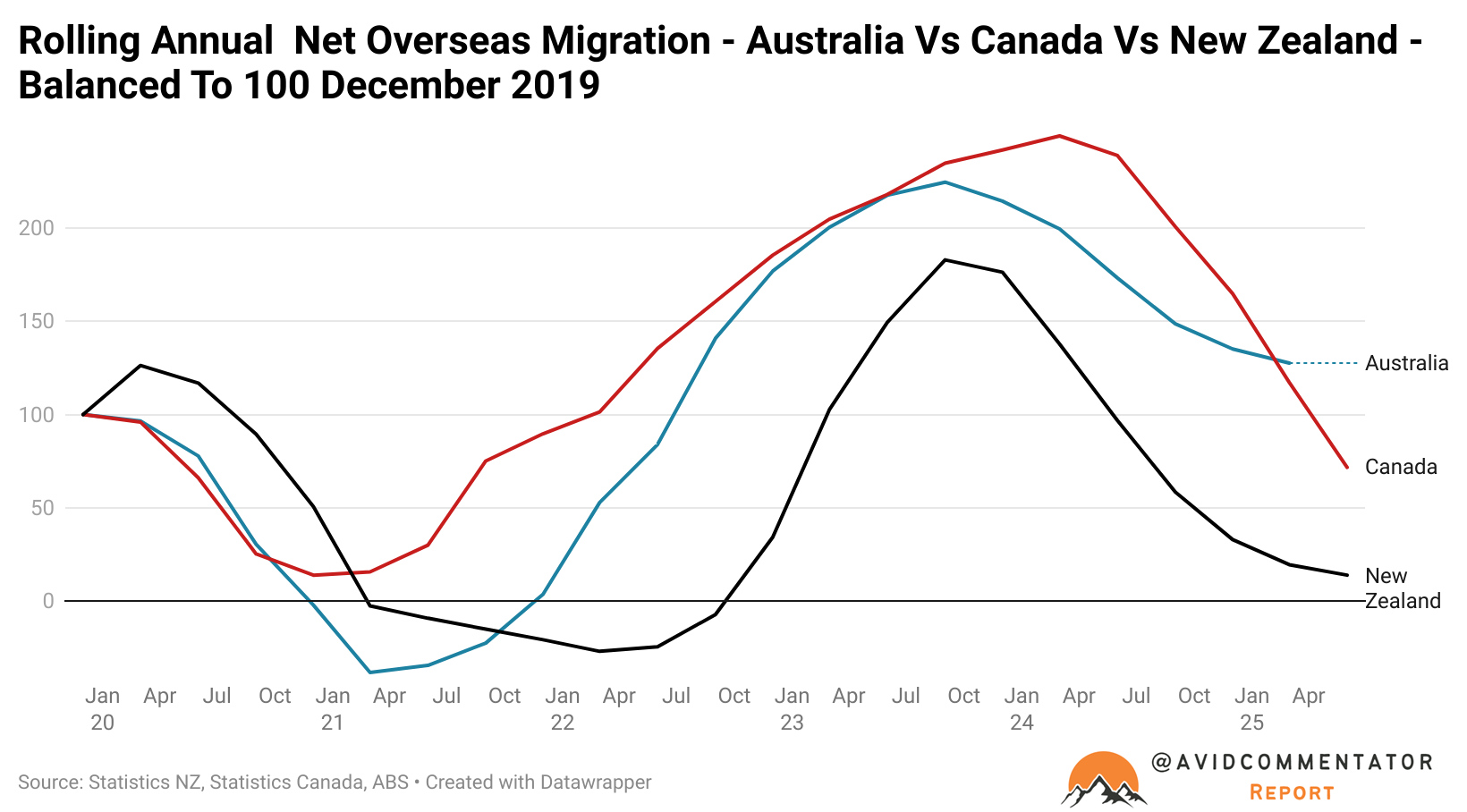
However, in Canada, there was a silver lining: per capita GDP stopped declining.
As migration slowed dramatically and the net intake was squarely focused on more skilled permanent migrants, GDP per capita began to rise.
It has since been hit hard by the outbreak of the U.S.-Canada trade war, like most other indicators within the Canadian economy, but it nonetheless persisted long enough to illustrate that the strategy was indeed viable.
The Money
Here, we arrive at another foundational element of the argument for keeping migration higher: its impact on the budget.
In this instance we have some very helpful data and graphs from the independent Parliamentary Budget Office (PBO), which models the impact of all manner of different scenarios, both as a tool to illustrate the impact of policy changes for members of Parliament and as a forecasting implement more broadly.
As part of their recently released 2025-26 Medium Term Budget Outlook, the PBO modelled the impact of various different changes to the migration intake, both larger and smaller.
Below is a copy of a table detailing the various migration intake scenarios that the PBO modelled.
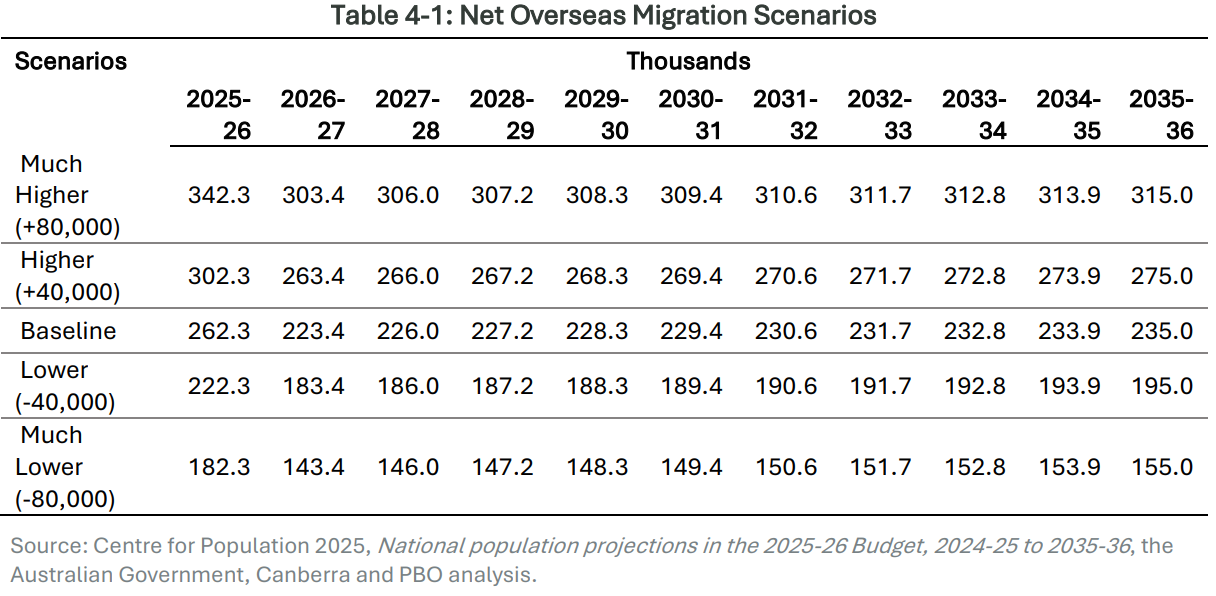
An intake in the range of 150,000 would currently be approximately 0.53% of the population, down dramatically from the current level of 315,000 or 1.13% of the population.
If realised, this would put Australia still somewhat above the developed world average for its per capita migrant intake but within the ballpark of what is considered normal.
The PBO provides estimates on the impact of migration on the fiscal position of the federal government, extending to 2035-36.
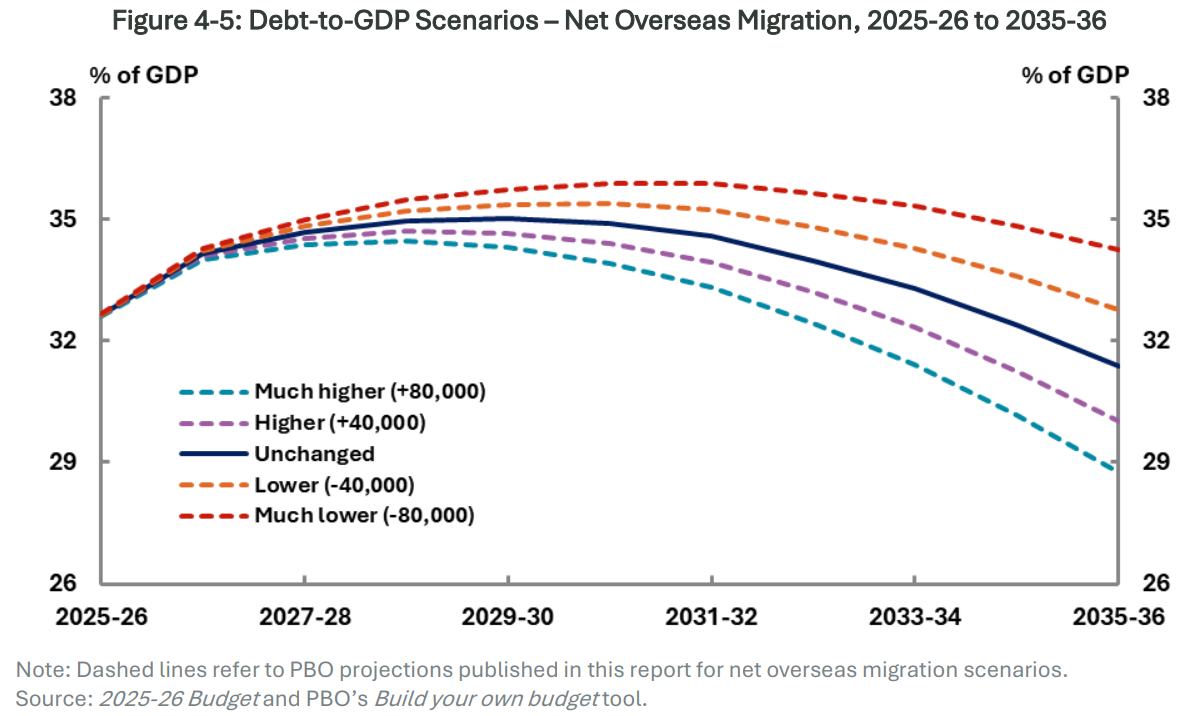
If the baseline were to be realised, we would see federal debt at 31.4% of GDP in 2035-36, a reduction of 0.2 percentage points compared with the current level.
If migration were to be reduced by 80,000 per year compared with the baseline, federal debt would amount to 34.2% of GDP, an increase of 2.6 percentage points compared with the current level.
After all the various commentary warning of the budget downside of lower migration, an increase in debt to GDP of 2.6 percentage points seems like a small price to pay to reduce the migration intake to a level where it’s possible that significant inroads could be made in addressing the housing shortage, rather than the current expectation of it worsening until at least 2029 (the end of the forecast period).
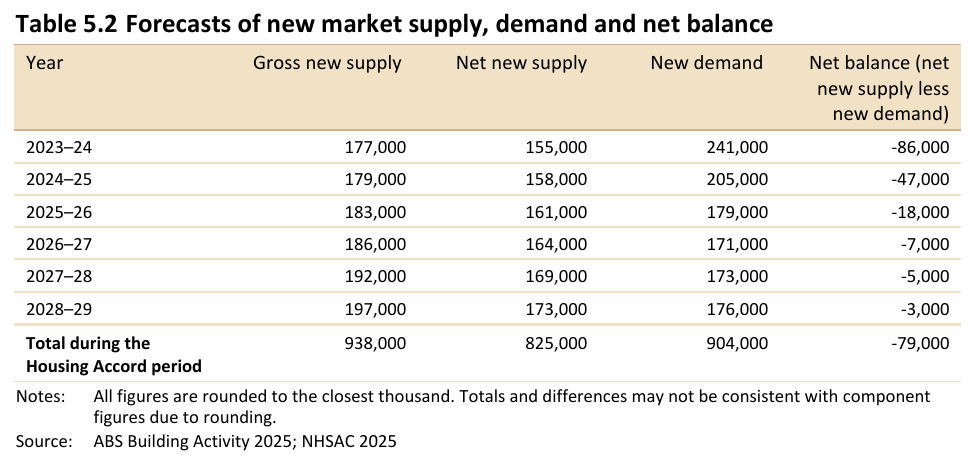
As part of their modelling, the federal government’s National Housing Supply and Affordability Council explored various different scenarios of population growth.
What it found was that if population growth was 15% lower than its baseline, which comes from the Centre for Population, then instead of the housing shortage growing until at least the end of the next decade, significant progress would be made in addressing the housing shortage during the ‘Housing Accord’ period between July 2024 and June 2029.
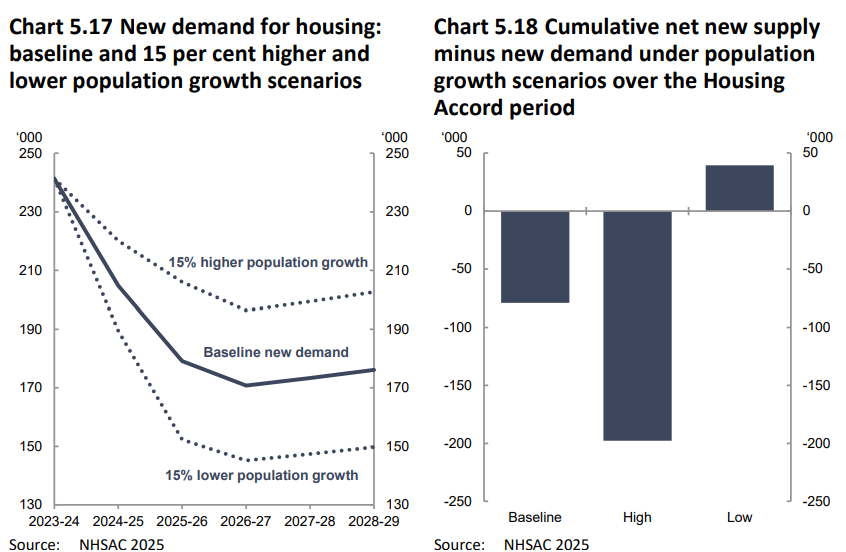
This wouldn’t address the shortage entirely, but some estimate it would only make up about 1/6 of the current estimated shortfall; however, it would significantly improve the current projected status quo.
The Takeaway
While it’s certainly true that removing the Jenga block labelled “high migration” from the game would have significant short-term consequences for the performance of headline GDP, as it has in Canada and New Zealand, it doesn’t necessarily have a long-term downside for the average person in the street.
Meanwhile, cutting migration to a level more consistent with developed world norms costs an additional level of federal debt worth just 2.6 percentage points of GDP more than where we are already over the next decade.
It’s also possible that if a smaller, more well-targeted migration were adopted, it could help to boost productivity, thereby improving the pathway of the federal budget and the broader economy in a way that the PBO did not model.
Ultimately, it is Australia that is truly the outlier, well away from the pack on its own when it comes to migration. This is especially the case now that New Zealand and Canada have reduced their per capita intakes to within the range of developed world norms.
