Earlier this month, I reported on China’s insatiable appetite for coal-powered electricity.
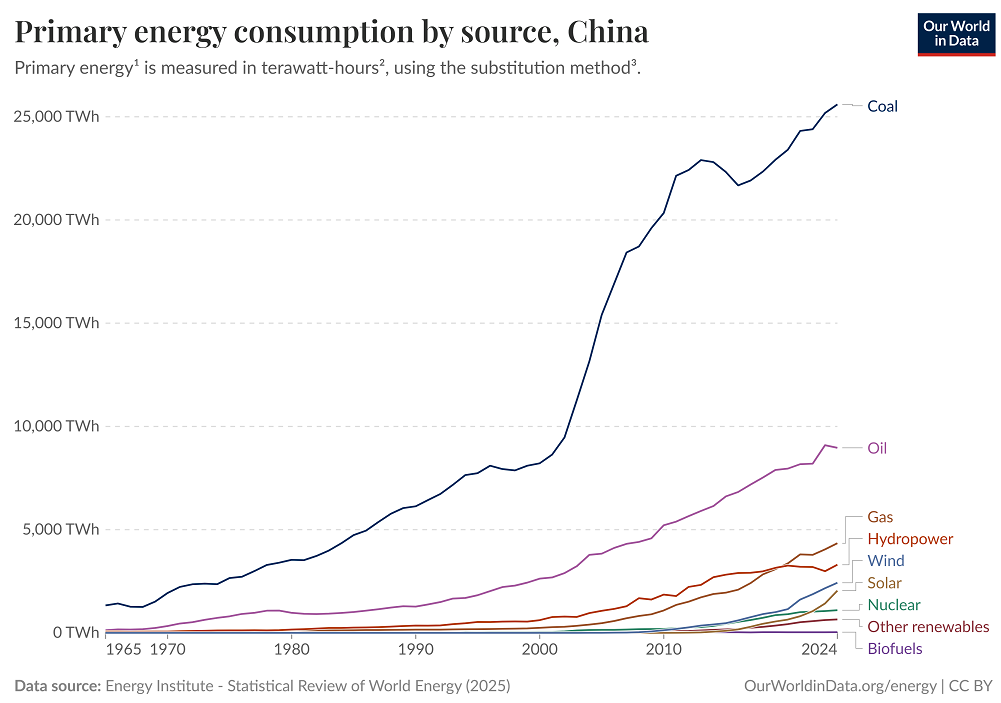
China is by far the world’s largest carbon emitter, which has been driven by its insatiable appetite for coal:
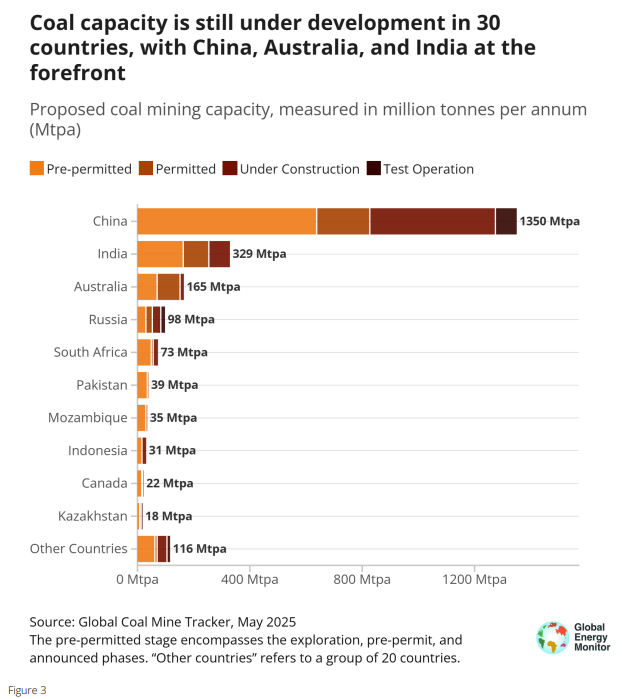
China has a significant number of new coal mines in development:
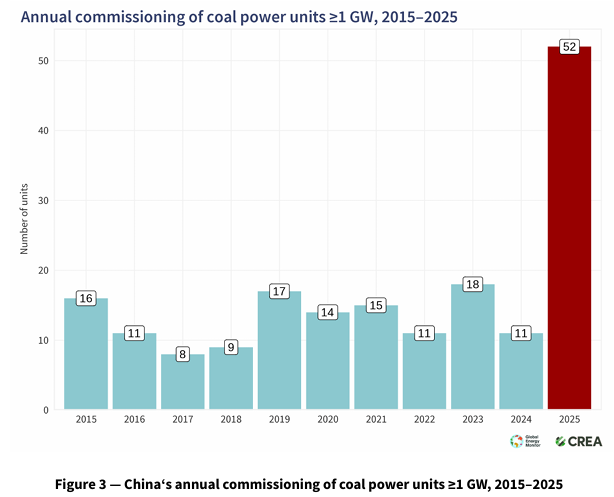
More than 50 large coal units—individual boiler and turbine sets with generating capacity of 1 gigawatt or more—were commissioned in China in 2025, up from fewer than 20 a year over the previous decade:
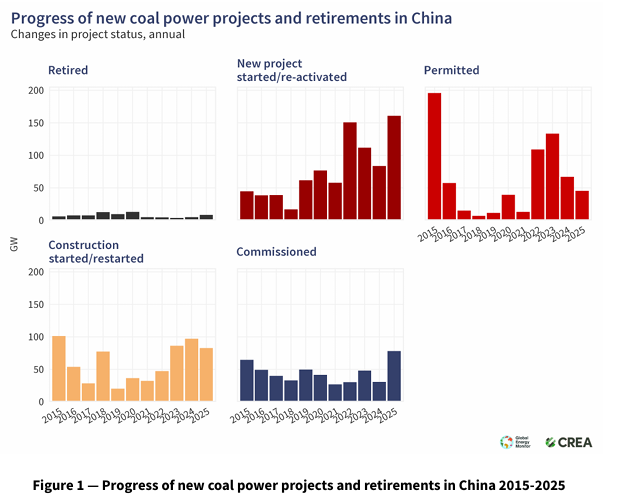
Overall, China brought 78 gigawatts of new coal power capacity online in 2025, a sharp uptick from previous years, according to the joint report by the Centre for Research on Energy and Clean Air and Global Energy Monitor.
The pipeline of Chinese coal power projects also remains strong:
“The scale of the buildout is staggering”, said report co-author Christine Shearer of Global Energy Monitor. “In 2025 alone, China commissioned more coal power capacity than India did over the entire past decade”.
Today, I want to turn to India—the world’s third largest and one of the fastest-growing emitters of carbon dioxide.
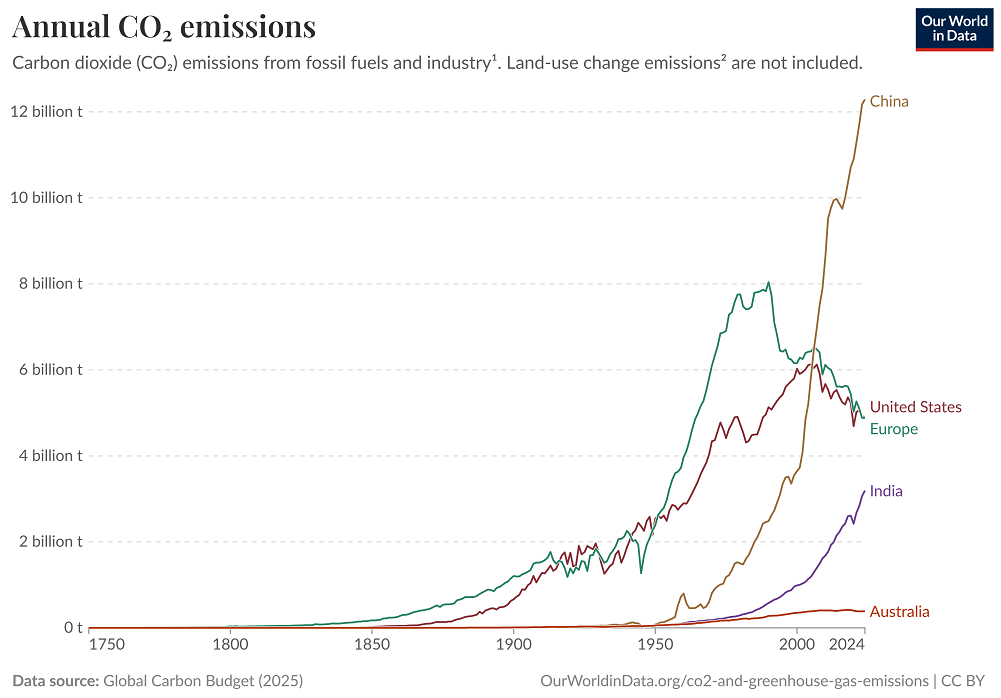
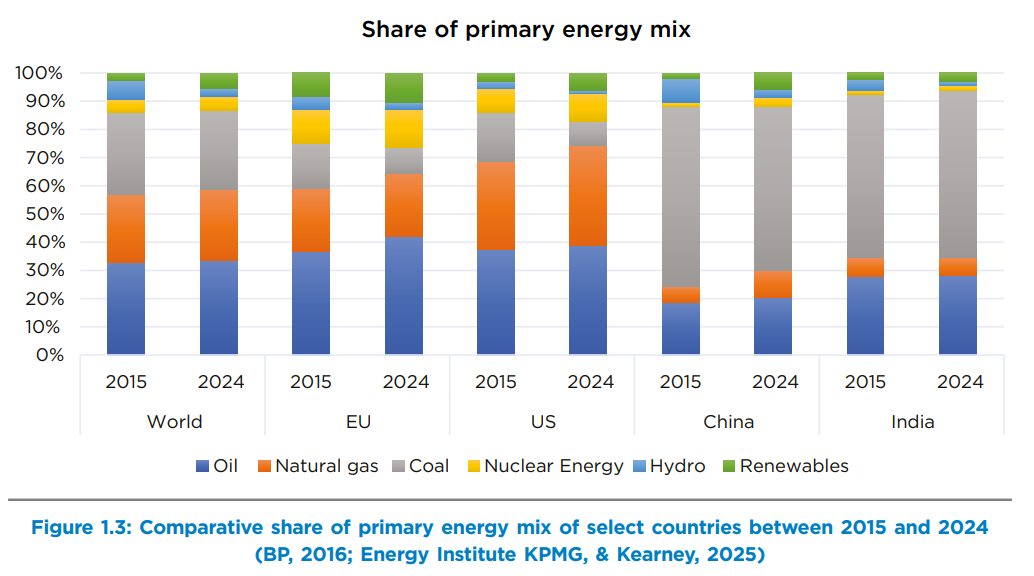
Like China, India has rapidly expanded its coal use over the past decade while developed nations (including Australia) have cut back:
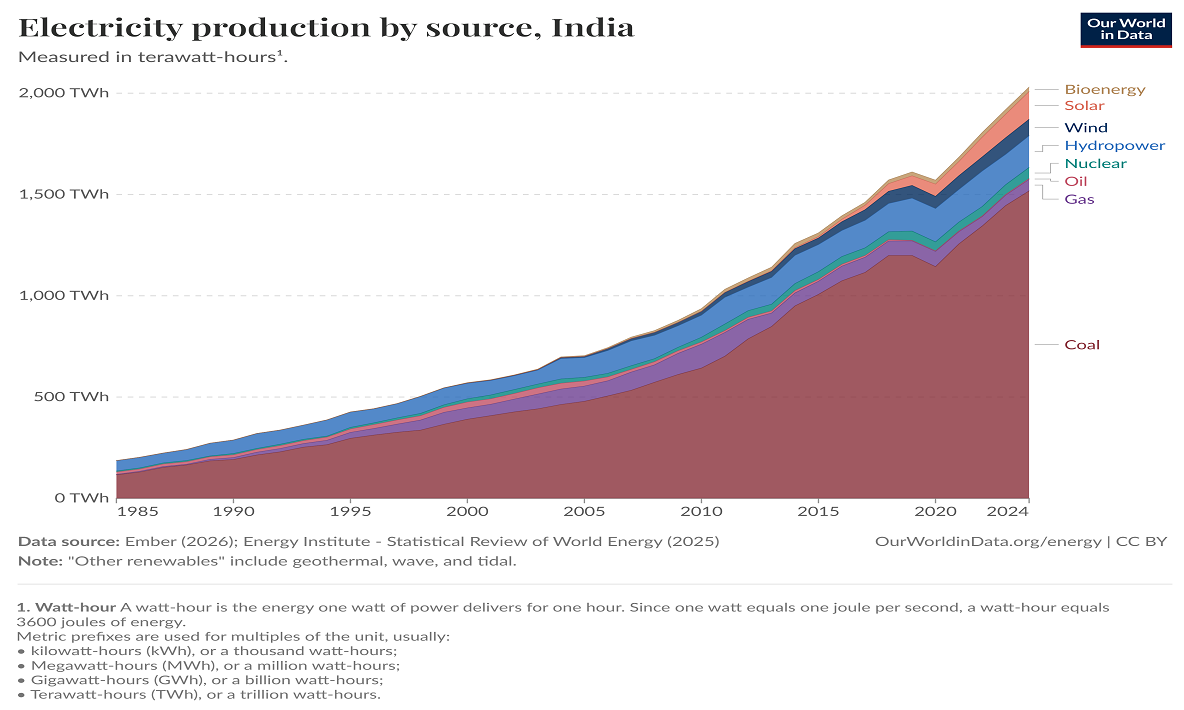
In 2024-25, 73% of India’s energy production came from coal:
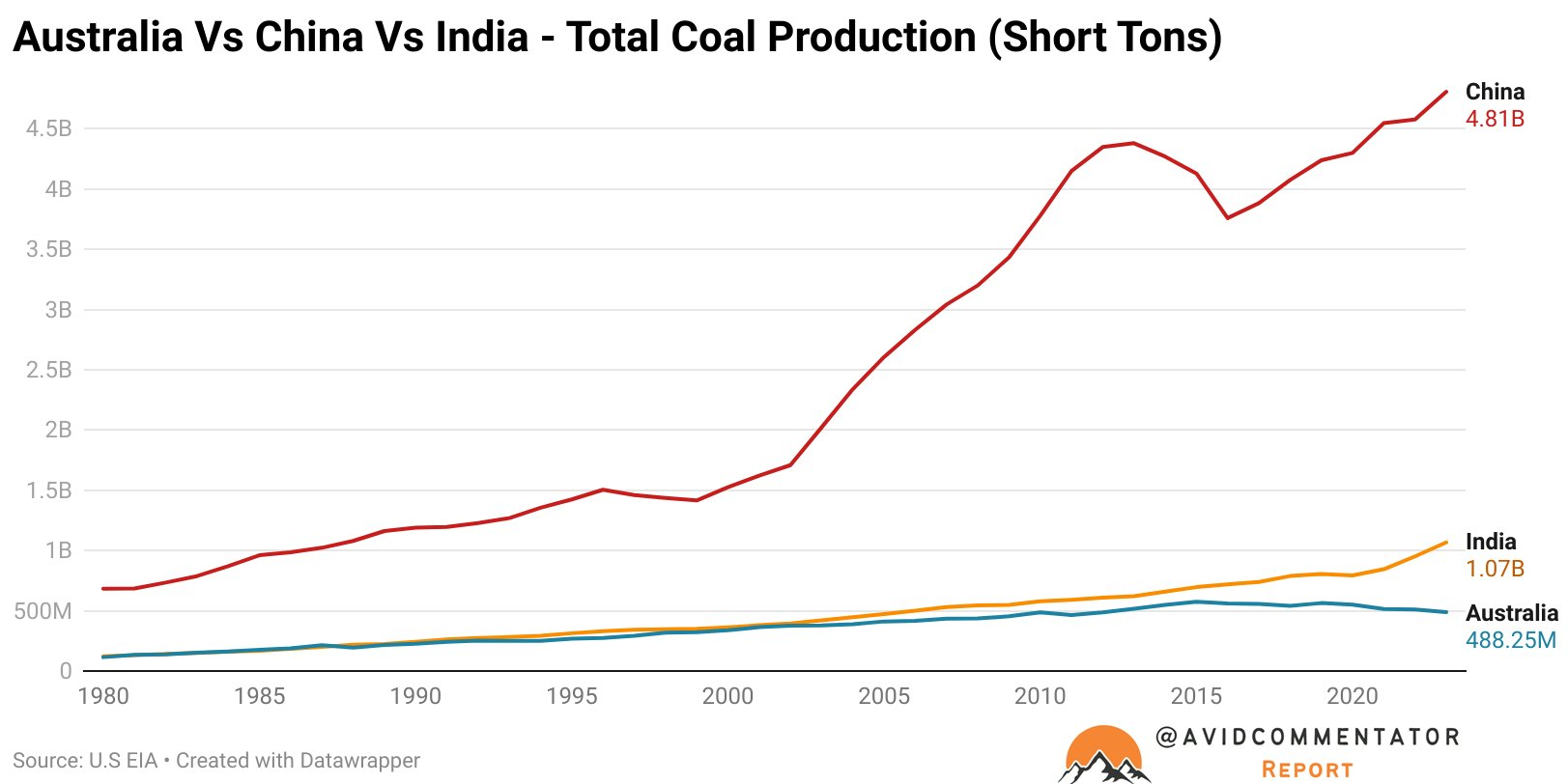
India produces more than twice as much coal as Australia and imports coal from other nations, including Australia:
A new report, “Scenarios Towards Viksit Bharat and Net Zero: An Overview (Vol. 1)”, outlines India’s strategic pathways to achieve two major goals by 2047: becoming a developed nation (Viksit Bharat) and reaching net-zero carbon emissions.
The report projects that India’s coal consumption will increase dramatically until 2047, even as the country pursues its net-zero emissions target by 2070, to support economic growth and energy demand:
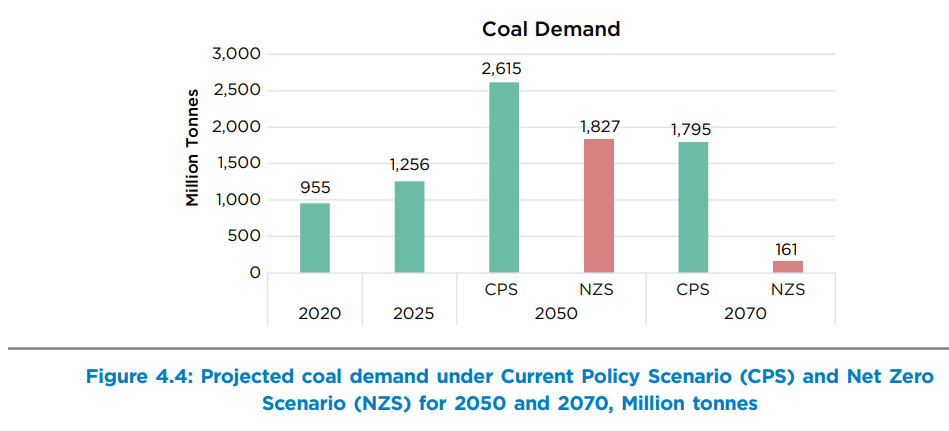
Under the Current Policy Scenario (CPS), long-term demand could more than double to 2.615 billion tons by 2050, up from 1.256 billion tons in 2025.
Even in the net-zero scenario (for India, the net-zero goal is 2070), coal demand will rise to 1.827 billion tons by 2050, up from 1.256 billion tons in 2025.
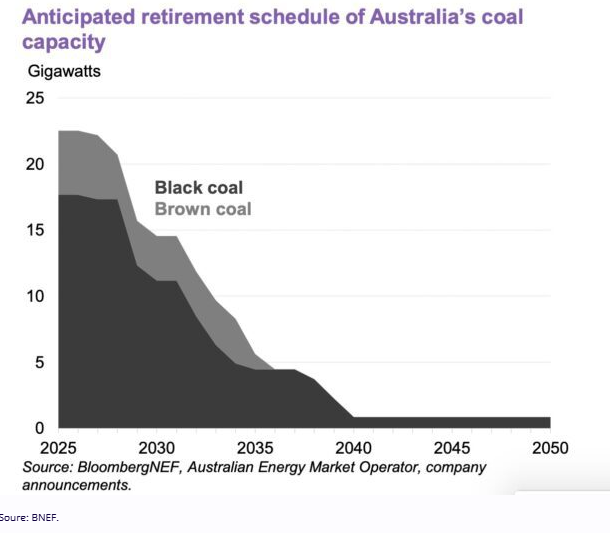
Now compare India’s and China’s insatiable appetite for coal with Australia, which accounts for around 1% of the world’s carbon emissions. The Australian government plans to shut down baseload coal generation in favour of weather-dependent solar and wind, backed by batteries, pumped hydro, and gas:
Given Australia’s growing demand for energy from population growth, data centres, desalination plants, and transitioning the vehicle fleet to electric, my view is that Australia should build more energy generation capacity across all segments: baseload (coal or nuclear), gas, renewables, and storage.
Otherwise, Australia will be left behind, suffering energy scarcity, high costs, and deindustrialisation.
Moreover, it makes no sense for Australia to be the world’s largest coal exporter, including to China and India, but refuse to burn it ourselves.
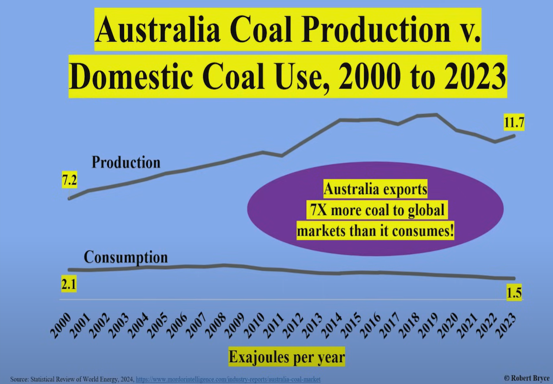
Global carbon emissions would be unchanged if Australia used more coal at home, rather than exporting it to China, India, and other Asian nations to use.