The ABC reported that only half of the 22,000 homes approved for construction in Western Sydney are proceeding to construction because there are not enough buyers able or willing to pay enough to cover construction costs.
KPMG urban economist Terry Rawnsley warned that interest rate rises would worsen the viability of new apartment projects due to weaker consumer demand for apartments, caused by reduced borrowing capacity, and greater difficulty for developers in securing the finance needed for projects.
A separate report in The Age newspaper reveals that Victoria’s flagship plan to boost housing supply through 60 high‑density activity centres is running into a harsh economic reality: only a small fraction of the proposed homes are financially viable to build.
The Grattan Institute estimates 600,000 homes could be enabled by rezoning in activity centres. But only 110,000 (18%) are viable under current construction costs and market conditions.
Construction costs have surged 40% in five years, wiping out the economics of most mid‑rise projects.
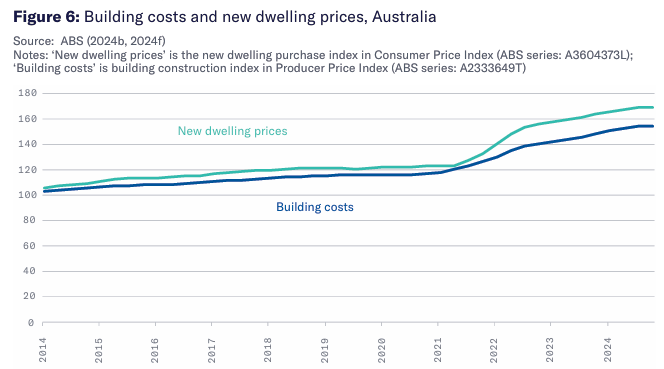
Source: Build Skills Australia
Victorian government reforms have increased zoned capacity to 1.58 million homes. But only 530,000 of these are financially viable today.
This mismatch raises serious doubts about the state’s target of 80,000 new homes per year, which it is already missing by 20,000 annually.
The following chart from Michael Matusik shows that it costs far more to build apartments than detached houses or townhouses:
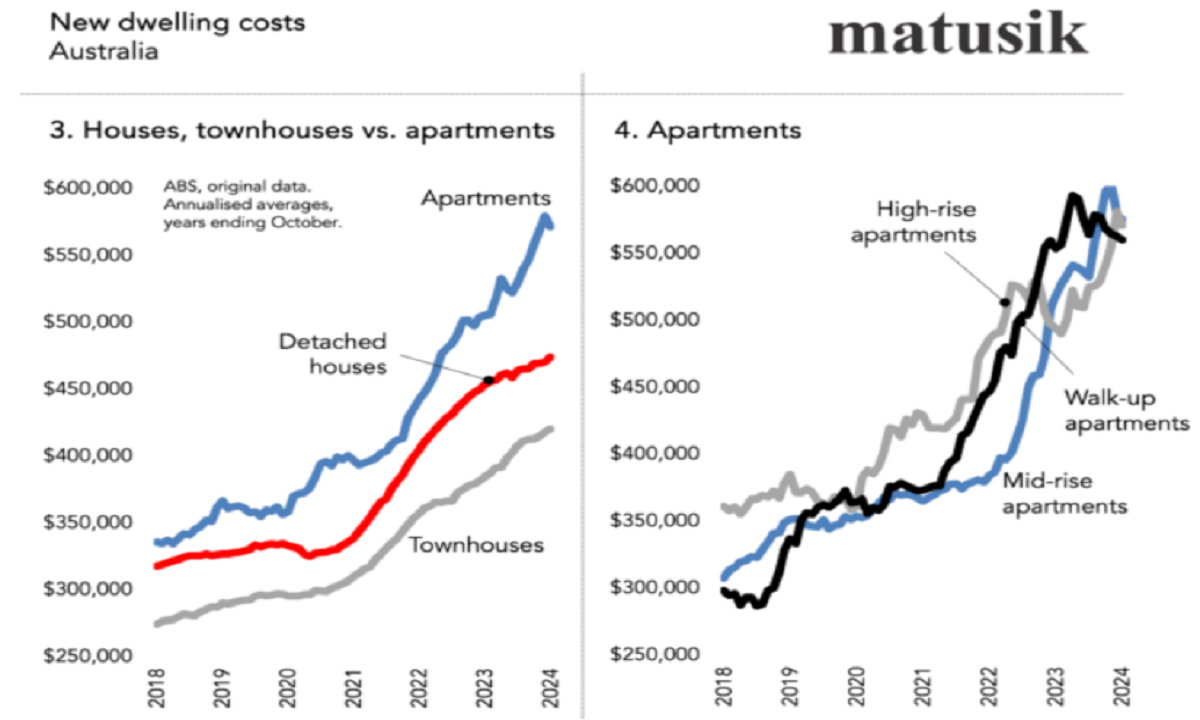
Chart by Michael Matusik
To bridge the cost gap, governments have proposed (e.g., here and here) higher towers, smaller apartments, less storage and natural light, smaller balconies, and fewer car spaces:
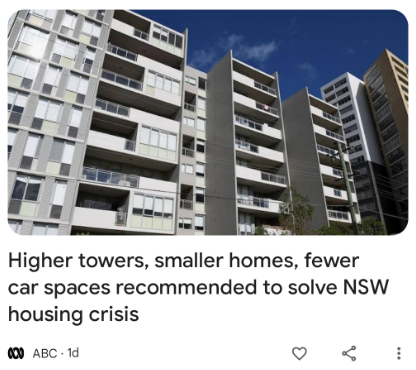
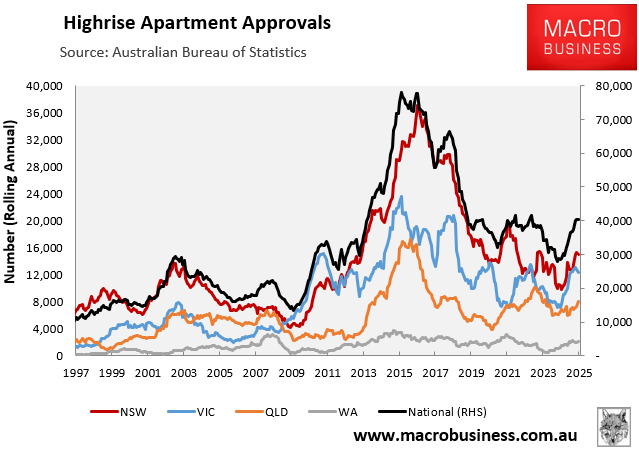
Last decade’s high-rise apartment boom delivered large volumes of low-quality, defective, shoebox apartments (e.g., see here, here, and here).
Body corporate fees are also excessive, as documented by Four Corners in “The Strata Trap”.
Repeating the same mistakes again by building huge volumes of small, low-quality apartments would be a grave mistake.
With the populations of our major capital cities projected to balloon over the next 40 years, according to the Centre for Population:
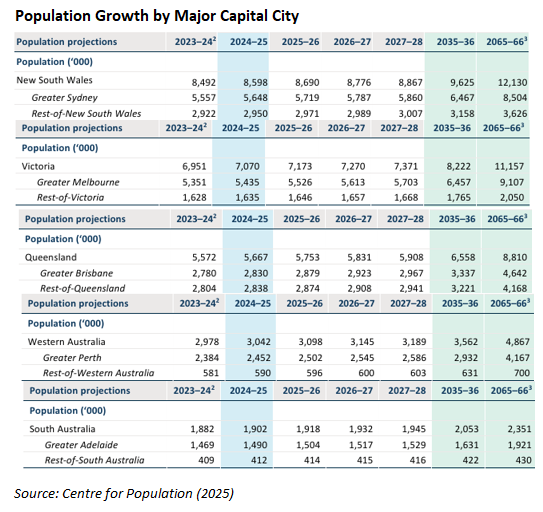
High-rise shoebox living will become inevitable, especially in Sydney and Melbourne.
The quality of construction and amenity will inevitably degrade, and congestion in economic and social infrastructure will worsen, limiting residents’ access to roads, hospitals, schools, parks, and other public services.
Australians have never backed endless mass immigration, and the vast majority of voters oppose it. Australians also adamantly would prefer not to live in high-rises.
Our policymakers should reflect the wishes of voters and stop flooding our cities with more people, overloading our housing, infrastructure, water supplies, and living standards.
Let us not repeat the previous decade’s record apartment boom, which was fraught with defects.