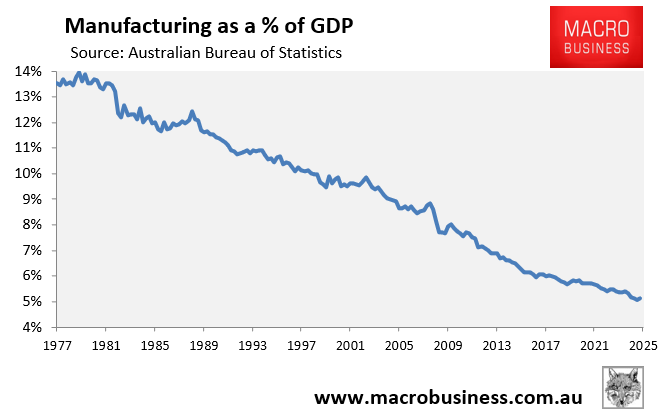
Soaring energy costs have contributed to Australia’s declining manufacturing sector, which is the smallest in the OECD as a share of GDP.
Alex Joiner, chief economist at IFM Investors, illustrated the manufacturing sector’s energy problem in the following chart:
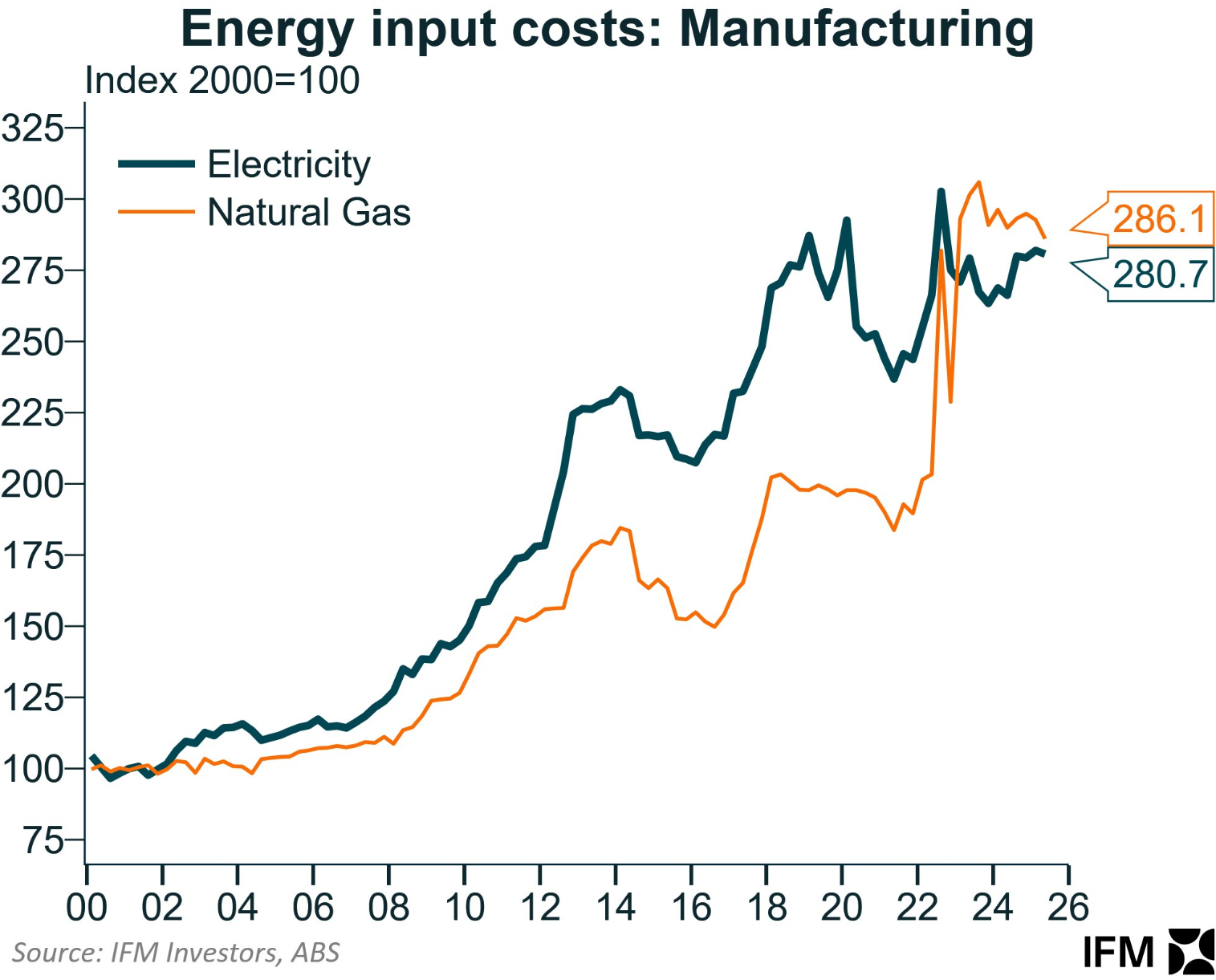
Natural gas input costs in manufacturing have increased by 186% since 2000, while electricity prices have risen by 181%.
A July 2025 research note from the Australian Industry Group (AiG) warned that heavy manufacturing—particularly metals and petrochemicals—is suffering most acutely from soaring gas costs.
“These manufacturers consume around half of Australia’s domestic gas supply, and their need for heat and chemical feedstocks cannot be substituted for lower cost electricity supply”, AiG noted.
“Surging energy costs must often be borne on the balance sheet, greatly reducing the profitability of energy-intensive branches of manufacturing”.
A June 2025 analysis of ASIC insolvency figures showed that more than 1400 manufacturers nationwide had failed over the first two years of the Albanese government.
Among these failures was Incitec Pivot, a large fertiliser company, which closed most of its Australian operations due to rising energy costs.
Qenos, Australia’s last major plastics manufacturer, shut down in 2024 due to high energy prices, leaving the country entirely reliant on polymers imported from China.
Oceania Glass, Australia’s last architectural glass manufacturer, shuttered in February last year after 169 years of operation, citing rising energy costs and Chinese dumping.
Orica, the world’s largest producer of mining explosives, chemicals, and agricultural fertilisers, and BlueScope Steel have threatened to downsize their Australian operations and relocate to the United States in response to rising energy prices.
Australia is awash with rare earths and minerals, as illustrated below:
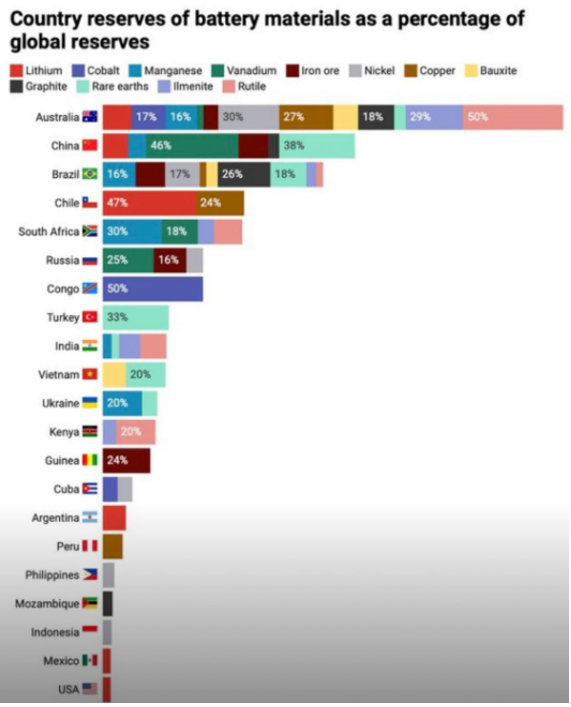
However, high energy costs have made it uneconomic to process these in Australia and move up the value chain.
Last week, Albemarle’s lithium refinery in Western Australia’s Southwest was placed on care and maintenance (i.e., shut down), with about 275 jobs expected to be affected.
Mining commentator Tim Treadgold blamed high energy costs for the closure.
“Sadly, it was predictable because the projects, any processing projects we have in Australia, have become uncompetitive”, he said.
“We’ve got a very high-cost energy system in Australia, and we simply can’t process the minerals at a price competing, say, with China, which has very low-cost energy”.
“It’s just such a basic issue that we’ve gone down the road of driving energy prices higher in the belief that eventually renewables will be able to compete with coal and uranium and nuclear power and things like that”, Treadgold said.
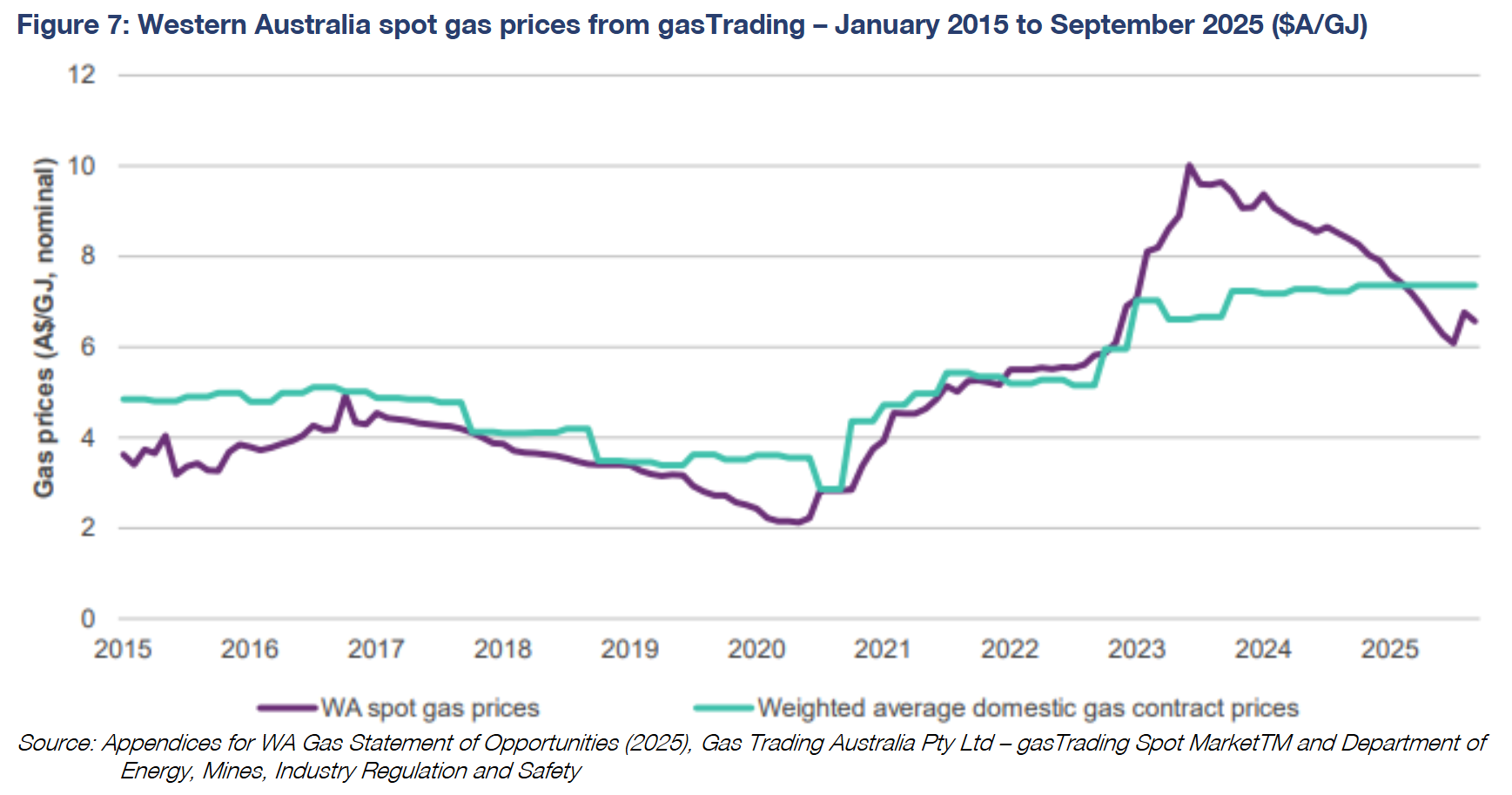
While Western Australia’s gas price is significantly lower than the East Coast’s due to its 15% reservation scheme, costs have still increased strongly over the past five years:
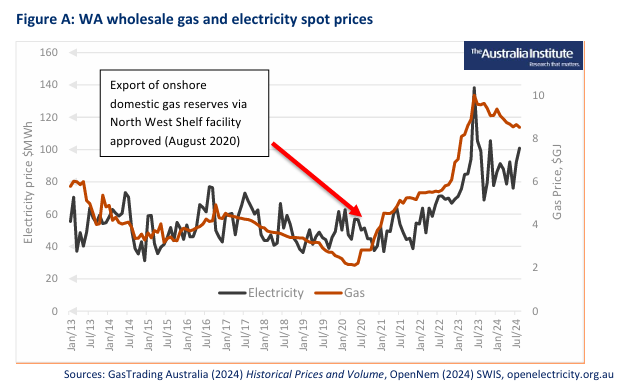
The reality is that if energy costs continue to rise, then Australia will become an industrial wasteland, with a less diverse and sophisticated economy, lower productivity, and, ultimately, lower living standards.
There is no Future Made in Australia without abundant, affordable, and reliable energy.