Australia recorded the strongest net overseas migration (NOM) in the nation’s history between Q4 2019 and Q2 2025, with 266,000 net migrants arriving annually, including the Covid-19 border closure:
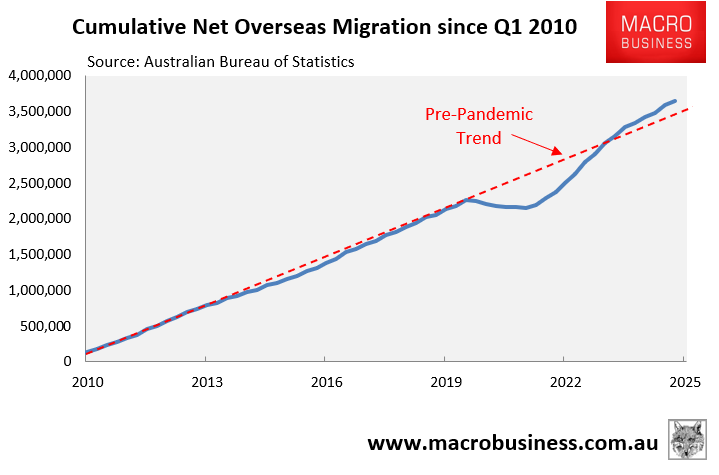
This huge immigration inflow had a devastating impact on the rental market.
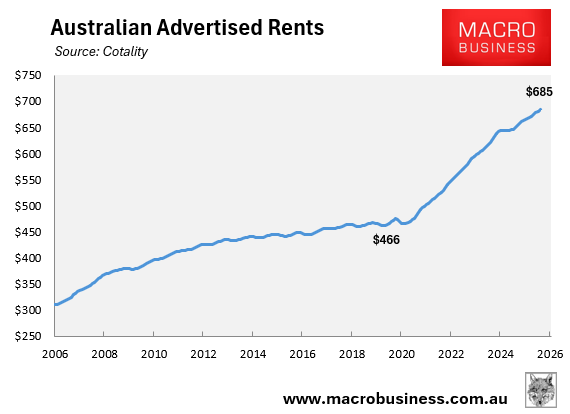
Since the end of 2019, the record net migration flows (i.e., 266,000 per annum) have driven up national advertised rents by 47%, according to Cotality, adding $11,400 to the annual cost of renting:
Dr Shane Oliver, chief economist at AMP, estimated that Australia’s cumulative housing shortage was between 200,000 and 300,000 last year, depending on assumptions about the number of people per dwelling.
Over the weekend, Prime Minister Anthony Albanese told Sky News that the government had no intention to lower immigration:
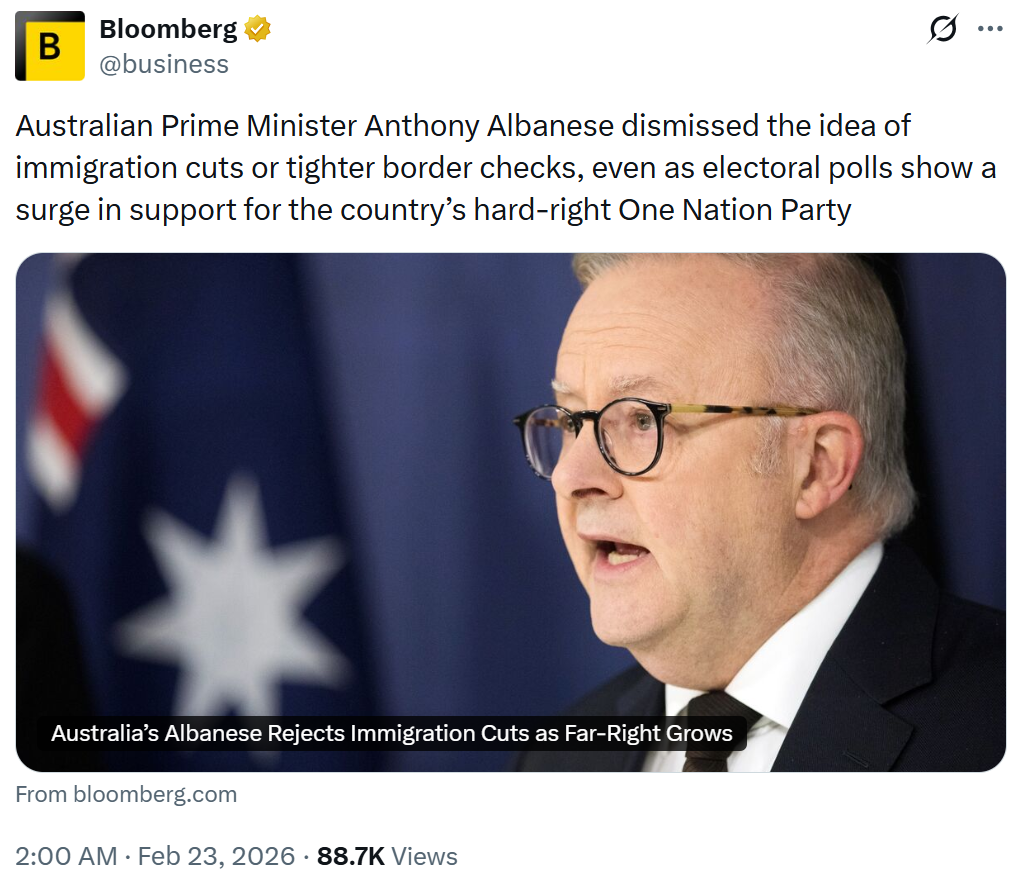
In doing so, Albanese confirmed that Australia’s housing shortage will worsen.
The latest State of the Housing System report from the federal government’s own National Housing Supply and Affordability Council (NHSAC) forecast that the nation’s housing shortage would worsen by 79,000 over the five years to 2028-29, based on the Centre for Population’s migration forecasts:
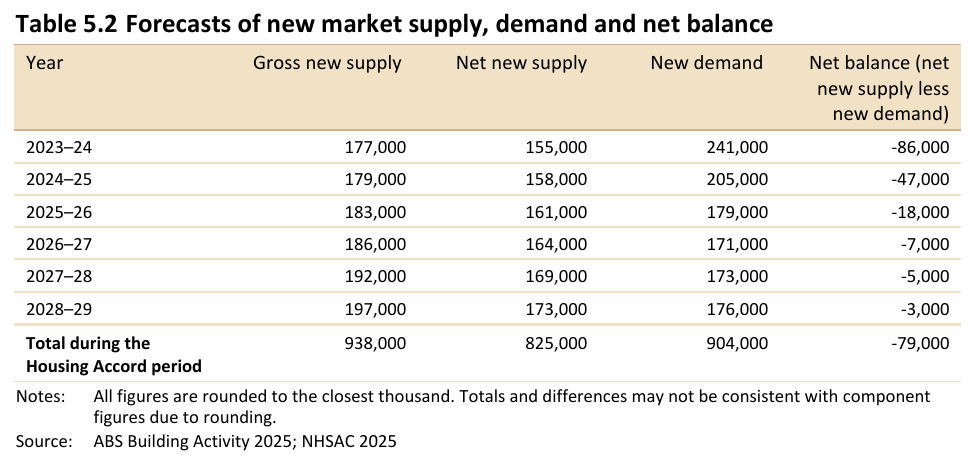
As shown above, NHSAC forecasts a shortage of housing each year to 2028-29.
However, NHSAC’s sensitivity analysis showed that if the population grew by only 15% slower than projected by the Centre for Population, then Australia’s cumulative housing deficit would reduce by 40,000 as housing supply would exceed lower population demand:
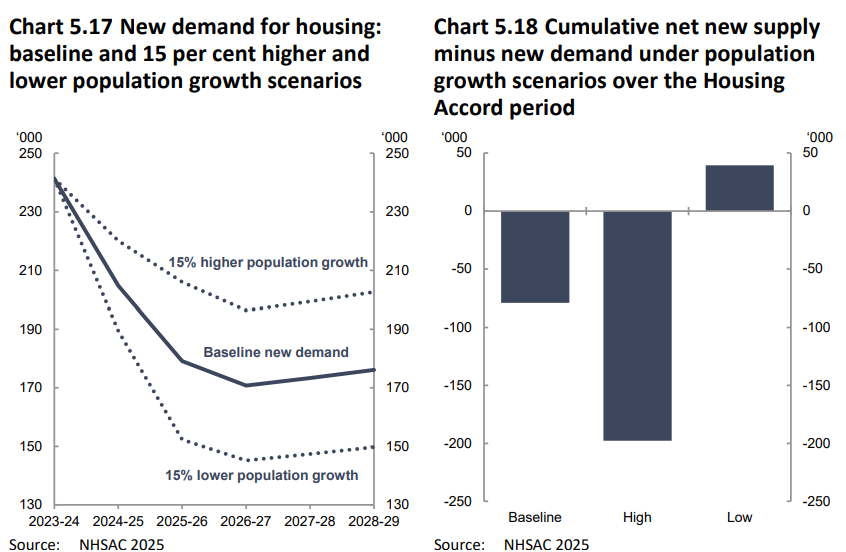
Therefore, NHSAC stated explicitly that if the Albanese government slowed immigration, it would alleviate the nation’s housing shortage.
KPMG’s latest housing report likewise forecasts a worsening housing shortage as population demand continues to outrun supply:
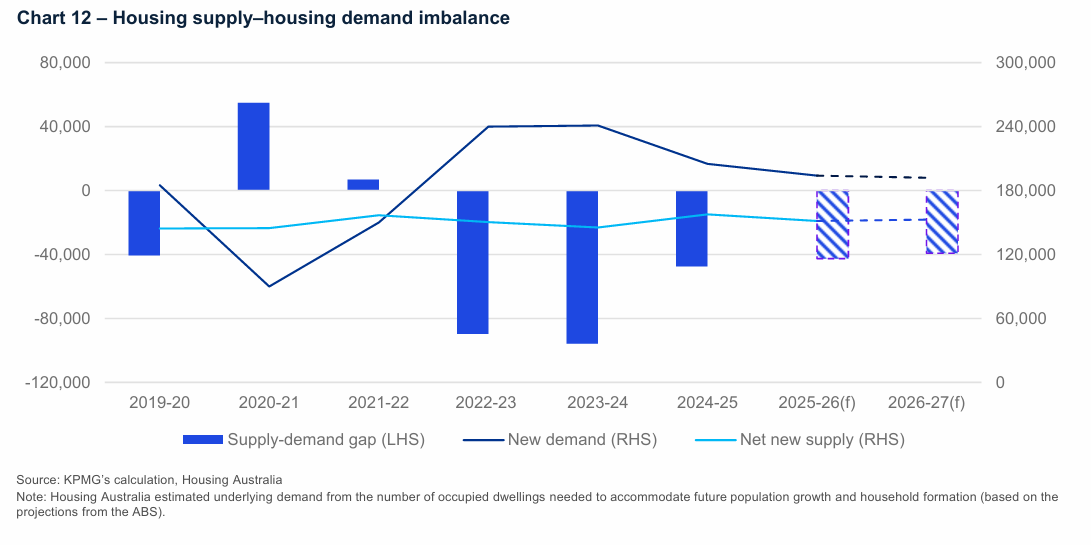
Source: KPMG
Why won’t Albanese follow Canada’s immigration policy?
One has to wonder why Anthony Albanese won’t emulate Canada’s immigration cuts.
The left-of-centre Liberal government of Canada in 2024 implemented sweeping immigration cuts aimed at easing pressures on housing and infrastructure, alongside rebalancing the economy toward sustainable growth.
The measures include decreasing annual permanent resident targets, restricting international student and temporary worker admissions, and toughening asylum and border rules.
The Canadian population declined by 76,000 in the third quarter of 2025, the first reduction in the country’s history (excluding the pandemic), driven by a reduction in temporary (non-permanent) residents:
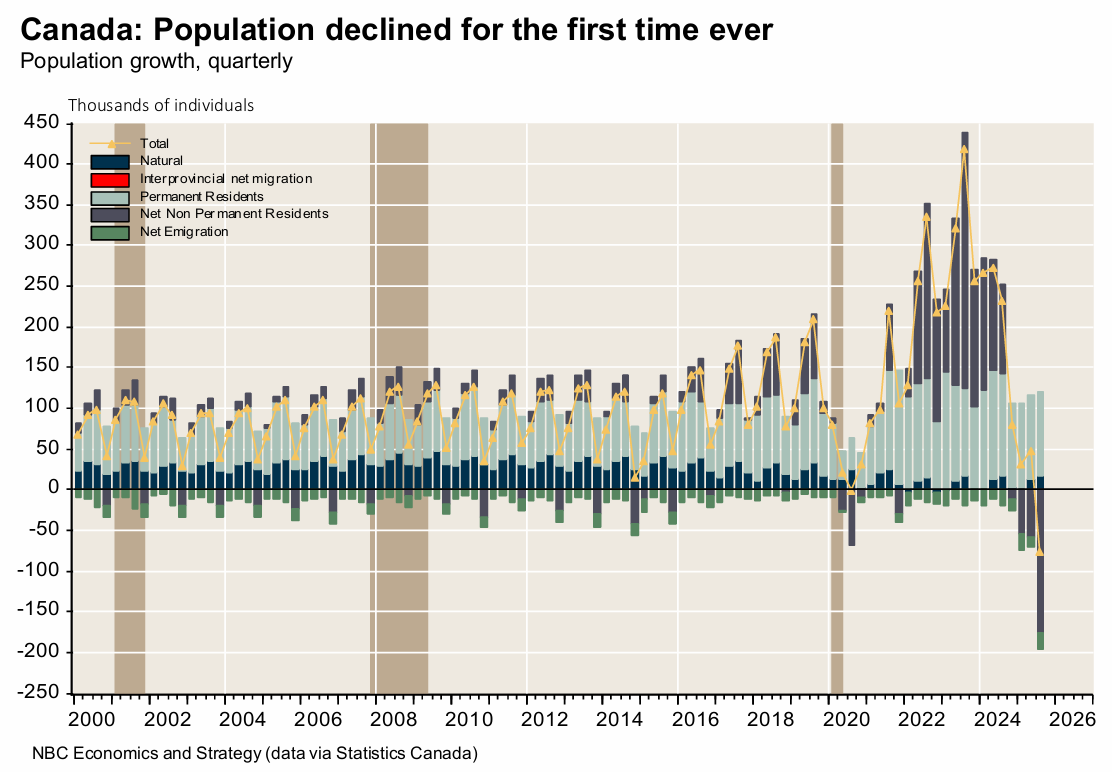
Chart from the National Bank of Canada
The severe slowing of Canada’s population growth has been felt most acutely in the nation’s rental market.
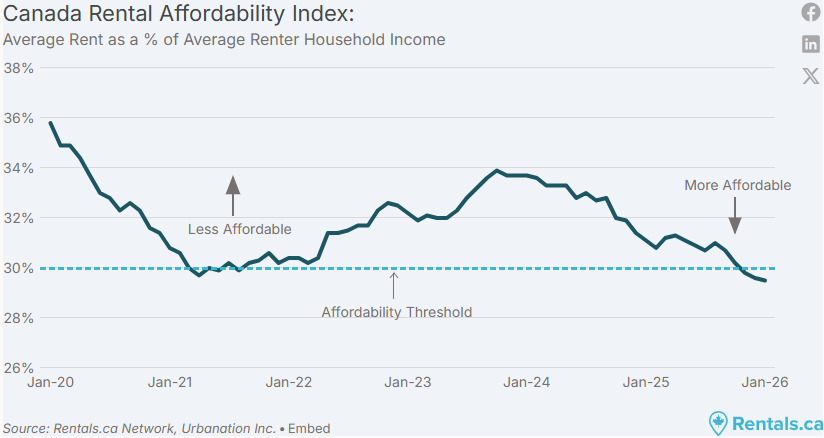
According to new data from Rentals.ca, annual Canadian asking rents have declined for 16 consecutive months and are now tracking at a 31-month low.
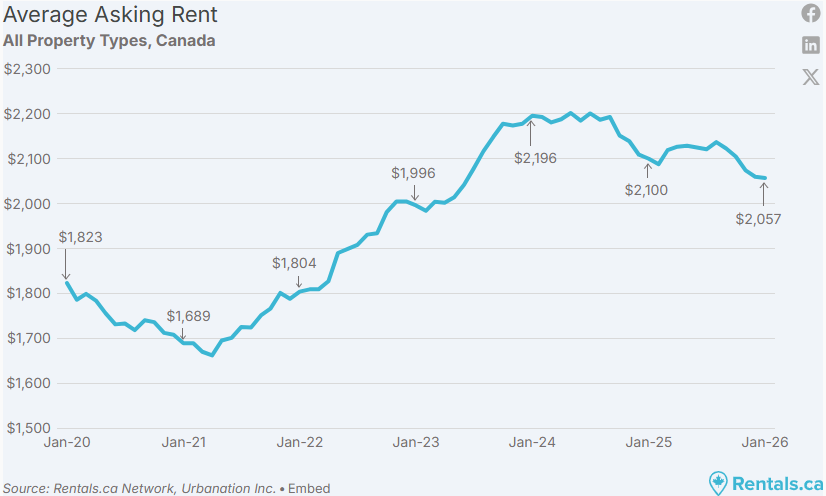
Canadian asking rents have fallen by 6.6% from their May 2024 peak, saving the average tenant $145 per month ($1,740 per year) in rental costs.
Rental affordability is now at its most favourable level in six years, tracking below the 30% affordability benchmark:
Canada has solved its rental crisis by restricting immigration. Why won’t Anthony Albanese do the same for Australia?
By maintaining an historically high level of immigration, Albanese has committed to endless housing shortages.