Following the release of the official Q2 2025 population statistics from the Australian Bureau of Statistics (ABS), IFM Investors’ chief economist, Alex Joiner, published the following chart on Twitter (X) illustrating the extremeness of Australia’s recent population growth.
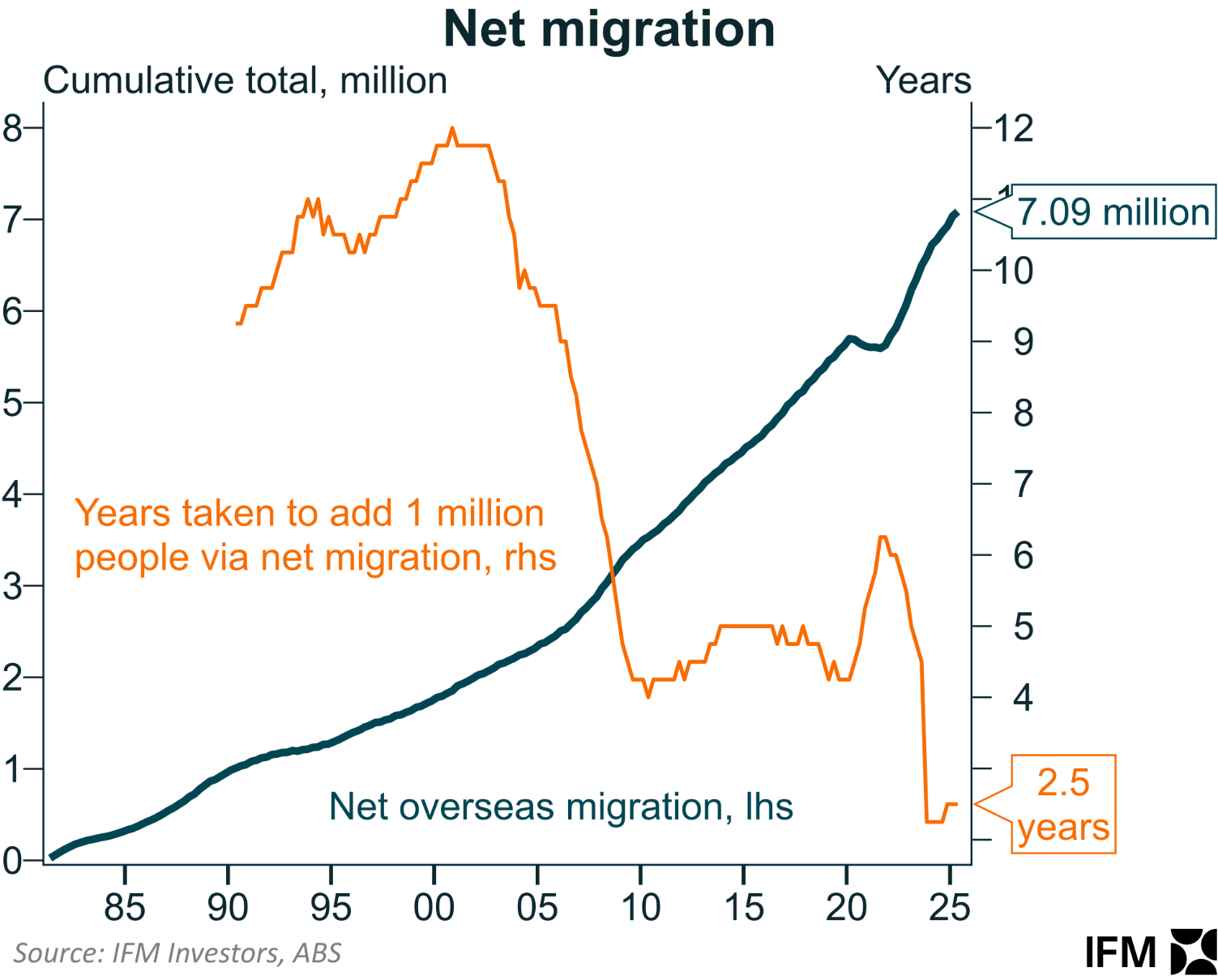
Joiner noted that “in Q4 2000, it took 12 years of net migration to that point to add 1,000,000 people to the population”. However, as of Q2 2025, it took 2.5 years to add one million people to Australia’s population.
“This has both fueled economic growth but also put pressure on the provision of housing, infrastructure and services”, Joiner stated on Twitter (X).
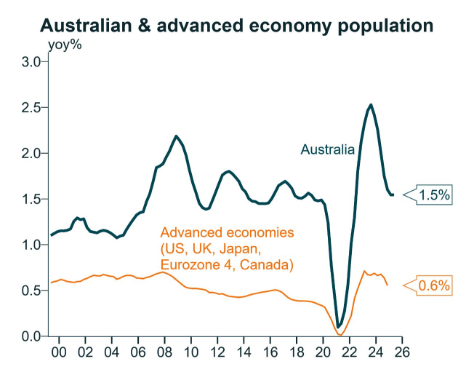
In a separate post on Twitter (X), Joiner posted the following chart illustrating how Australia’s population growth has far exceeded other advanced nations:
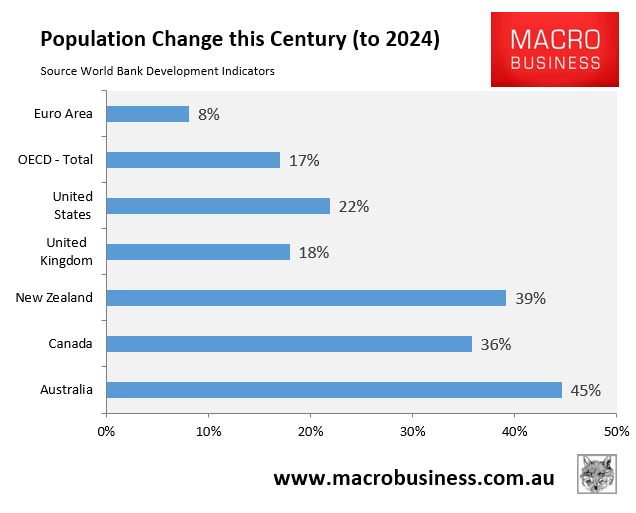
I have made similar comparisons previously, illustrating Australia’s world-beating immigration-driven population growth:
Amazingly, despite the international border being closed for two years, Australia’s net overseas migration (NOM) and population growth have exceeded the pre-pandemic trend.
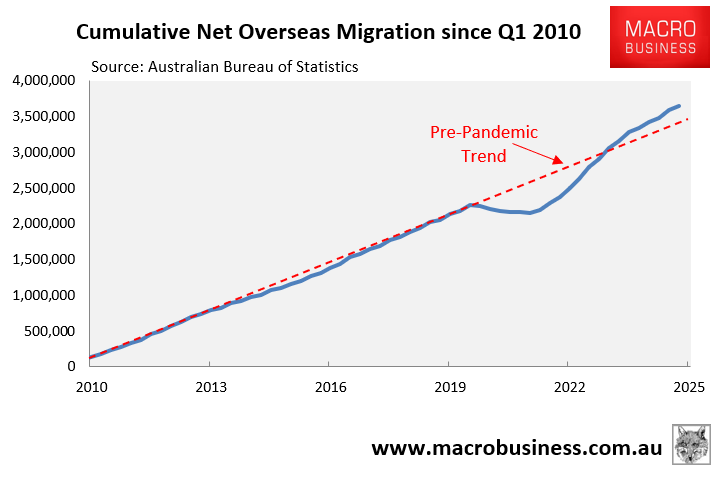
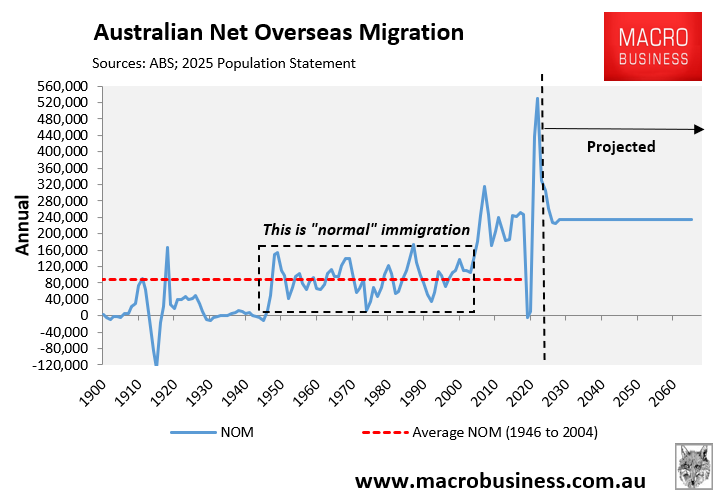
Since the end of 2019, NOM has averaged 266,000 per year. This is significantly above the 226,000 average NOM during the 15 years of ‘Big Australia’ before the pandemic.
In fact, since the Albanese government was elected in mid-2022, NOM has averaged 424,400 per year, amounting to 1,162 net migrants landing every day over Labor’s first three years and 1,273,200 net migrants overall:
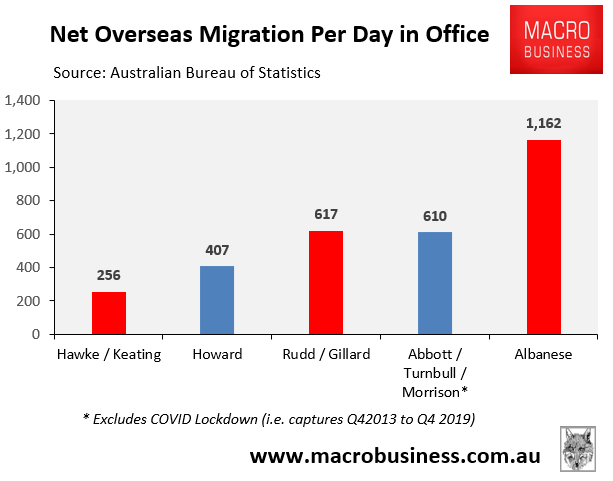
As shown above, the level of NOM under Labor is nearly double the daily average reported by the previous Coalition government prior to the pandemic (i.e., between Q4 2013 to Q4 2019). It is also significantly higher than any other prior government.
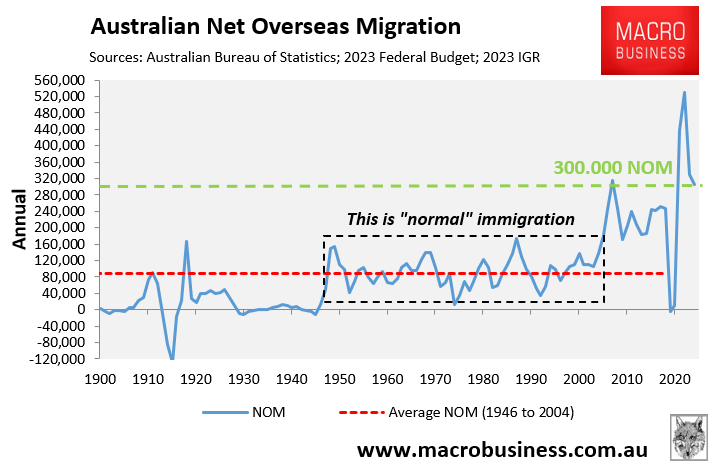
The end result of two decades of extreme immigration-driven population growth has been felt most acutely across Australia’s major capital cities, which have suffered from chronic shortages of housing, infrastructure, water supplies, hospitals, and schools, and worsening traffic congestion and overall quality of life.
The nation’s productivity growth has also suffered because infrastructure and business investment have not kept pace with the 8 million-plus extra residents that have landed in Australia since the turn of the century, diluting the nation’s capital stock.
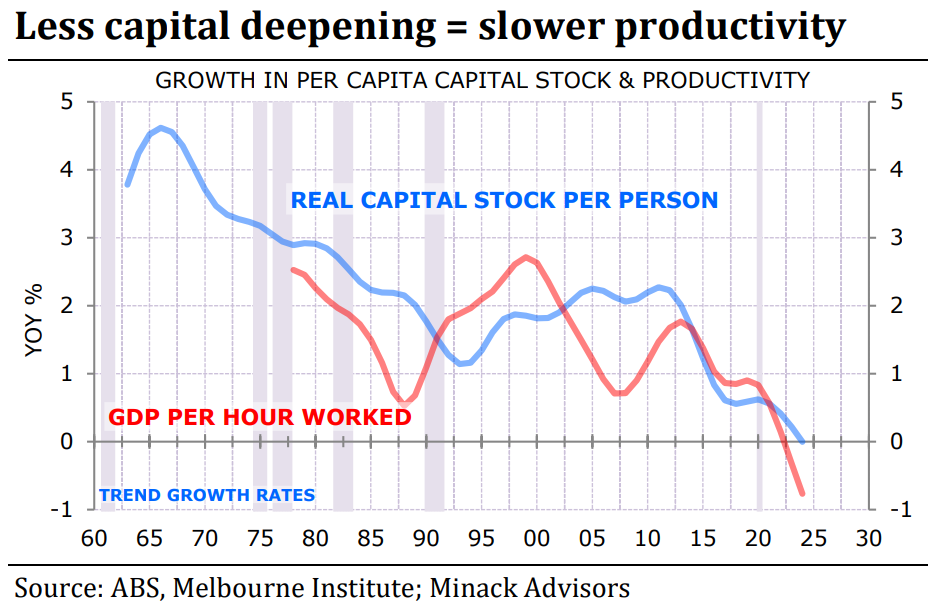
Given the deleterious impacts on the economy and living standards, common sense would dictate that the Australian Treasury and policymakers would change track and opt for a significantly smaller immigration program that prioritises quality over quantity.
Sadly, the Australian Treasury, via its Centre for Population, has instead doubled down on mass migration and a Big Australia with its 2025 Population Statement, which was released on Friday.
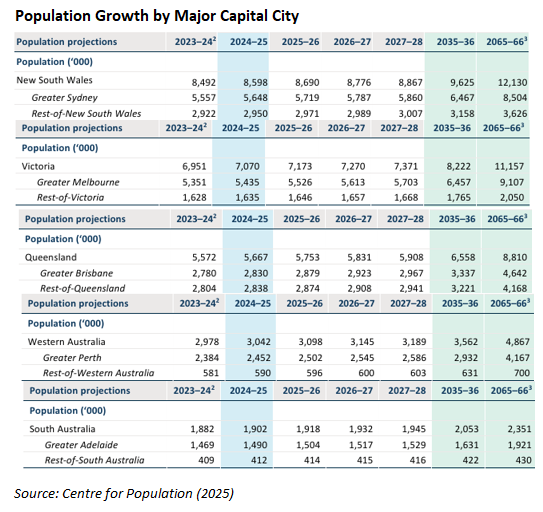
The Center for Population projects that the nation’s population will balloon by 3,860,000 over the 11 years to 2035–36, with most (80%) of this growth occurring in the capital cities, which are projected to swell by 3,080,000 over the 11 years.
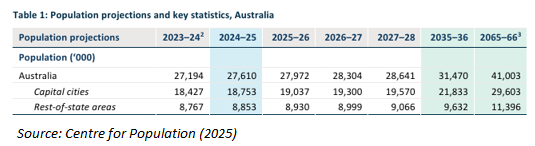
The hyperpopulation growth will continue ad infinitum, with the nation’s population projected to balloon by an insane 13.4 million over the next 41 years to 2065–66, with most (81%) of this growth occurring in the capital cities, which are projected to swell by 10,850,000 over the next 41 years.
This rate of population growth is comparable to adding another Sydney, Melbourne, and Perth to the nation’s current population in just 41 years. All of the housing and infrastructure in these three major cities would need to be replicated, and water and energy supplies greatly expanded; otherwise, housing shortages, productivity, and living standards will decline.
All major Australian capital cities will experience strong population growth over the 41-year period, with Melbourne (9.1 million) and Sydney (8.5 million) projected to become mega-cities by the mid-2060s:
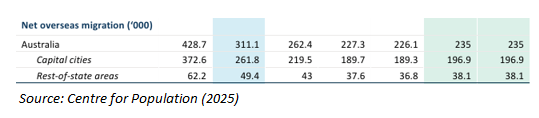
As usual, this extreme projected population growth is expected to come from high NOM, which is forecast to average 235,000 over the 41-year forecast horizon—i.e., 9,000 higher than the 226,000 average NOM recorded during the 15 years of ‘Big Australia’ before the pandemic.
To add insult to injury, the overwhelming majority (84%) of this NOM is forecast to flow to the capital cities, rather than Australia’s regions where immigration is actually needed:
In summary, the Australian Treasury’s obsession with mass migration will result in perpetual shortages of housing, infrastructure, water, and energy, while also damaging the natural environment.
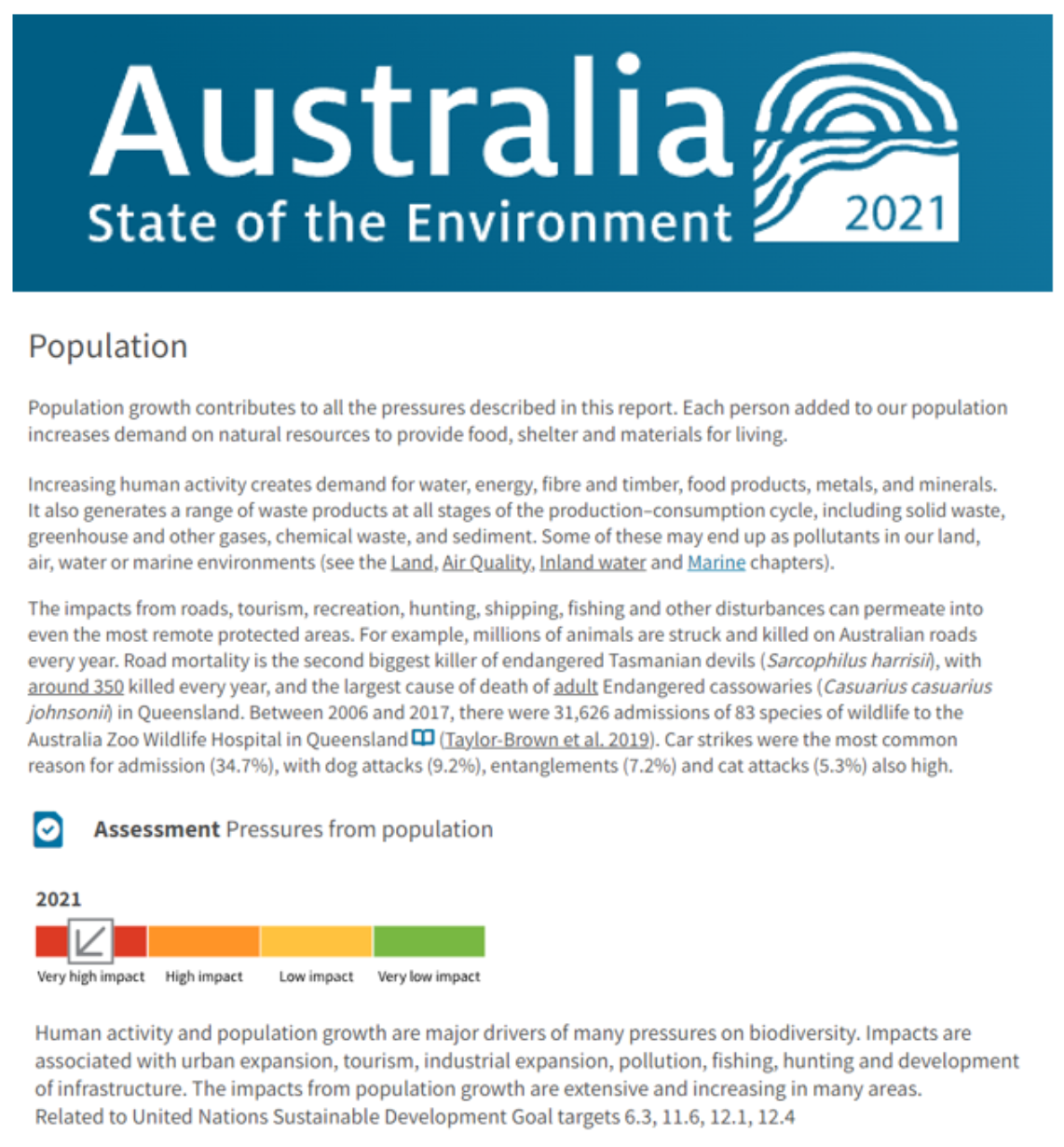
Source: State of the Environment Report 2021
The Centre for Population’s forecasts are a blueprint for economic and social destruction.